
86% Of Kenyan Consumers Likely To Buy A Product That Carries The Superbrands Seal
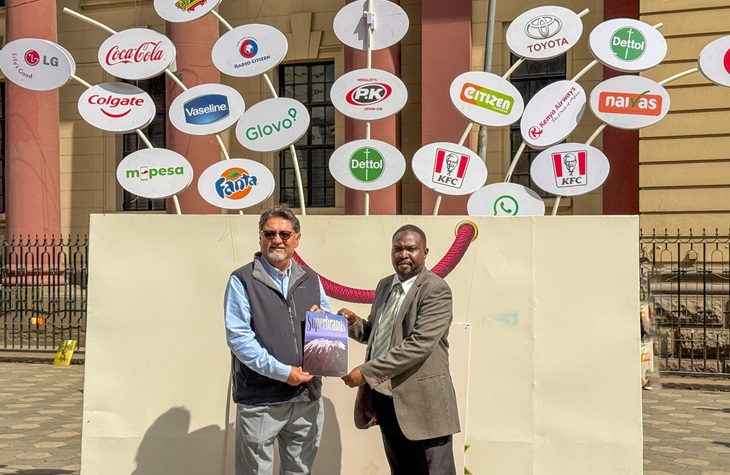
M-Pesa has been named Kenya’s strongest brand for 2026, leading a consumer-voted ranking in which its parent, Safaricom, took second place. The results, released on 4 November by Superbrands East Africa from research run by Kantar, also suggest that Kenyan shoppers are rewarding trust and consistency more than discounts.
The survey found that 86% of consumers are likely to buy a product or service that carries the Superbrands seal, and 84% say the recognition would raise their trust in a brand. But only 63% would pay more for it, a gap that points to a market where reputation opens the door but price still decides how far a customer will go.
Trust opens the wallet, but not all the way
The study shows strong goodwill toward recognised brands. Beyond the 86% purchase intent, 85% of respondents said the seal would push them to consider a product or try a new service. Another 81% said it helps a brand stand out from competitors, and the same share said it helps them spot category leaders.

That goodwill weakens when it comes to price. The 63% willing to pay a premium sits more than 20 points below every other measure of positive sentiment in the survey. For businesses, the message is that a strong name can win the first purchase, but it cannot carry a price gap on its own.
“Kenyan consumers have many brands to choose from, but what ultimately matters is whether a brand delivers on its promises,” said Jawad Jaffer, Project Director and Associate Publisher at Superbrands East Africa. He added that consumer trust “must be earned consistently through brand building, not simply through advertising.”
Superbrands says this shift puts businesses under pressure to show consistent value and to build reputations that actually sway buying decisions.
Safaricom’s double, and a crowded race behind it
M-Pesa scored 91.909, the highest awareness (98%) and the top marks for distinction (9.29) and reliability (9.25). Its lead over second-placed Safaricom is 2.29 points. That is wider than the entire gap between Safaricom at No. 2 and Toyota at No. 30, which is 2.36 points apart. In effect, the mobile money service sits in a tier of its own.
Below it, the race is extremely tight. Safaricom (89.623) edged Samsung (89.622) by one-thousandth of a point. WhatsApp and Google followed within 0.1 points.
Several patterns stand out in the top 30:
- Global tech platforms are deeply embedded. WhatsApp (4), Google (5), YouTube (10) and TikTok (13) all made the list, with Google scoring 9.09 for reliability, second only to M-Pesa.
- Local brands hold their ground. Ten Kenyan brands made the top 30, including Naivas (6), Kenya Airways (9), Quickmart (12), Citizen TV (16), Equity Bank (21) and two universities.
- Retail rivals share the spotlight. Naivas, with 96% awareness, ranked six places ahead of Quickmart in the supermarket category.
- Some owners appear more than once. Dettol placed twice, in soaps (7) and disinfectants (11). Coca-Cola (14) and Fanta (19) both made the list, as did Royal Media’s Citizen TV and Radio Citizen (23).
- Bolt flies past the national carrier. The ride-hailing app ranked eighth, one place ahead of Kenya Airways, despite lower awareness.
Premium brands punch above their reach
Fame lifts a brand to the top, but the best experience ratings go to brands fewer people know. Range Rover has the lowest awareness in the top 30 (62%) yet the highest quality score (9.37). Mercedes-Benz (68%) and confectionery maker PK (68%) also outscore far better-known names, with PK posting a 9.01 reliability rating.
Bolt shows how a younger brand can stand out: at 78% awareness, its 9.14 distinction score is second only to M-Pesa. At the other end, Toyota is known by 90% of consumers but has the lowest distinction score in the top 30 (8.53), and Radio Citizen has the lowest reliability score (8.48).
Influencers win attention, not loyalty
The research also tested how far social media influencers sway Kenyan buyers. Some 58% of consumers trust influencer recommendations at least some of the time, but only 10% trust them consistently. The remaining 42% do not trust them at all, either because they see endorsements as insincere or because they prefer to decide for themselves.
The seal itself still has a visibility problem. Half of respondents link it with excellence, quality and trust, but 26% mistake it for a manufacturer’s logo. Packaging is the main place consumers see it (64%), well ahead of television (31%) and social media (29%).
Willingness to recommend seal-carrying brands has risen sharply. Their Net Promoter Score climbed from 10 in 2024 to 31 in 2026.
How the ranking was built
Kantar ran the survey independently in Kenya. From thousands of brands reviewed, just over 1,900 were shortlisted across 112 categories. Just over 2,250 consumers, split evenly between men and women and spread across age groups, income levels and education levels, then rated familiar brands from 1 to 10 on three questions:
- Quality: does the brand provide quality products and services?
- Reliability: can it be trusted to deliver consistently?
- Distinction: is it well known in its sector and suitably different from rivals?
Kantar compiled the scores into a final ranking, and the leading brands in each category earn Superbrand status. According to Kantar Insights EA project leads Keith Pere and Wetindi Patrick, the strongest brands meet both functional and emotional needs while offering something meaningfully different.
Kenya’s top 30 brands, 2026
Scores for quality, distinction and reliability are averages on a 1–10 scale. The full list is published at ea.superbrands.com/research.
| Rank | Brand | Category | Awareness | Quality | Distinct | Reliable | Score |
|---|---|---|---|---|---|---|---|
| 1 | M-Pesa | Mobile money & digital finance | 98% | 9.13 | 9.29 | 9.25 | 91.909 |
| 2 | Safaricom | Telecoms & mobile operators | 96% | 8.85 | 8.82 | 9.07 | 89.623 |
| 3 | Samsung | Appliances & electronics | 91% | 9.03 | 8.94 | 8.88 | 89.622 |
| 4 | Search, social & streaming | 88% | 9.08 | 8.89 | 8.96 | 89.584 | |
| 5 | Search, social & streaming | 87% | 9.00 | 8.88 | 9.09 | 89.527 | |
| 6 | Naivas | Supermarkets | 96% | 8.90 | 8.79 | 8.83 | 89.193 |
| 7 | Dettol | Soaps | 84% | 9.02 | 8.81 | 8.93 | 88.833 |
| 8 | Bolt | Ride hailing & taxi | 78% | 9.08 | 9.14 | 8.79 | 88.786 |
| 9 | Kenya Airways | Airlines | 92% | 8.94 | 8.79 | 8.68 | 88.707 |
| 10 | YouTube | Search, social & streaming | 88% | 8.95 | 8.79 | 8.80 | 88.675 |
| 11 | Dettol | Disinfectants | 93% | 8.95 | 8.68 | 8.63 | 88.470 |
| 12 | Quickmart | Supermarkets | 87% | 8.86 | 8.82 | 8.78 | 88.360 |
| 13 | TikTok | Search, social & streaming | 83% | 8.97 | 8.74 | 8.88 | 88.349 |
| 14 | Coca-Cola | Carbonated soft drinks | 92% | 8.68 | 8.86 | 8.78 | 88.334 |
| 15 | Colgate | Dental & toothpaste | 95% | 8.67 | 8.73 | 8.81 | 88.306 |
| 16 | Citizen TV | TV stations | 96% | 8.73 | 8.71 | 8.69 | 88.245 |
| 17 | University of Nairobi | Universities | 84% | 8.91 | 8.91 | 8.61 | 88.066 |
| 18 | Sunlight | Detergents & laundry soaps | 82% | 8.96 | 8.70 | 8.77 | 87.911 |
| 19 | Fanta | Carbonated soft drinks | 93% | 8.68 | 8.74 | 8.65 | 87.876 |
| 20 | Vaseline | Body & skin care | 90% | 8.68 | 8.84 | 8.63 | 87.823 |
| 21 | Equity Bank | Banks | 88% | 8.72 | 8.79 | 8.70 | 87.818 |
| 22 | Mercedes-Benz | Cars | 68% | 9.23 | 8.99 | 8.88 | 87.795 |
| 23 | Radio Citizen | Radio stations | 86% | 8.90 | 8.82 | 8.48 | 87.755 |
| 24 | LG | Appliances & electronics | 84% | 8.82 | 8.74 | 8.75 | 87.751 |
| 25 | Range Rover | Cars | 62% | 9.37 | 9.07 | 9.01 | 87.628 |
| 26 | KFC | Fast food | 76% | 8.93 | 8.79 | 8.85 | 87.545 |
| 27 | Glovo | Food delivery apps | 84% | 8.82 | 8.62 | 8.74 | 87.478 |
| 28 | PK | Sweets, gum & confectionery | 68% | 9.00 | 8.99 | 9.01 | 87.435 |
| 29 | Kenyatta University | Universities | 89% | 8.64 | 8.64 | 8.68 | 87.313 |
| 30 | Toyota | Cars | 90% | 8.73 | 8.53 | 8.61 | 87.264 |
Source: Superbrands East Africa / Kantar, press release of 4 November 2026.
What it means for business
The study points to three lessons for companies competing for Kenyan consumers:
- Consistency beats campaigns. The top-ranked brands are those people use daily and trust to work every time, from M-Pesa to supermarkets and soap.
- Recognition is not a pricing licence. With only 63% willing to pay more for a trusted brand, value for money still decides repeat business.
- Influencer spend needs scrutiny. With just 10% trusting influencers consistently, product experience and packaging may do more work than paid endorsements.
“A strong brand is not simply one that people recognise, but one that has earned their trust,” Jaffer said.
Read Also: Superbrands East Africa Honours 61 Market Leaders

About Soko Directory Team
Soko Directory is a Financial and Markets digital portal that tracks brands, listed firms on the NSE, SMEs and trend setters in the markets eco-system.Find us on Facebook: facebook.com/SokoDirectory and on Twitter: twitter.com/SokoDirectory

- January 2026 (220)
- February 2026 (248)
- March 2026 (287)
- April 2026 (207)
- May 2026 (193)
- June 2026 (240)
- July 2026 (283)
- August 2026 (226)
- September 2026 (261)
- October 2026 (253)
- November 2026 (269)
- January 2025 (119)
- February 2025 (191)
- March 2025 (212)
- April 2025 (193)
- May 2025 (161)
- June 2025 (157)
- July 2025 (227)
- August 2025 (211)
- September 2025 (267)
- October 2025 (297)
- November 2025 (230)
- December 2025 (220)
- January 2024 (238)
- February 2024 (227)
- March 2024 (190)
- April 2024 (133)
- May 2024 (157)
- June 2024 (145)
- July 2024 (136)
- August 2024 (154)
- September 2024 (212)
- October 2024 (255)
- November 2024 (196)
- December 2024 (143)
- January 2023 (182)
- February 2023 (203)
- March 2023 (322)
- April 2023 (297)
- May 2023 (267)
- June 2023 (214)
- July 2023 (212)
- August 2023 (257)
- September 2023 (237)
- October 2023 (264)
- November 2023 (286)
- December 2023 (177)
- January 2022 (293)
- February 2022 (329)
- March 2022 (358)
- April 2022 (292)
- May 2022 (271)
- June 2022 (232)
- July 2022 (278)
- August 2022 (253)
- September 2022 (246)
- October 2022 (196)
- November 2022 (232)
- December 2022 (167)
- January 2021 (182)
- February 2021 (227)
- March 2021 (325)
- April 2021 (259)
- May 2021 (285)
- June 2021 (272)
- July 2021 (277)
- August 2021 (232)
- September 2021 (271)
- October 2021 (303)
- November 2021 (364)
- December 2021 (249)
- January 2020 (272)
- February 2020 (310)
- March 2020 (390)
- April 2020 (321)
- May 2020 (335)
- June 2020 (327)
- July 2020 (333)
- August 2020 (276)
- September 2020 (214)
- October 2020 (233)
- November 2020 (242)
- December 2020 (187)
- January 2019 (251)
- February 2019 (215)
- March 2019 (283)
- April 2019 (254)
- May 2019 (269)
- June 2019 (249)
- July 2019 (335)
- August 2019 (292)
- September 2019 (306)
- October 2019 (313)
- November 2019 (362)
- December 2019 (318)
- January 2018 (291)
- February 2018 (213)
- March 2018 (275)
- April 2018 (223)
- May 2018 (235)
- June 2018 (176)
- July 2018 (256)
- August 2018 (247)
- September 2018 (255)
- October 2018 (282)
- November 2018 (282)
- December 2018 (184)
- January 2017 (183)
- February 2017 (194)
- March 2017 (207)
- April 2017 (104)
- May 2017 (169)
- June 2017 (205)
- July 2017 (189)
- August 2017 (195)
- September 2017 (186)
- October 2017 (235)
- November 2017 (253)
- December 2017 (266)
- January 2016 (164)
- February 2016 (165)
- March 2016 (189)
- April 2016 (143)
- May 2016 (245)
- June 2016 (182)
- July 2016 (271)
- August 2016 (247)
- September 2016 (233)
- October 2016 (191)
- November 2016 (243)
- December 2016 (153)
- January 2015 (1)
- February 2015 (4)
- March 2015 (164)
- April 2015 (107)
- May 2015 (116)
- June 2015 (119)
- July 2015 (145)
- August 2015 (157)
- September 2015 (186)
- October 2015 (169)
- November 2015 (173)
- December 2015 (205)
- March 2014 (2)
- March 2013 (10)
- June 2013 (1)
- March 2012 (7)
- April 2012 (15)
- May 2012 (1)
- July 2012 (1)
- August 2012 (4)
- October 2012 (2)
- November 2012 (2)
- December 2012 (1)