
The School Parents Were Leaving Became the School They Were Queuing For
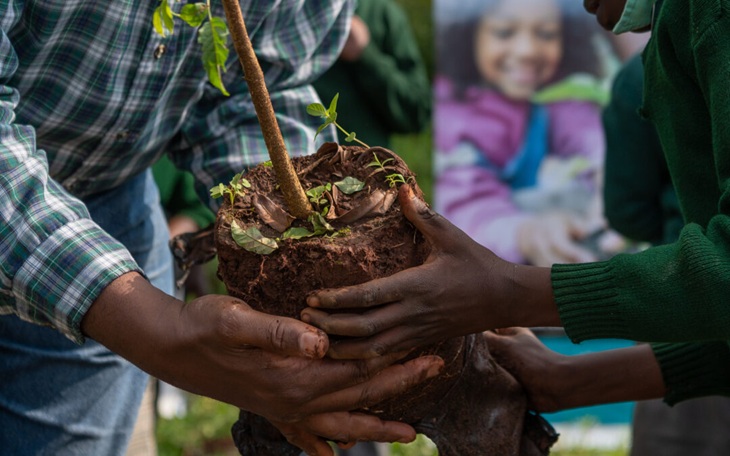
A school with empty desks is one of the saddest things a community can see. A school with a waiting list is a rather different problem—one headteachers might be forgiven for celebrating. At Oboch Primary School in Akala, Siaya County, the journey from the first situation towards the second began with something much simpler than artificial intelligence: classrooms fit for children.
The starting point was painfully ordinary
According to Safaricom’s 2026 Sustainable Business Report, Oboch Primary had mud-walled classrooms, unreliable access to water and meals prepared outdoors under trees. Parents were moving their children to other schools as confidence in the local institution fell. Enrolment had dropped to approximately 155 learners.

A classroom is not merely a building. It tells a child whether the adults around them expect them to succeed. It tells parents whether it is sensible to keep their children close to home. Without basic facilities, even the most determined teacher is forced to spend energy solving problems that should have been settled before the first lesson.
In September 2024, the M-PESA Foundation invested KSh 35 million in rebuilding the school. The work provided modern classrooms, sanitation facilities, water tanks, a smoke-free kitchen and a computer laboratory. The report says the laboratory gave many pupils their first opportunity to use a computer.
From 155 learners to about 380
The report states that enrolment later rose from roughly 155 to 380 learners, alongside improved attendance and greater confidence among pupils. The increase is striking, although it should be read as a reported before-and-after outcome rather than proof that every improvement was caused by one intervention alone.
Think about the family decision that sits behind each new enrolment. A parent who previously saw a school as a compromise begins to see it as a genuine option. The child walks into a place that looks prepared to teach them. The school becomes a source of community pride rather than a reminder of what is missing.
The computer laboratory adds a second layer to that story. Digital opportunity is often discussed as though it arrives fully formed inside a smartphone. For a young learner, opportunity can begin with the first mouse click, the first time they type their name or the first time the internet becomes something they can use for learning rather than a distant idea.
Why a school needs more than a laptop donation
A recurring mistake in technology projects is to confuse equipment with outcomes. A computer that has no power, no maintenance or no trained teacher becomes a very expensive ornament. An internet connection without educational content or support can be equally underused.
The bigger approach in Safaricom’s report links infrastructure to scholarships, learning, skills and long-term community programmes under Citizens of the Future. By FY2026 year-end, the programme had moved into implementation across 131 education facilities in 46 counties; seven had been completed, 65 were under construction and 28 were in planning or pre-construction.
The report also records first cohorts of 261 senior-secondary scholarship recipients, 355 Wezesha Vijana TVET scholarships and 409 scholarships through a University of Embu partnership. Those categories represent different pathways and should not automatically be treated as one unduplicated beneficiary total.
The return on investment is not only on a balance sheet
A country can count classrooms, computers, bursaries and construction milestones. It is harder—but far more important—to understand how those inputs change attendance, completion, confidence, skills and future earnings. Those are the outcomes long-term education programmes must continue to test.
Corporate participation is useful when it strengthens public education rather than replacing public responsibility. The state remains responsible for ensuring children can learn in safe and adequately equipped schools. Foundations and partners can accelerate progress, demonstrate working models and help communities close practical gaps.
Oboch’s story is powerful because it is not really about a corporate logo. It is about parents who regained confidence and children who gained a better place to learn. The best technology story may begin with a roof that does not leak—and end with a pupil who can finally imagine a wider world.
Read Also: The Matatu Conductor Has Competition—and It Isn’t Another Conductor

About Steve Biko Wafula
Steve Biko is the CEO OF Soko Directory and the founder of Hidalgo Group of Companies. Steve is currently developing his career in law, finance, entrepreneurship and digital consultancy; and has been implementing consultancy assignments for client organizations comprising of trainings besides capacity building in entrepreneurial matters.He can be reached on: +254 20 510 1124 or Email: info@sokodirectory.com

- January 2026 (220)
- February 2026 (248)
- March 2026 (287)
- April 2026 (207)
- May 2026 (193)
- June 2026 (240)
- July 2026 (283)
- August 2026 (226)
- September 2026 (261)
- October 2026 (253)
- November 2026 (269)
- January 2025 (119)
- February 2025 (191)
- March 2025 (212)
- April 2025 (193)
- May 2025 (161)
- June 2025 (157)
- July 2025 (227)
- August 2025 (211)
- September 2025 (267)
- October 2025 (297)
- November 2025 (230)
- December 2025 (220)
- January 2024 (238)
- February 2024 (227)
- March 2024 (190)
- April 2024 (133)
- May 2024 (157)
- June 2024 (145)
- July 2024 (136)
- August 2024 (154)
- September 2024 (212)
- October 2024 (255)
- November 2024 (196)
- December 2024 (143)
- January 2023 (182)
- February 2023 (203)
- March 2023 (322)
- April 2023 (297)
- May 2023 (267)
- June 2023 (214)
- July 2023 (212)
- August 2023 (257)
- September 2023 (237)
- October 2023 (264)
- November 2023 (286)
- December 2023 (177)
- January 2022 (293)
- February 2022 (329)
- March 2022 (358)
- April 2022 (292)
- May 2022 (271)
- June 2022 (232)
- July 2022 (278)
- August 2022 (253)
- September 2022 (246)
- October 2022 (196)
- November 2022 (232)
- December 2022 (167)
- January 2021 (182)
- February 2021 (227)
- March 2021 (325)
- April 2021 (259)
- May 2021 (285)
- June 2021 (272)
- July 2021 (277)
- August 2021 (232)
- September 2021 (271)
- October 2021 (303)
- November 2021 (364)
- December 2021 (249)
- January 2020 (272)
- February 2020 (310)
- March 2020 (390)
- April 2020 (321)
- May 2020 (335)
- June 2020 (327)
- July 2020 (333)
- August 2020 (276)
- September 2020 (214)
- October 2020 (233)
- November 2020 (242)
- December 2020 (187)
- January 2019 (251)
- February 2019 (215)
- March 2019 (283)
- April 2019 (254)
- May 2019 (269)
- June 2019 (249)
- July 2019 (335)
- August 2019 (292)
- September 2019 (306)
- October 2019 (313)
- November 2019 (362)
- December 2019 (318)
- January 2018 (291)
- February 2018 (213)
- March 2018 (275)
- April 2018 (223)
- May 2018 (235)
- June 2018 (176)
- July 2018 (256)
- August 2018 (247)
- September 2018 (255)
- October 2018 (282)
- November 2018 (282)
- December 2018 (184)
- January 2017 (183)
- February 2017 (194)
- March 2017 (207)
- April 2017 (104)
- May 2017 (169)
- June 2017 (205)
- July 2017 (189)
- August 2017 (195)
- September 2017 (186)
- October 2017 (235)
- November 2017 (253)
- December 2017 (266)
- January 2016 (164)
- February 2016 (165)
- March 2016 (189)
- April 2016 (143)
- May 2016 (245)
- June 2016 (182)
- July 2016 (271)
- August 2016 (247)
- September 2016 (233)
- October 2016 (191)
- November 2016 (243)
- December 2016 (153)
- January 2015 (1)
- February 2015 (4)
- March 2015 (164)
- April 2015 (107)
- May 2015 (116)
- June 2015 (119)
- July 2015 (145)
- August 2015 (157)
- September 2015 (186)
- October 2015 (169)
- November 2015 (173)
- December 2015 (205)
- March 2014 (2)
- March 2013 (10)
- June 2013 (1)
- March 2012 (7)
- April 2012 (15)
- May 2012 (1)
- July 2012 (1)
- August 2012 (4)
- October 2012 (2)
- November 2012 (2)
- December 2012 (1)