


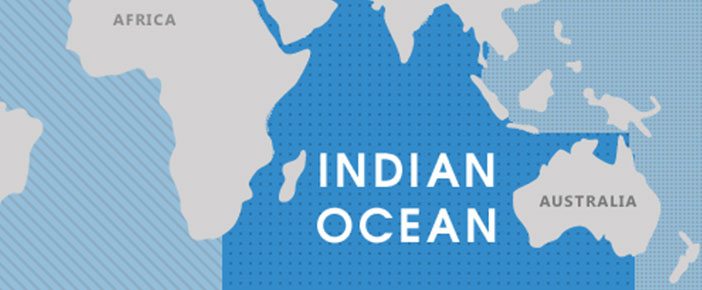
The International Court of Justice in The Hague will decide on who owns the Indian Ocean.
Somalia wants the ICJ to define the boundary as laid down by the United Nations Convention on the Law of the Sea and other international sea laws.
The Kenyan government, however prefers the border demarcation. In 2012, Kenya opened eight new offshore blocks for sale to corporations, including L-5, L-21, L-22, L-23, L-24, and L-25 within the disputed territory.


Follow the case and historical background here.
AG @Githumuigai urges International Court of Justice to throw out maritime case by Somalia; tells Hague court two countries have valid MOU
— Rob N Jillo (@robjillo) September 19, 2016
Why Politicians in Africa’s Key Economies Aim at Central Banks
Ghana, Kenya, Nigeria and South Africa are set to announce interest-rate decisions this week in an environment marked by accelerating price growth and an economic slump in some countries and attempts by politicians to prescribe policy in others. While Nigeria’s central bank will probably take more aggressive action, South Africa, Kenya and Ghana are set to keep rates on hold, according to analysts surveyed by Bloomberg.
All over the world, people escape poverty by moving to cities. Why does this not work so well in Africa?
In Kenya and Africa, Urbanisation has not been driven by increasing agricultural productivity or byindustrialisation[Sd1] . African cities (Nairobi included) are centres of consumption, where the rents extracted from natural resources are spent by the rich. Politicians across Africa often seem to see the poor as a problem to be swept away, rather than people whose lives need improving.
Africa leads in the pursuit of a sustainable ocean economy
Building on the momentum of COP21 and the Africa Climate Business Plan (ACBP), Africa is raising its voice to protect the huge assets and resources of coastal countries and island states while building a climate-smart ocean economy. It may be hard to reconcile these two, but it’s not impossible. We just took one more step towards COP22.
Global fund raises $12.9Bn to fight AIDS, TB and malaria
A global fund has raised over $12.9 billion from international donors as part of a campaign aimed at effectively eradicating AIDS, malaria and tuberculosis by 2030, conference organizers said on Saturday.
The Global Fund asked government, faith-based and private-sector partners to raise a total of $13 billion at a donor conference in Montreal to support its activities over the next three years, starting in 2017.