


Kigali is beating Nairobi, and Kilimanjaro in terms of airport capacity in terms of growth according to the analysis of International air travel to East Africa this year (January to August) by ForwardKeys, a company that predicts future travel patterns by crunching and analysing 14m booking transactions a day, reveals strong growth of 11.2% compared with the same period last year.
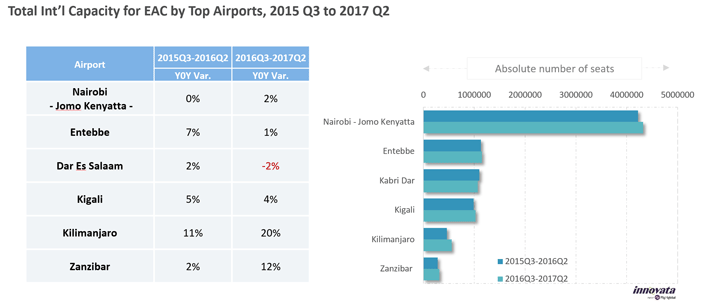
The analysis in a statement states that, “Looking at international capacity in the periods Q3 2015 – Q2 2016 and Q3 2016 – Q2 2017, Nairobi grew 0% and 2% respectively, Kigali 5% and 4% respectively and Kilimanjaro 11% and 20% respectively. Whilst a 2% growth for Nairobi may not sound so impressive, its capacity is around four times that of Kigali.



Looking at capacity for flights within East Africa in the periods Q3 2015 – Q2 2016 and Q3 2016 – Q2 2017, Nairobi grew 0% and 2% respectively, Kigali 13% and 5% respectively and Kilimanjaro 6% and 14% respectively.”
Read:
- Kenya Airways to Benefit from Sita’s Fast Connectivity on its Route
- Without Kenya Airways There is no Tourism – Tourism CS
- Kenya Airways Q1 capacity within Africa increase by 15 percent
The data has been released ahead of AviaDev, a new airline route development conference and AHIF, Africa’s highest profile hotel investment conference, which run concurrently in Kigali from 4-6 October 2016.
Jonathan Worsley, Chairman of Bench Events, which is organising AHIF and AviaDev, said, ““If what is happening in Rwanda becomes a yardstick against which other East African countries measure themselves, I would expect this strong growth to continue. There, a new airport is under construction 25km outside Kigali, with the ability to cater for 4.5 million passengers/ year, seven times today’s traffic.”
Olivier Jager, CEO, ForwardKeys, said: “We are seeing a tale of two Africas, with North African countries suffering from political instability and terror activities and Sub Saharan African countries powering ahead, with Ethiopia up 9.6%, Tanzania up 10.6%, Mauritius up 11.6% and Kenya up 14.9%. South Africa is up 11.4%”