Treasury bill subscriptions remained high during the month of November according to the Cytonn Investments report, with overall subscriptions increasing to 121.7 percent, from 112.6 percent in the month of October.
Yields on T-bills were on an upward trend in November, closing the month at 8.3, 10.4 and 10.8 percent respectively, from 8.0, 10.3 and 10.6 percent respectively in the month of October for the 91, 182 and 364-day papers, respectively.
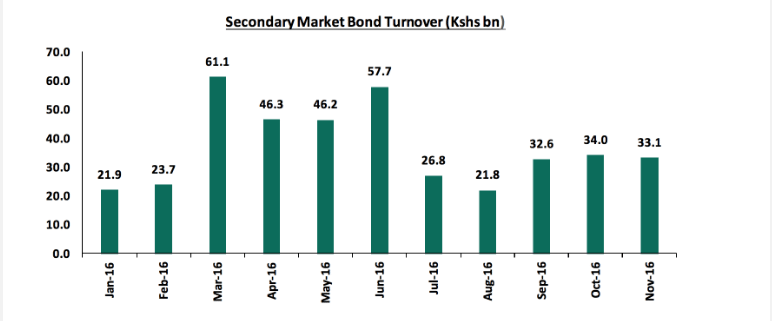
According to the report, the levels of T-bill subscription have started declining, with last week’s overall subscription decreasing to 105.5 percent compared to 113.5 percent recorded the previous week, with the subscription rates on the 91, 182 and 364-day papers decreasing to 141.6, 113.4 and 73.6 percent respectively from 147.8, 115.6 and 88.6 percent respectively, as a result of investors looking to lock-in attractive yields in the secondary bonds market.


Despite the drop experienced in subscription levels during the week, yields on the 91, 182 and 364-day T-bills were on an upward trend, coming in at 8.4, 10.5 and 10.9 percent respectively from 8.3, 10.4 and 10.8 percent respectively the previous week. The 182-day paper continues to offer the highest return on a risk-adjusted basis, but investors are now keeping short.
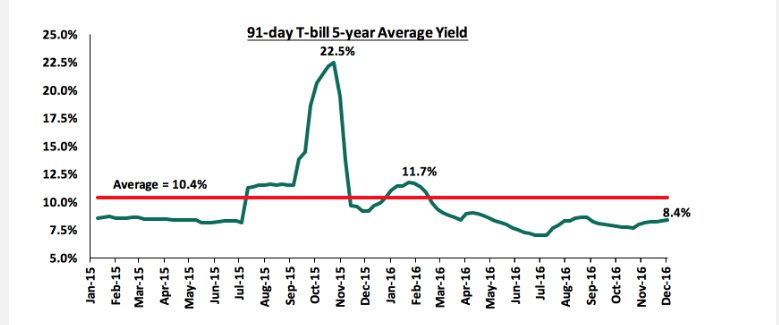
The 91-day T-bill is currently trading below its 5-year average of 10.4 percent. The decline on the 91-day paper is largely attributed to the expected low interest rate environment as a result of:
- Reduced pressure from the government borrowing program, given they are ahead of their pro-rated domestic borrowing target.
- Increased liquidity in the market brought about by the enactment of the Banking (Amendment) Act, 2015.
The government has this far borrowed 147.3 billion shillings domestically, against a pro-rated target of 101.6 billion shillings considering the current domestic borrowing target of 229.6 billion shillings. The government is also in the process of revising its domestic borrowing target upwards to 294.6 billion shillings, which if passed by Parliament will take the pro-rated borrowing target to 130.3 billion shillings, meaning that the government will still be ahead of the borrowing target.
During the month, the Kenyan Government re-opened two bonds, a 15-year and 20-year with effective tenors of 6.0 years and 11.6 years, respectively, to raise a combined 30.0 billion shillings for budgetary support with yields on the bonds came in at 13.6 and 14.3 percent respectively.