


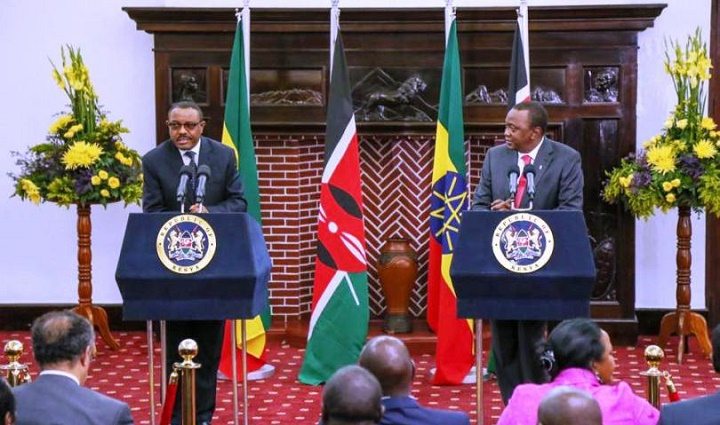
Kenya and Ethiopia have signed a cross-border integrated programme that seeks to foster sustainable peace and socio-economic transformation along their common border.
According to Treasury Cabinet Secretary, Henry Rotich, successful implementation of the programme will address a lot of challenges that are being faced in the region. The agreement has come in amidst a water conflict between the neighboring East African nations due to the receding water resources along their common border.
“The uniqueness of the program is that it addresses transformative change and resilience building in a coordinated way. The programme is bringing together national/regional governments, local governments, and partners around strategic priorities of the region,” said Rotich.


Marsabit Governor Ukur Yattani, said the Cross Border Programme for Sustainable Peace and Socio-Economic Development, “will be an example to the region and the world.”
“I am glad to report that as a county we have made significant progress. Our communities harmoniously co-exist and are focused on solving our myriad social economic problems,” said Governor Yattani.
Turkana County Governor Josephat Nanok said that the Fund will accelerate the pace of development in the county.
“We have identified our development priorities in the County Integrated Development Plan (CIDP). This fund will, therefore, help us fill up the resource gaps that exist in our planning,” he said.
Kassa Tekleberhan, Ethiopia’s Minister of Federal Affairs and Pastoralist Area Development signed the agreement for the Ethiopian side and he asked partners to be at the forefront in ensuring that the program turns out successful.
“I call upon the regional and local administrators of the two countries to exert your utmost effort to mobilise local resources to the implementation of prioritized projects since the external support only serves as catalysts for our indispensable roles,” said Tekleberhan.
The European Union head of mission Stephano Dejak disclosed that the EU had already approved 7.3 billion shillings for the programme which will be disbursed in four years across the intended regions.
“The signing will effectively give way to an intensive and extensive resource mobilization exercise,” said Dejak.
The road map outlines key components of the document as well as stages of development to be taken into account so that a new, effective framework aligned to Kenya’s Vision 2030 exists by the time the current one, United Nations Development Assistance Framework (UNDAF) 2014-2018, expires in July, 2018.