


The Kenya Shilling depreciated by 0.2 percent to the USD during the month of May to close at 103.4 shillings from 103.2 shillings in April according to an analysis done by Cytonn Investments Limited.
The weakening of the Kenyan shilling during the month of May was primarily driven by dollar demand from oil and retail importers. On a year to date basis, the shilling has depreciated against the dollar by 0.9 percent.
In the coming months, given the high forex reserve level, currently at USD 8.2 billion (equivalent to 5.4 months of import cover), and the IMF having maintained Kenya’s precautionary credit facility at USD 1.5 billion (equivalent to 1.0 more month of import cover) that Kenya can draw on in case of any balance of payment emergencies, Cytonn Investments believes that the shilling should remain stable.


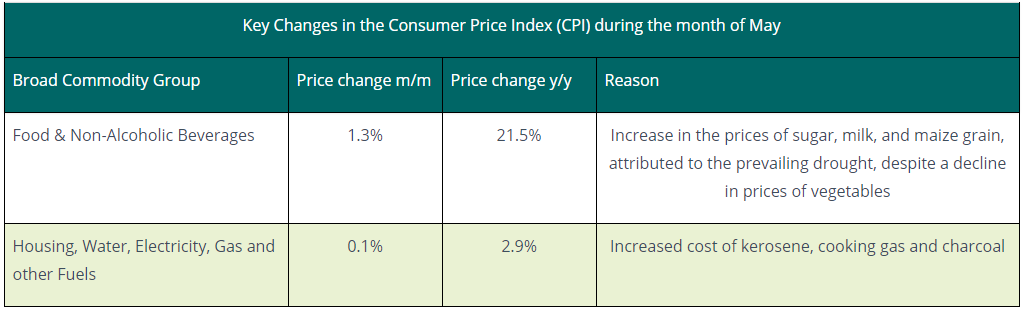
The Inflation Rate for May
The inflation rate for the month of May increased by 20 bps to 11.7 percent from 11.5 percent recorded in the month of April.
The slight rise was driven by:
- An increase in food prices, which rose 1.3 percent m/m from 3.6 percent in April
- An increase in housing, water, electricity, gas and other fuels, which rose 0.1 percent m/m from 0.6 percent in April.
Financial experts expect inflationary pressures to stabilize at current levels given:
- The food component of the CPI basket is expected to decline slightly, with depressed rainfall witnessed in the long rains season between March and May, which has served to ease the drought situation
- Rising US oil production, which has suppressed the global recovery of oil prices following OPECs decision to extend the deal to cut down on oil production.