Mixed-use developments place Nairobi on global map – Knight Frank
Soko Directory Team
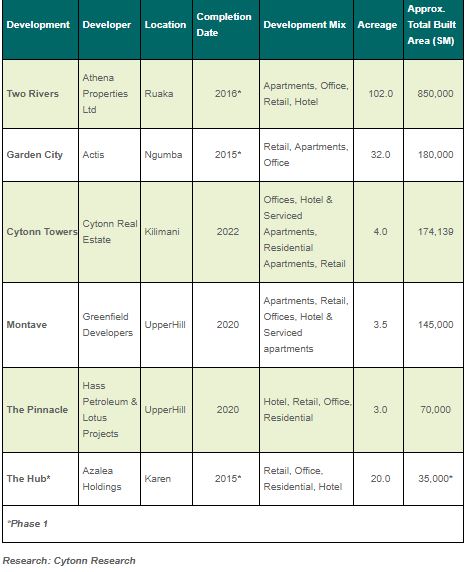
The continued development of mixed-use real estate projects has placed Nairobi among key global cities reducing the overall commute time. “The concept of live-work-play mixed-use developments is rapidly catching on, with a number of projects offering office, residential and retail elements within one scheme,” says Ben Woodhams, Managing Director, Knight Frank Kenya in the fourth edition of the Global Cities – The 2018 Report. Nairobi’s integrated mixed-use developments include Garden City by Actis on Thika Road, which has a high-quality shopping mall with blocks of high-end apartments and offices under construction. The model is set to be mirrored by Centum’s Two Rivers development, and The Pinnacle, which recently broke ground in Upper Hill. These developments, among others coming up, demonstrate that Nairobi is keeping with the global trend where work and home life are coming together in mixed-use schemes. Nairobi and Dubai are among cities emulating mature markets such as London, San Francisco, New York and Miami where the development of mixed-use projects is relatively advanced. According to Woodhams, “Nairobi, like many regional hubs in emerging markets, has a rapidly expanding population and the city’s infrastructure struggles to keep pace. One challenge that this creates is traffic, which means a large amount of time is spent sitting in the numerous tailbacks that occur in and around the city.” As the main reason for the shift. In other parts of the city, simple solutions are being used to create mixed environments by linking separate neighbourhoods, further illustrating the growing desire for people to walk to work. For example, a new footbridge over Nairobi River now connects 14 Riverside Drive, a commercial development, with Riverside Park which is a prime residential development.
The fourth edition of the Global Cities report, which has just been published, says there is a growing focus by city authorities and private developers worldwide to create true mixed-used use environments that provide seamlessly for living, working and leisure. “This process has been encouraged by shifts in economic activity, for example, the redevelopment of former industrial and dockland districts near city centres, and rising competition between businesses as they look to attract and retain talent,” the report notes. Key economic forecasts indicate support for future growth of mixed-use environments, including a rise in the overall numbers of employees in cities; an increase in the incomes of these employees (notably in cities across developing economies); and an enhanced desire to spend incomes in ways that support the successful expansion of these environments. The Global Cities 2018 report notes that urban environments will be influenced by the ways in which the rising incomes are spent and this will fuel demand for mixed-use developments in cities over the next decade. In Nairobi, for instance, the total spend in restaurants—and eating out more broadly—is anticipated to rise by 77 percent from US$848 million in 2017 to US$1.5 billion over the next decade.