


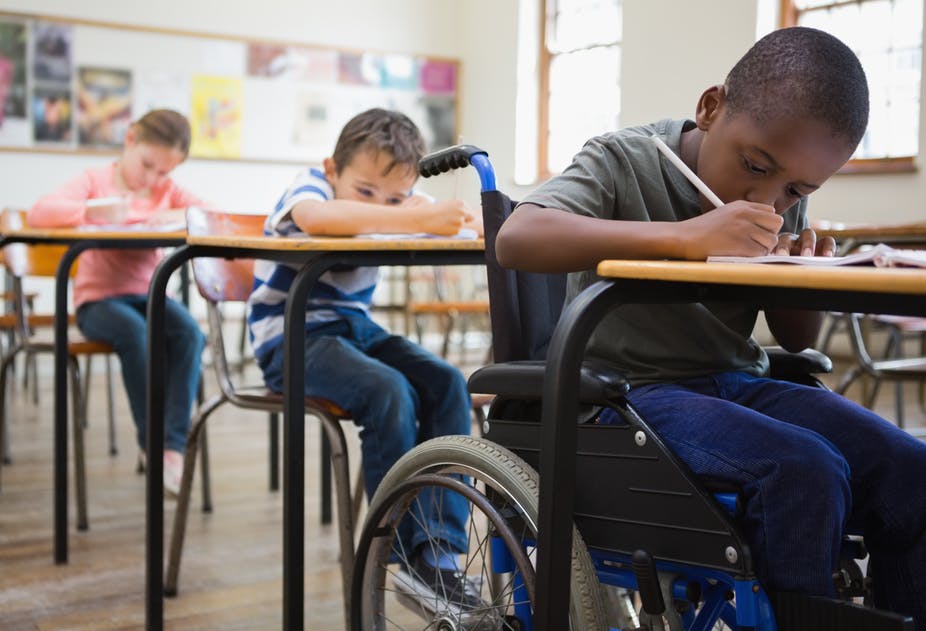
Inclusive education has not been well embraced in Africa as less than 10 percent of children living with disability get a chance to attend school in the region compared to their peers without disability.
According to the World Report on Disability (2011), 6.4 percent of children under the age of 14 live with disabilities in Africa.
These children are at a higher risk of dropping out of school since they have fewer opportunities to participate and achieve a quality education.


World Bank, in collaboration with United States Agency for International Development (USAID), UNICEF and the Government of Kenya took the initiative to conduct a Technical Learning Session on Inclusive Education in Nairobi.
The learning session is aimed at promoting solutions and increase knowledge of effective disability inclusive education planning, financing and implementation in sub-Saharan Africa.
The event set to share knowledge and capacity building for effective disability inclusive education planning and practices in Africa brings together development partners as well as civil society and Ministry of Education representatives from the Gambia, Senegal, Lesotho, Ghana, Zambia, Liberia, Ethiopia, Tanzania, Kenya, Malawi, Uganda, and Rwanda.
“Kenya is committed to ensuring that all children, regardless of their abilities or disabilities, get the same opportunity of accessing quality education services in an inclusive manner, not just because our laws and international obligations require that we do so, but also because the society itself is inclusive and therefore it is the right thing to do,” said Amb (Dr.) Amina Mohammed, Kenyan Cabinet Secretary of Education.
World Bank Country Director for Kenya Carlos Felipe Jaramillo noted that inclusive education meant that all children, no matter who they were, can learn together in the same school adding that the importance of quality inclusive education is to leave no one behind and that it is the cornerstone for providing a brighter future for all young Kenyans.
“In many countries, disability inclusive policy, education planning, and implementation remains aspirational. We must collaborate, coordinate, share technical expertise and resources to move along the path of creating equitable and quality inclusive education for all, including children with disabilities,” said Charlotte McClain-Nhlapo, World Bank Global Disability Advisor,
Despite major progress made around the world towards Education for All, significant gaps remain in ensuring that children with disabilities access school, stay in school, and achieve quality learning outcomes that prepare them for educational growth and life.