


Damaris Mabeya
In Less Developed Countries (LDCs), the death rate due to cervical cancer is high and it comes second after breast cancer as a killer disease.
Cervical Cancer is a malignant tumor that occurs in the cervix and is classified into two histological types. The squamous cell carcinoma and adenocarcinoma.


The statistics have been dropping since the mid-1970s to the mid-2000s due to an increase in screening. This detects and curbs any form of cervical cell changes before they turn cancerous.
The 5-year survival rate for all women with cervical cancer is 66 percent, this shows that 66 women out of 100 live for at least five years after the cancer is diagnosed.
The percentage of women still alive for a given period of time after diagnosis (survival rate) varies depending on:
a) Age – For women age 50 and older, the 5-year survival rate is 46 percent.
b) Stage of Cervical Cancer detection.
Localized: The survival rate is 92 percent. It means that if cancer is detected early, while it’s still confined to your cervix and uterus.
Regional: This is the second stage of cancer which has a 58 percent survival rate. In this stage cervical cancer has spread to your uterus and nearby lymph nodes.
Distant: This is the third stage of cancer and it has a 17 percent survival rate. Cervical cancer has spread to parts of your body that aren’t close to your cervix. All stages of cervical cancer combined have a 66 percent survival rate.
Despite cervical cancer being curable and easily noticeable in the early phase, less than 5 percent of women in LDCs go for a routine check-up, an exact opposite in that the 70 percent reduction rate in other countries is due to regular screening for the cancer cells.
Only 3.2 percent of women are reported to have undergone screening in Africa (WHO, 2010). WHO Cervical screening guidelines advise that every woman should begin cervical cancer screening at age 25 and have a pap smear test every 3years between the age of 25-65years.
Kenya has a population of 13.45 million women ages 15 years and older who are at risk of developing cervical cancer. Current estimates indicate that annually 5,250 women are diagnosed with cervical cancer and 3,286 dies from the disease (HPV Information Centre).
According to the Kenya Stepwise survey for NCDs Risk Factors 2015 report (KNBS, 2015), only 16.4 percent of women aged 30 – 49 years had ever been screened for cervical cancer. Cancer of the cervix is easily avoidable by way of vaccination before it sets in using the HPV vaccine.
Lack of knowledge about cancer of the cervix remains a critical barrier in women’s access to screening services (HPV Information Centre).
Factors associated with cervical cancer screening: different aspects related to screening for cancer of cervix knowledge, attitude, and practice. Age was a significant factor in accessing cervical cancer screening services.
Women aged between 25-34 years had higher chances of screening compared to those aged 45 years and older. Socioeconomic factors also play a significant role in access and utilization of screening services, Females who were financially independent, who have formal education, and aged 25-34 have a higher affinity to access cancer screening services (WHO 2010).
Barriers to Cervical Cancer screening:
a) Fear of positive outcomes that one might be diagnosed with cancer.
b) Perception that it is a painful process.
c) Lack of awareness of where to be screened.
d) Fear of the examination process.
e) Lack of time to go for screening.
f) Perception that it is an embarrassing process.
g) The feeling that one is healthy and did not need to be screened.
Kenya has at least35 oncologists for 40 million people. This means there are more than 3,000 cancer cases for each oncologist in Kenya, compared to less than 150 in the US and China. (Journal of Global Oncology).

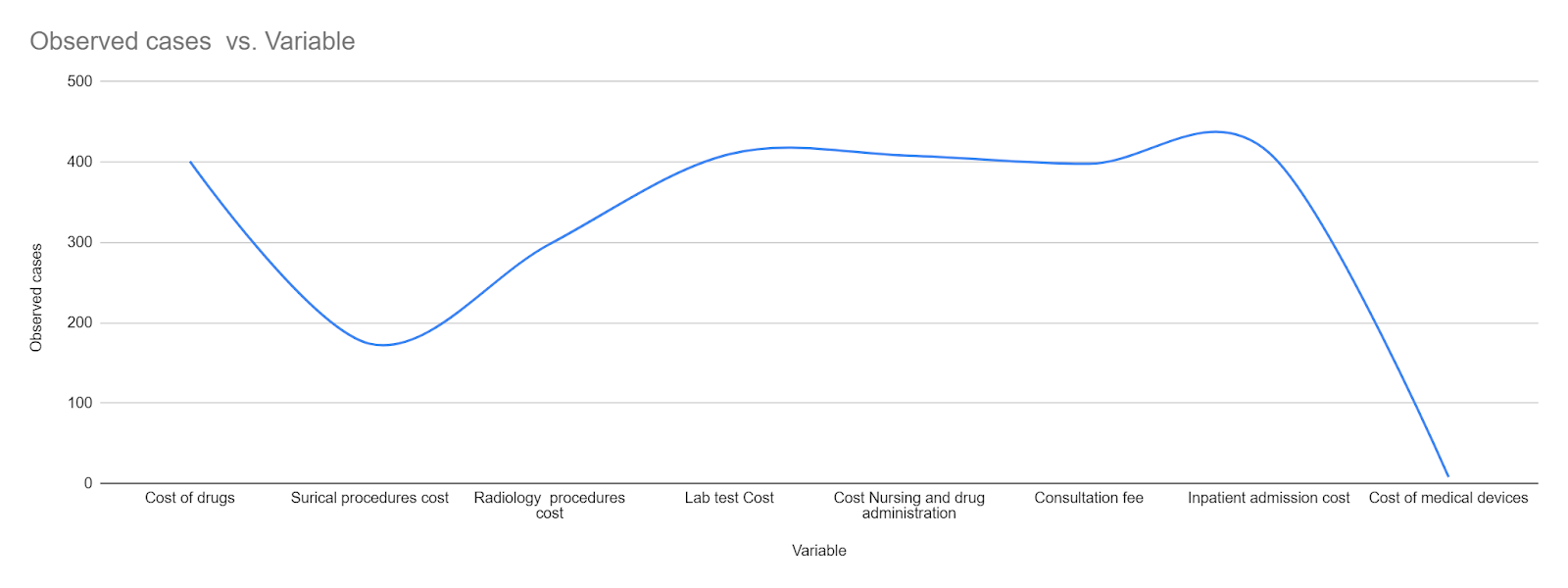
Screening programs continue to have a vital role, allowing for early detection and treatment to achieve a maximal impact on cervical cancer prevention.
When screening detects precancerous lesions, these can easily be treated and cancer avoided. Screening can also detect cancer at an early stage, enabling women to receive treatment when it is highly effective (WHO, 2014).
While the screening program will be introduced incrementally depending on health service capacity, the ultimate goal is to screen at least 70 percent of women, nationally, within the target age group within 10 years of initiating the program (IAEA, 2016).
Data (HPV Info Centre) Burden of Cervical Cancer (Kenya). Incidence Mortality Annual number of new cases/deaths 5250 3286 Crude rate 20.5 12.8 Age-standardized rate 33.8 22.8 Cumulative risk 0-74 years (%) 3.7 2.6 Incidence: is the occurrence, rate, or frequency of a disease. Mortality: is a measure of the frequency of occurrence of death in a defined population during a specified interval.
Cervical cancer is fully preventable and curable, at low cost, and at low risk when screening to facilitate the timely detection of early precursor lesions in asymptomatic women is available together with appropriate diagnosis, treatment, and follow-up, however, in its advanced stages managing cancer can be really expensive.
A hospital like Marie Stopes conducts cervical cancer screening which detects abnormal cells in the cervix. It isn’t a cancer test in itself but it can detect abnormal cells that could lead to serious problems like cervical cancer.
Read More: Patients To Benefit From Ksh 8 Billion Kitty Under Breast Cancer Research Foundation