


T-bills remained undersubscribed, with the overall subscription rate coming in at 87.4 percent, up from 65.7 percent recorded the previous week.
The 91-day paper recorded the highest subscription rate, receiving bids worth 4.5 billion shillings against the offered 4.0 billion shillings. This translated to a subscription rate of 113.3 percent, a decline from the 126.9 percent recorded the previous week.
The subscription rate for the 182-day and 364-day papers increased to 112.2 percent and 52.3 percent, from 55.2 percent and 51.7 percent, respectively.


The yields on the Treasury Bills recorded mixed performance, with the 91-day and 182-day papers yields declining by 1.5 bps and 0.7 bps to 7.3, and 8.0 percent, respectively, while the yield on the 364-day paper increased by 7.3 bps to 9.2 percent.
The government continued to reject expensive bids, accepting 17.9 billion shillings of the 21.0 billion shillings worth of bids received, translating to an acceptance rate of 85.5 percent.
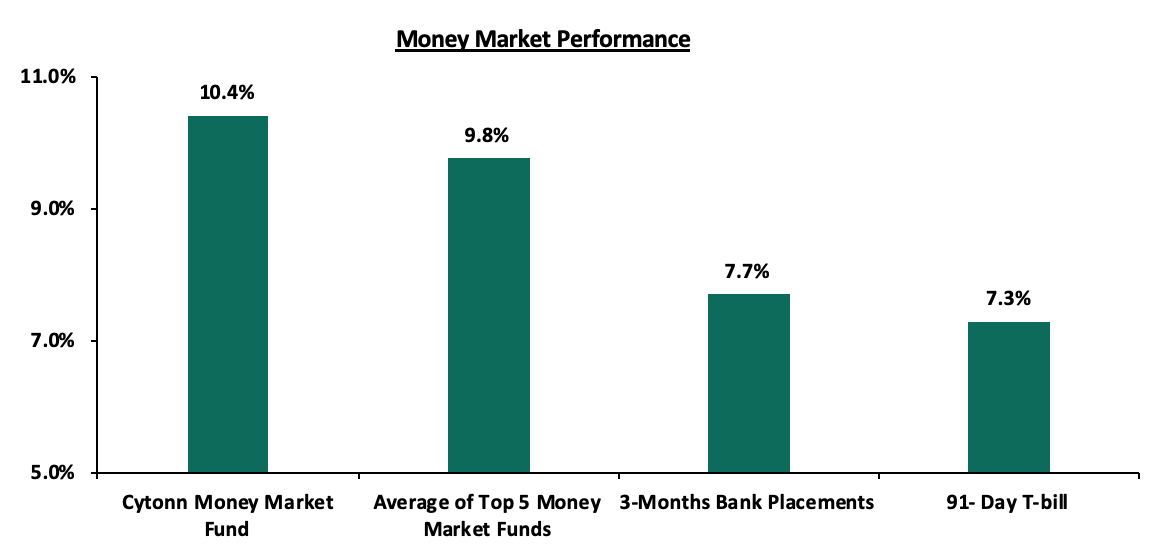

In the money markets, 3-month bank placements ended the week at 7.7 percent (based on what we have been offered by various banks), while the yields on the 91-day T-bill decreased by 1.5 bps to 7.3 percent.
The average yield of the Top 5 Money Market Funds remained relatively unchanged at 9.8 percent, while the yield on the Cytonn Money Market Fund decreased marginally by 0.1 percentage points to 10.4 percent, from 10.5 percent recorded the previous week.
During the week, liquidity in the money markets eased, with the average interbank rate declining to 4.3 percent from the 4.8 percent recorded the previous week, partly attributable to government payments, including Term Auction Deposits (TADs) maturities of Kshs 49.9 bn, which offset tax remittances and settlements of government securities.
The average interbank volumes traded increased by 203.6% to Kshs 19.7 bn, from Kshs 6.5 bn recorded the previous week partly attributable to the eased liquidity ahead of the upcoming festive season.