


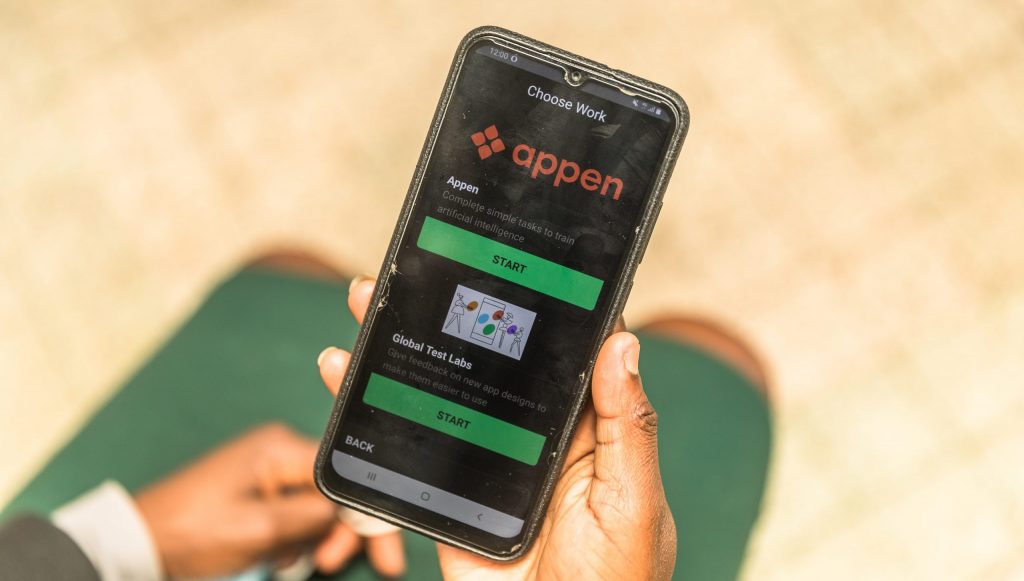
A new microwork pilot project in Kenya by Celo Foundation and Mercy Corps Ventures has demonstrated the potential of crypto micropayments to drive financial inclusion and save Kenya a lot in terms of cross-border remittances.
The pilot notes that blockchain and cryptocurrencies can create new digital employment opportunities while reducing the cost of cross-border micropayments, and incentivizing saving among low-income youth.
Digital microwork, global industry with an estimated size close to 1 billion dollars, is a form of digital labor that breaks up complex technical projects into thousands of fractional tasks that can be completed on a mobile phone within minutes.


Microwork has the potential to create jobs for gig workers of any skill level and boost employment for Africa’s booming youth population.
Research shows that in Kenya, Ghana, Nigeria, and Tanzania, females are more likely to be micro workers than males. The flexibility offered by microwork makes it more inclusive of women because it can be completed at home and during flexible hours, making it highly compatible with the multiple demands on women’s time.
Twenty-year-old Sarah Turuma, a pilot participant who lives in a low-income Nairobi settlement noted that the program has changed her life and overall view of online jobs…the pilot jobs served as good training for work on the open platform.
“The technologies are fast, easy to use, and efficient. The program came at a crucial time when many had lost their livelihood due to the Covid-19 pandemic and as such, it has been beneficial to all participants,” she said.
ALSO READ: Meta Launches Reels on Facebook to Help SSA Creators Make Money
However, one of the key challenges surrounding microwork is paying workers. Historically, cross-border payments have been costly, slow, and bureaucratic.
High transaction fees, especially for lower payouts, mean that micro workers often forfeit a significant portion of earnings (with a global weighted average cost of 4.71 percent but in some cases up to 30 percent of gross earnings).
Workers need to wait for a month to accumulate their earnings and justify the cost of the payment rail, which makes digital microwork unappealing, despite its potential to provide income.
“Cryptocurrency removes this costly barrier and has the potential to create new ways for young people to earn, spend, save and send money,” explains Scott Onder, Senior Managing Director, Mercy Corps Ventures.
“We trained 200 Kenyan youth to access digital microwork from global platforms using a mobile app and integrated Valora digital wallet, which is built on Celo. Our pilot tested how a stablecoin could reduce the costs and challenges of sending and receiving cross-border micropayments over a three-month period,” he added.
Participants were paid within a few seconds in Celo dollars (cUSD), a Celo-native stablecoin that tracks the value of the US dollar, with fees at approximately 0.01 dollars. Participants could then cash out anytime to Kenya’s ubiquitous mobile money platform, M-Pesa.
While the amount paid for a single task is small, young people could earn roughly 7.00 dollars a day – significant when the Kenyan urban earning average for low-income groups is 4.35 dollars per day.
The pilot proved that using cryptocurrency dramatically reduced the average transaction cost for microwork payments – dropping from 28.8 percent for a 5 dollar transaction to 2.02 percent, regardless of the transaction value.
This translates to a 93 percent reduction in transaction fees, drastically boosting participants’ daily take-home earnings.
“Our goal at Celo is to support an inclusive financial system that contributes to achieving prosperity for all,” says Will Le, Partner, Innovation, Celo.
By reducing financial frictions, this new model taps talent across borders, which was not previously possible with traditional financial infrastructure.
Cryptocurrency, and specifically stablecoins, could hugely reduce the cost of remittances and foster cross-border commerce. In 2020, remittances made up 3.13 percent of Kenya’s total GDP, totaling a value of over three billion dollars.
With global weighted average remittance costs at 4.71 percent, Kenyans receiving remittances are potentially losing out on over 80 million dollars per year.
ALSO READ: Stakeholders Push for Data and Tech Adoption to Enhance Africa’s Healthcare Supply Chain
Given that the average cost of remittances to the value of USD 200 is significantly higher than the global average (8.72 percent in sub-Saharan Africa versus 6.30 globally), the savings are potentially even greater.
If all those transactions only cost the 2.02 percent enabled during the pilot, the total potential impact to the Kenyan economy could be over 200 million dollars or 0.22 percent over Kenya’s overall GDP.
The Celo / Mercy Corps Ventures pilot project shows that talented, skilled young people in Kenya and beyond, regardless of their location, can generate income and participate in the global economy.