


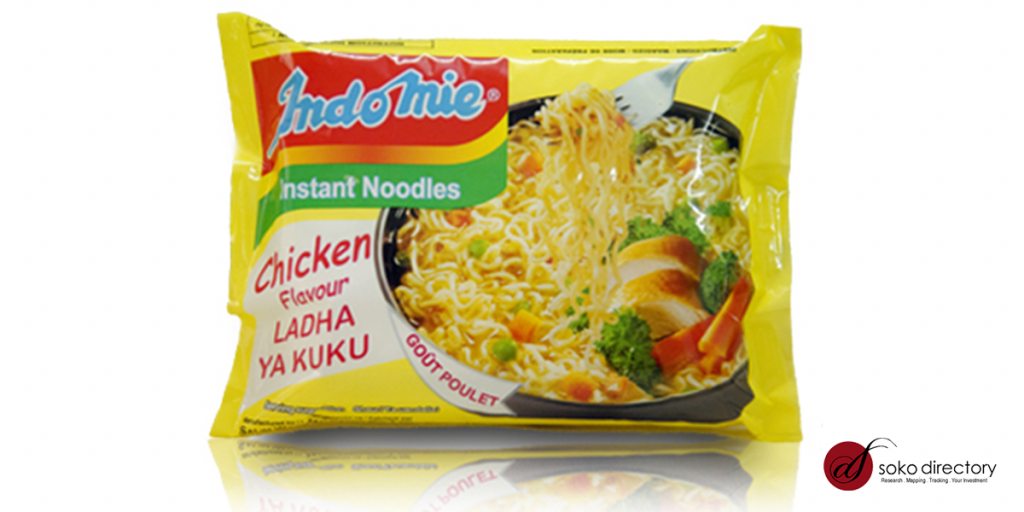
The Consumers Federation of Kenya (COFEK) has warned Kenyans against over-consuming Indomie following claims that the noodle product is unfit for human consumption.
“We advise consumers to refrain from either consuming and or purchasing any imported Indomie until necessary verification is conducted by the Kenya Bureau of Standards and other relevant agencies,” COFEK said in a statement on Wednesday.
This comes after some cartons of the popular noodle product were withdrawn from supermarkets and retail shelves in the Egyptian market over health concerns.


Egyptian authorities said last month that 733,340 cartons of different Indomie product flavors were withdrawn from the local market after they were found to contain a “proportion of aflatoxins and pesticide residues that exceed the safe limits allowed for human consumption.”
Among the flavors that were flagged and even recalled from the market include Indomie’s chili, chicken, and vegetable flavor packets.
Egyptian authorities further urged Indomie manufacturers to remove the claim written on the product packages regarding the benefits of vitamin B and mineral salts of iron, zinc, and calcium.
COMESA Competition Commission later earlier advised its member states including Kenya to stop the importation of the commodity.
The Kenya Bureau of Standards (KEBS) has initiated an investigation on the safety of the Indomie products sold in the Kenyan market, with COFEK urging the market suppliers in the country to keep the product out of supermarkets and shops pending the conclusion of tests.
“Meanwhile we shall draw samples for testing and if the contaminants are present, we shall withdraw the products from the market.” Kebs managing director Bernard Njiraini said.
Indomie is a popular brand of instant noodles produced by the Indonesian company Indofood. The company is the largest instant noodle producer in the world with 16 factories, which produce 15 billion packets of Indomie annually. Kenya-based Salim Wazaran Kenya – a subsidiary of the Indonesian giant noodle maker – supplies the product in Kenya.
The Indomie investigation by KEBS comes some weeks after the regulator laid some investigations on the popular chocolate product, Kinder Joy, by Italian candy maker Ferrero after some European markets withdrew the products from the supermarket shelves over salmonella fears.
In 2020, KEBS flagged 17 maize flour brands including African King, Unique, MLO, City Corn, Sarafina, Tosha, Shiba, Hakika Best, Budget, Wema, Jomba, Adardere Mupa, Afya, Uzima, Tetema, and Dola, over high levels of aflatoxin. In the previous year the quality agency, banned Dola, Kifaru, Starehe, Two Ten, and Jembe where Dola and the Kifaru were later allowed back to the shelves following the implementation of the required corrective actions ordered by the standards body.
According to the Cancer National Institute of the US, aflatoxins are a family of toxins produced by certain fungi that are found on agricultural crops such as maize, peanuts, cottonseed, and tree nuts. Human exposure to aflatoxins has been associated with an increased risk of liver cancer infection.