


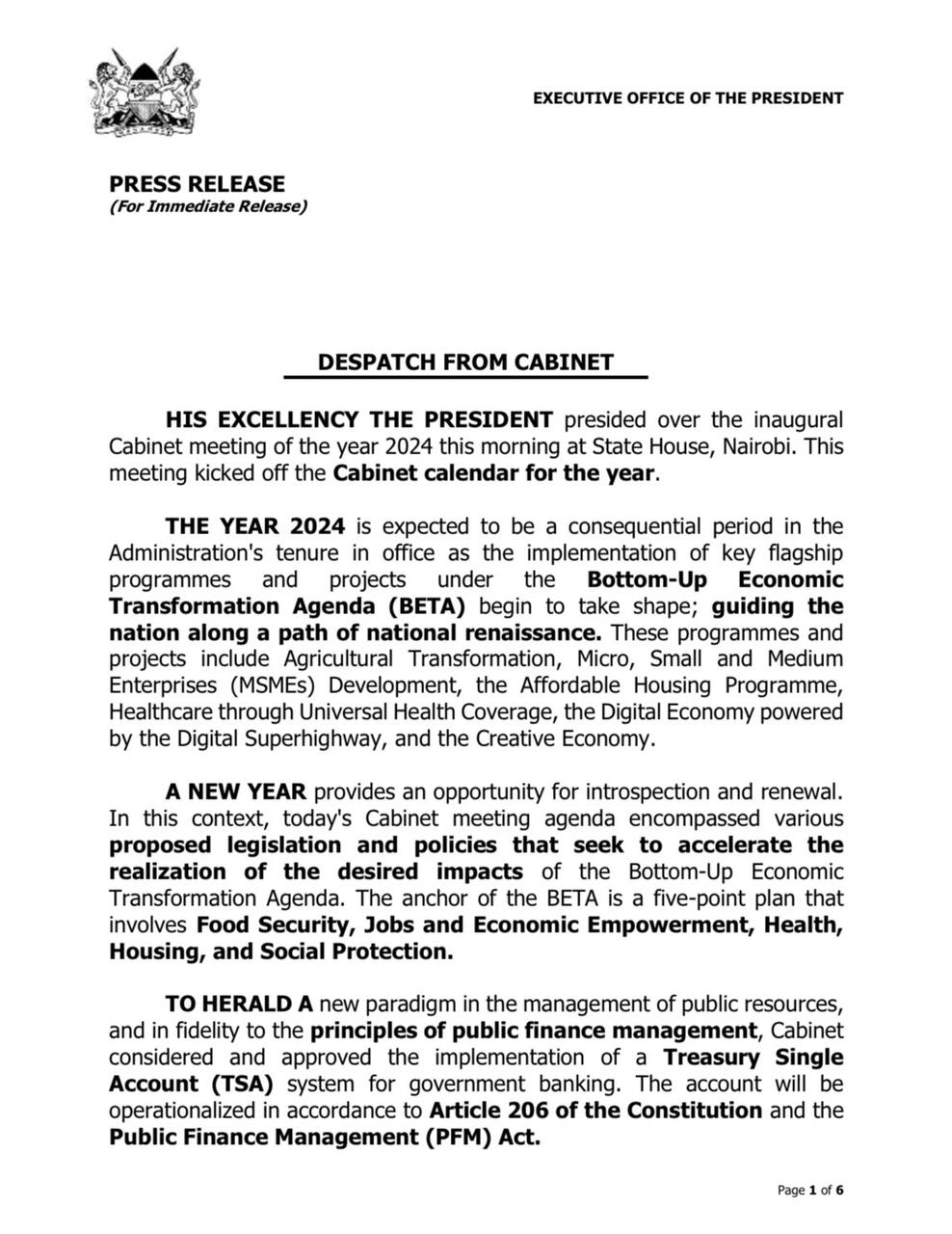
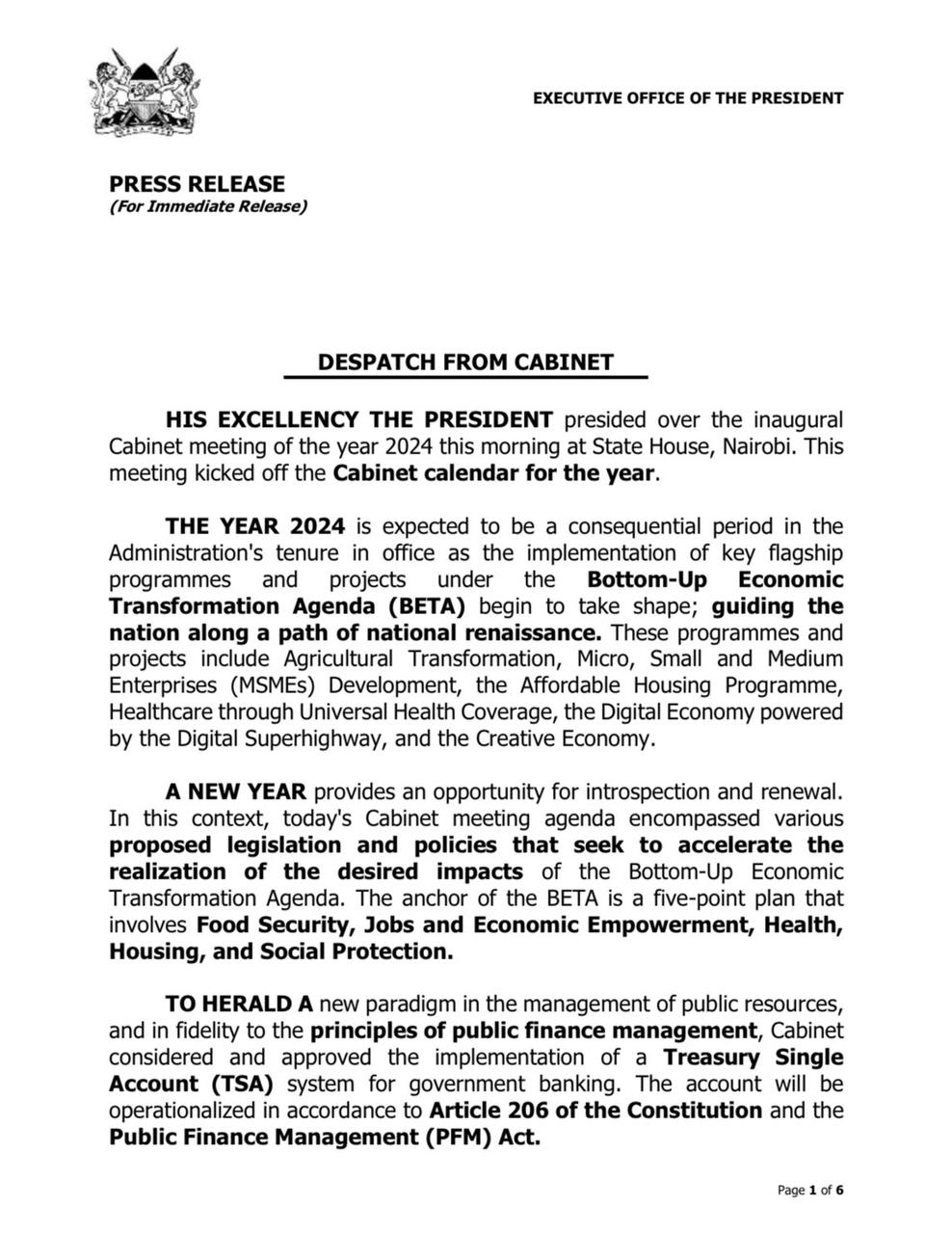
The Kenyan Cabinet, under the leadership of the President, has embarked on an ambitious path for the year 2024, unveiling a series of transformative policies and initiatives aimed at bolstering economic development and social welfare.
The Cabinet’s comprehensive agenda, popularly known as the Bottom-Up Economic Transformation Agenda (BETA), is a multi-faceted plan designed to address the nation’s pressing challenges and exploit emerging opportunities.
Read Also: Kenya’s Grim Reality: Escalating Homicides And Unchecked Gender Violence


Main Initiatives:
- Prior Learning Policy: This policy aims to bridge the gap between informal knowledge and formal recognition, potentially opening new opportunities for millions of Kenyans in the informal sector, also referred to as “Hustlers.”
- National Executive Retreat: An annual event that will include an assessment of progress across various ministries and the implementation of the BETA.
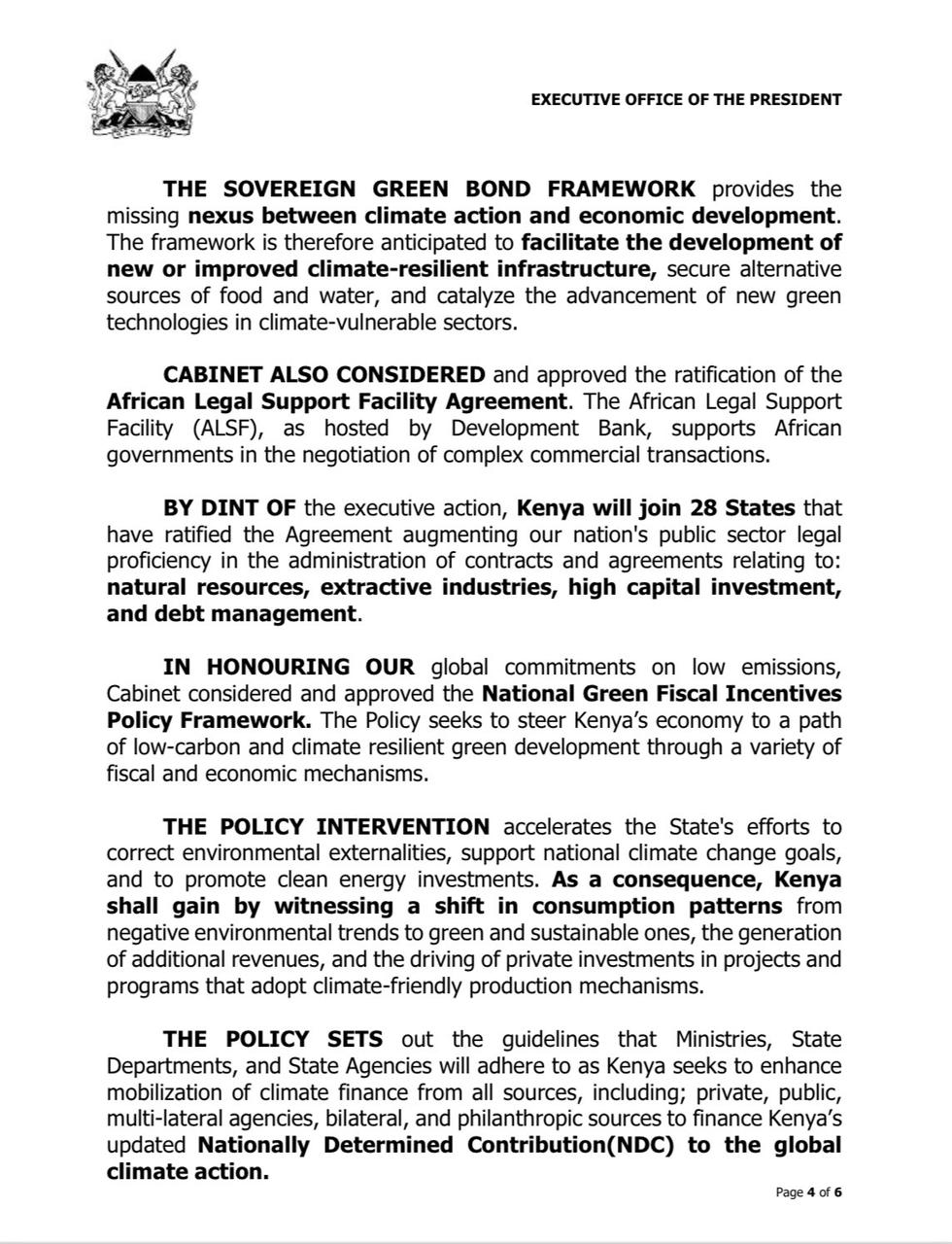
- Green Fiscal Incentives Policy: A strategic move to promote sustainable development and climate change mitigation through economic incentives.
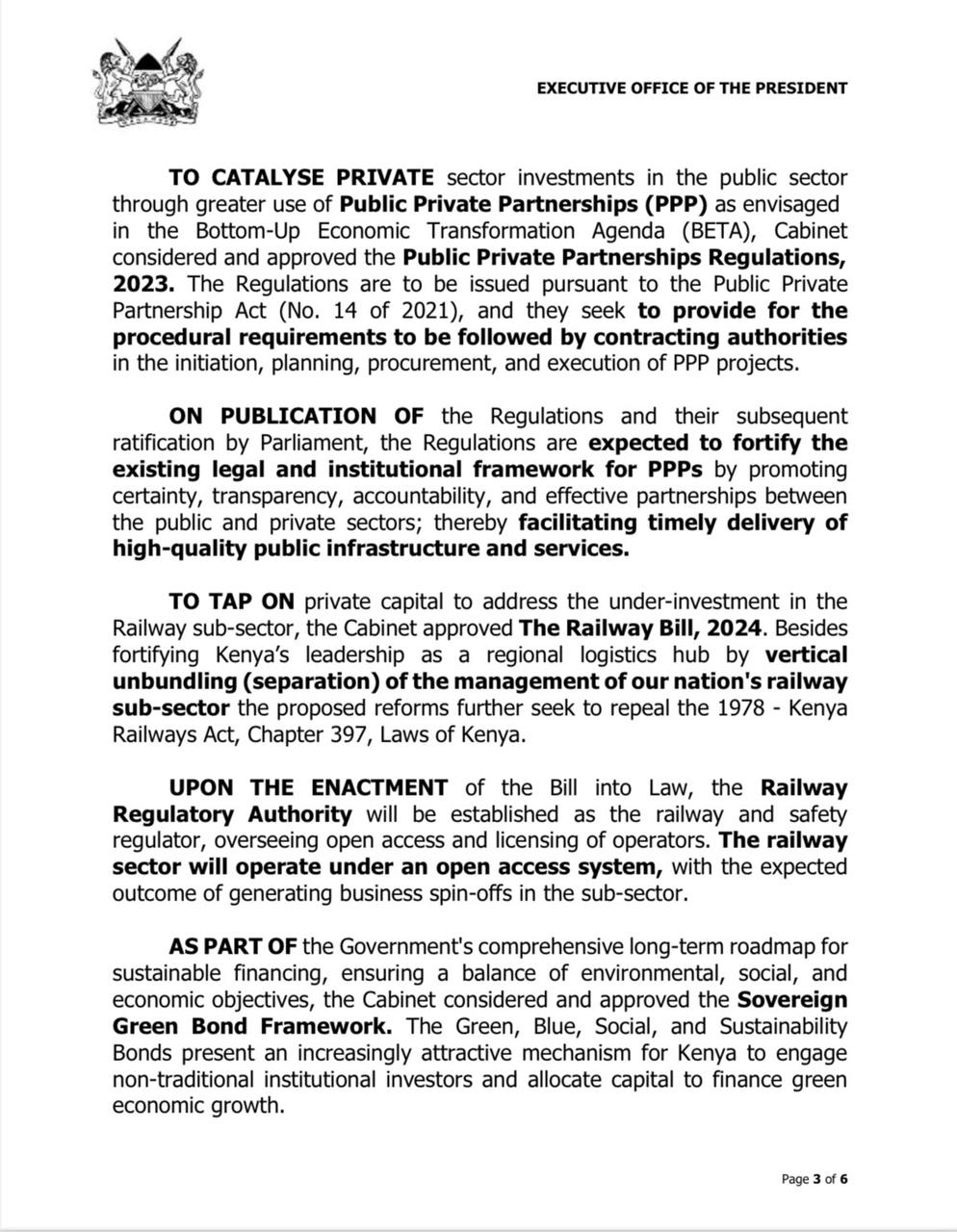
- Public-Private Partnerships (PPP): New regulations to enhance private investment in public projects, are expected to bolster high-quality public infrastructure and services.
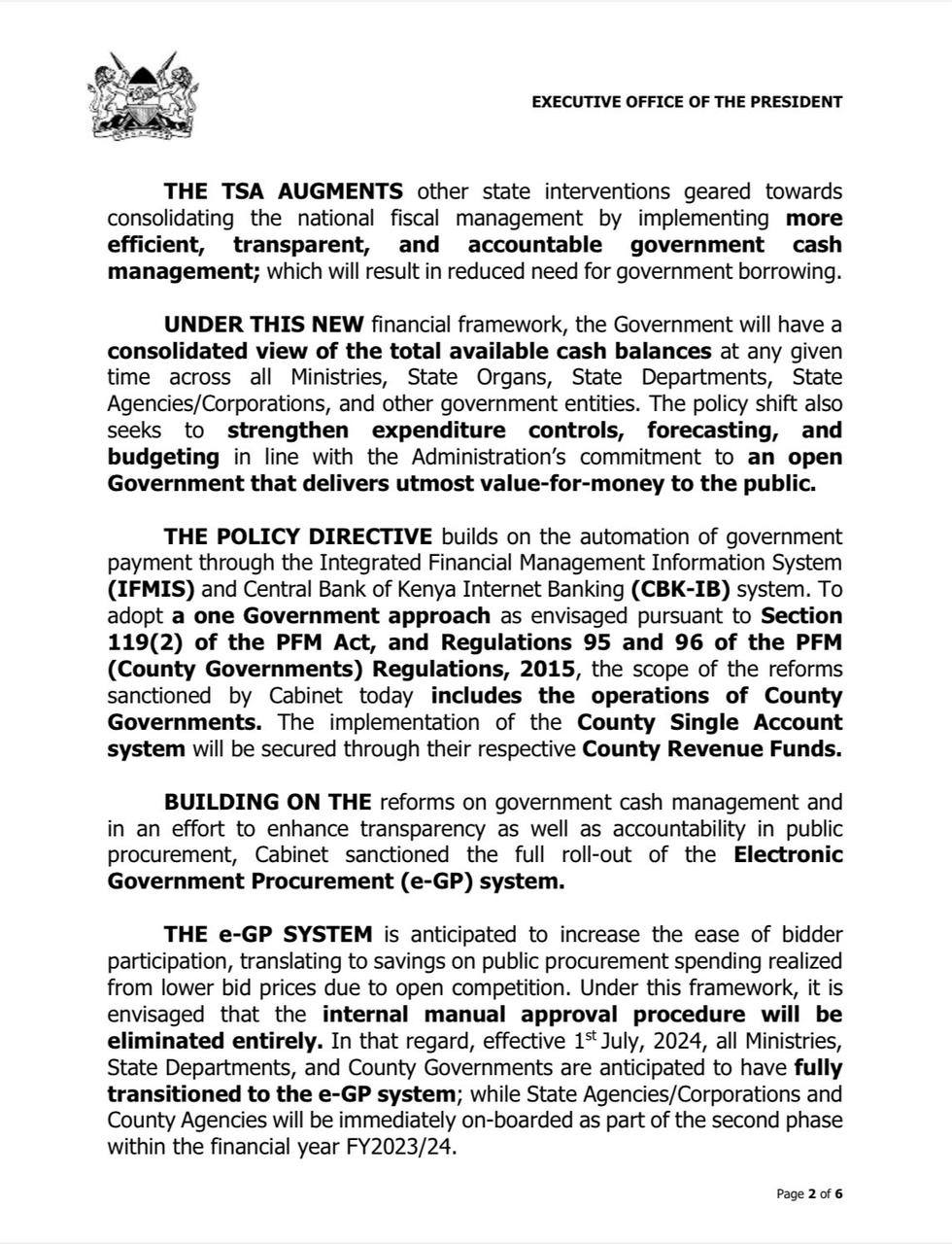
- Treasury Single Account (TSA): Implementation of a unified government banking system intended to enhance fiscal management and transparency.
- Electronic Government Procurement (e-GP) system: A digital procurement system to increase efficiency and reduce manual approval procedures.
- Sovereign Green Bond Framework: A financial instrument to attract investment in environmentally friendly projects.







Advantages:
The BETA is poised to catalyze economic empowerment, food security, health, housing, and social protection, which are critical for sustainable development.
By recognizing non-formal learning, the Prior Learning Policy could integrate a significant portion of the workforce into the formal economy.
The TSA and e-GP systems promise to streamline government operations, potentially leading to cost savings and reduced corruption.
The Green Bond Framework aligns with global sustainability goals, attracting eco-conscious investment.
Read Also: We Shall Resolve The Matter In 3 Days – Tanzania On Kenya Airways’ Flights To Dar
Disadvantages:
The successful implementation of these policies may be challenging, requiring extensive coordination and capacity-building across government entities.
There could be resistance from vested interests, particularly with the shift to new procurement and financial management systems.
The focus on large-scale projects and fiscal reforms might overlook the immediate needs of the most vulnerable populations unless carefully managed.
Implications:
The 2024 agenda of the Kenyan government could be a pivotal moment in the nation’s development trajectory. If successfully implemented, these initiatives could result in a more inclusive economy, improved public services, and a stronger position in the global effort against climate change.
However, the ambitious nature of the agenda presents significant execution risks, and the actual impact will depend on the government’s ability to deliver on its promises and manage the potential downsides effectively.
Kenya’s 2024 national agenda reflects a bold vision for the future, emphasizing a bottom-up approach to economic and social transformation. The blend of modern financial instruments, digital infrastructure, and inclusive policies holds the potential to create a robust, sustainable, and equitable economy. As with any major reform, the devil will be in the details of implementation, and the balance struck between innovation and inclusivity will ultimately determine the success of this ambitious endeavor.
Read Also: Balancing Power in Kenya: The Crucial Role of Judiciary Independence Amidst Executive Challenges