


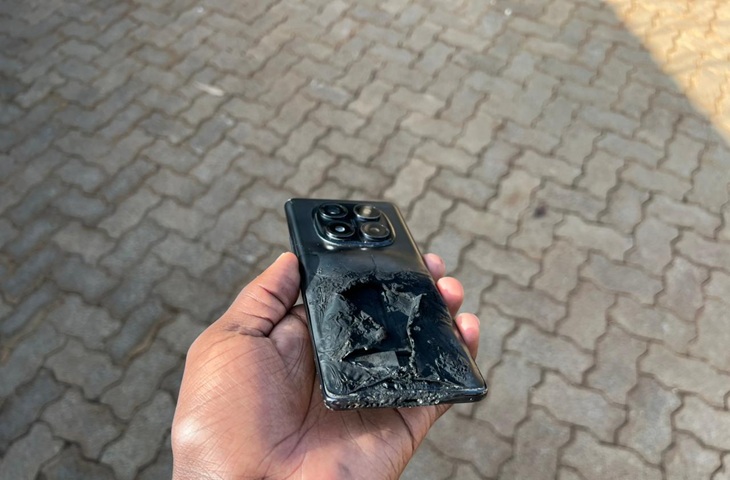
In recent years, thousands of people around the world have trusted Xiaomi’s entry-level smartphones as affordable and capable everyday devices. But behind the sleek marketing and aggressive pricing, a worrying pattern is emerging: several Xiaomi phones and related battery products have been linked to overheating and fire-related incidents that pose serious risks to users’ safety, property, and personal data.
One of the most startling stories we’ve documented comes from Ngong’, Kenya, where resident Alfred Mutuma woke up in the early hours to the smell of something burning. Around 2 a.m., Alfred was startled by a pungent odor coming from his bedroom; the same room where he had left his Xiaomi Redmi 14 Pro charging overnight ahead of work the next day.
“I was woken up by a very strong smell of something burning. When I turned on the bedroom lights, to my surprise it was my phone smoking. I grabbed a cleaning cloth, unplugged the phone and threw it out of the window,” Kreatorly narrated to us.


Thankfully, Alfred escaped harm that night, but his bedroom could easily have gone up in flames, and with it the data on his device, family photos, and potentially his life. This incident highlights how vulnerable users can be when devices fail unexpectedly, especially while people are asleep and less alert.
While comprehensive official statistics are limited, there’s real evidence that some Xiaomi-branded battery-powered products have presented safety concerns serious enough for authorities and the company itself to recall them.
Xiaomi voluntarily recalled nearly 147,000 of its 33W 20,000 mAh power banks in 2025 after identifying a fire hazard risk due to overheating lithium-ion batteries. These units, sold in multiple markets, were found to have components that could malfunction and potentially lead to overheating and fire under certain conditions.
Authorities in several countries, including Saudi Arabia and the UK, have issued formal warnings or recalls for the same power bank model, again because of potential fire risks posed by the batteries.
These recalls aren’t limited to one region, they represent global safety actions, suggesting the issues go beyond isolated user misuse or poor charging accessories.
Independent reports from users on forums like Reddit and tech sites, while anecdotal, they also point to multiple instances where Xiaomi phones have overheated, smoked, or even caught fire: A Redmi Note 12 Pro reportedly caught fire in a shirt pocket while not even plugged in. Many users have shared stories of phones smoking during charging, swelling batteries, or catching fire suddenly, sometimes resulting in irreversible damage and loss of stored data.
It’s important to note that these user reports aren’t verified scientific data, and large phone manufacturers often challenge such claims or attribute incidents to third-party chargers or physical damage. But when so many independent accounts describe similar thermal failures, the pattern is worth paying attention to.
Modern smartphones rely on lithium-ion batteries, powerful, energy-dense cells that can fail catastrophically if manufacturing defects occur, batteries are damaged or stressed, temperature control systems fail and cheap or incorrect chargers are used.
When such failures happen, the result can be overheating, smoke, and in worst cases, fire, all of which threaten lives, homes, and personal data stored on the device. This seems to be a problem unique to Xiaomi, with every widespread incident eroding trust in a brand that millions rely on daily.
Kreatorly ’s frightening experience in Ngong’ is a stark reminder that smartphones aren’t just tools, they’re powered devices with real physical risks when something goes wrong. While not every Xiaomi phone will fail, reported incidents from recall-worthy power banks to anecdotal phone fires suggest that budget devices can sometimes come with hidden dangers.
Read Also: Why Xiaomi Redmi 15C Falls Short For Daily Use In Kenya