


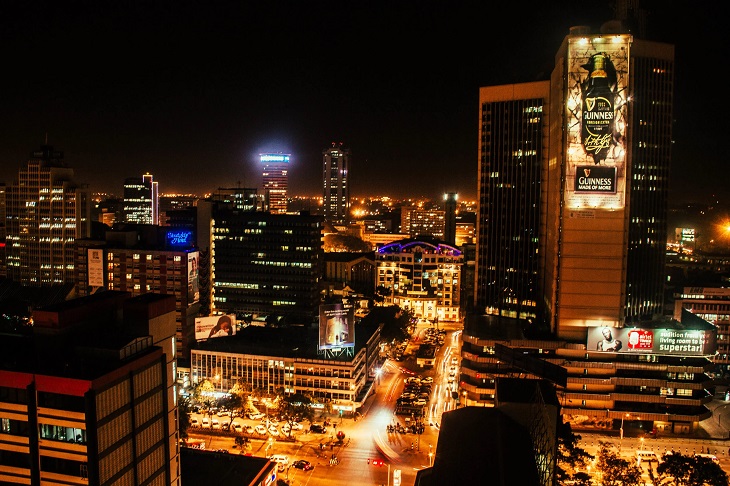
There was a time when Nairobi carried a brand that meant something. It was not just a slogan. “The Green City in the Sun” reflected a living, breathing metropolis defined by tree-lined avenues, functioning public spaces, and a rare urban proximity to wildlife that the world admired. Executives chose it as a regional hub. Diplomats built careers here. Families built lives here. Today, that identity lies in ruins. Nairobi is not collapsing overnight; it has been dismantled, decision by decision, compromise by compromise, election by election.
The environmental decay is the most visible scar. The Nairobi River system is a toxic channel of industrial effluent and raw sewage. Informal dumpsites spill into neighborhoods. Garbage collection is inconsistent, politicized, and often cartel-controlled. Once-pristine estates now compete with unregulated high-rises erected without coherent zoning discipline. Green spaces have been carved up for private gain. The city that once breathed now suffocates in dust, exhaust fumes, and concrete.
But environmental collapse is only one symptom. Urban planning in Nairobi has effectively broken down. Development control is erratic at best and compromised at worst. Roads are dug up and re-dug with no coordinated infrastructure planning. Pedestrian pathways are an afterthought. Public transport operates in chaos. Flooding is now routine during rainy seasons because drainage systems are clogged or were never properly designed to match explosive population growth. A city that cannot manage storm water cannot claim to be functional.


Security and order have also eroded. Petty crime, phone snatching, muggings, and organized theft are normalized. Street lighting is inconsistent. Enforcement is selective. Hawking is unmanaged. Public spaces feel abandoned to survivalist economics rather than structured commerce. The social contract between citizen and state has frayed.
Governance is central to this decline. Nairobi City County has repeatedly demonstrated administrative fragility—weak revenue collection systems, opaque procurement, politicized appointments, and perpetual wrangles between executive and assembly. Instead of coherent metropolitan strategy, we have seen reactive firefighting. Instead of technocratic urban management, we have witnessed patronage politics.
The national government cannot escape culpability either. Government of Kenya controls key levers—security, major highways, environmental regulation, and national planning frameworks. Nairobi is not just a county; it is the capital city, the diplomatic gateway, and the economic engine of the republic. When national leadership fails to enforce environmental laws, tolerates regulatory capture, or politicizes institutional oversight, the capital decays with impunity.
Infrastructure tells its own story. Water shortages persist despite massive public investment. Informal settlements expand without long-term integration planning. Affordable housing remains rhetoric while speculative luxury developments dominate skylines disconnected from actual demand. Traffic congestion drains billions in lost productivity annually. The city’s public transport remains fragmented, with no fully realized mass rapid transit backbone to match its scale. Urban efficiency has been replaced by endurance.
Economic competitiveness is quietly slipping. Investors do not just look at tax policy; they look at livability, infrastructure reliability, regulatory predictability, and quality of life. When executives spend hours in traffic, when waste lines the streets, when flooding disrupts operations, and when public utilities are unreliable, capital migrates. Regional competitors are modernizing aggressively. Nairobi risks becoming complacent while others are strategic.
And yet, leadership failure alone does not explain everything. Residents must confront their role. We litter. We build illegally. We bribe inspectors. We vote tribally instead of rationally evaluating urban policy competence. We normalize dysfunction because it is familiar. We have accepted mediocrity in exchange for political theatrics. Civic responsibility has eroded alongside public infrastructure.
A city dies not just when leaders fail, but when citizens disengage.
The tragedy of Nairobi is not inevitability—it is negligence. The environmental laws exist. The urban planning statutes exist. The regulatory frameworks exist. What is absent is enforcement insulated from political interference. What is absent is long-term metropolitan strategy spanning administrations. What is absent is accountability that survives electoral cycles.
Nairobi once stood out because it balanced ambition with livability. Today it balances density with dysfunction. It was once a place people aspired to move to. Increasingly, those with means move out—to satellite towns, gated enclaves, or other countries entirely. When the middle class flees the core, urban decline accelerates.
The phrase “Green City in the Sun” now feels archival. In its place stands a dusty city in concrete, choking on its own excess, drowning in its own waste, and paralyzed by fragmented governance. This is not urban evolution; it is urban regression.
Yet cities are resilient when confronted honestly. Revival would require depoliticized urban management, professional city administrators, transparent procurement, strict zoning enforcement, river restoration with measurable benchmarks, integrated public transport reform, aggressive waste management restructuring, and civic re-education on shared responsibility. It would require courage from both leaders and residents.
Until then, the harsh truth remains: Nairobi’s decline is not an accident. It is the cumulative result of tolerated incompetence, transactional politics, environmental indifference, and civic complacency.
A capital city is a mirror of national ambition. Right now, the reflection is deeply uncomfortable.
Read Also: List Of Nairobi Estates Set To Experience Water Shortage As Sasumua Plant Shuts Down