


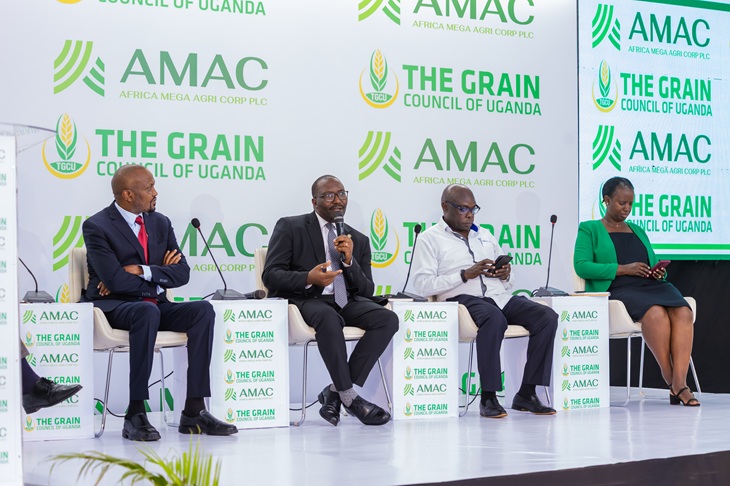
Africa Mega Agricorp Plc (AMAC) is quietly becoming one of the most compelling stories on the Nairobi Securities Exchange. Once known as Kenya Orchards, the company has repositioned itself into a modern agro-processing and export-driven platform, and the market has started to respond with conviction.
The price action tells the story. From lows near KES 51 in early 2025, AMAC has climbed steadily into triple-digit territory, crossing the KES 100 mark and trading in the KES 110–125 range by 2026. This is not a speculative spike. It is a structured re-rating driven by strategic repositioning, expanding global market access, and improving investor confidence.
Behind the rally is a deeper transformation. AMAC is no longer just a domestic processor. It is building a platform anchored on scale, exports, and integration into global commodity flows. The onboarding of more than 1,500 international buyers through global linkages has materially changed its addressable market.


This shift matters. For decades, African agribusinesses have struggled not because of production capacity, but because of limited access to structured global demand. AMAC is closing that gap.
The stock’s performance reflects that transition. It has delivered a near 100%+ return within a year, a signal that capital is beginning to recognize the business model shift.
Yet despite this strong performance, AMAC remains one of the least liquid counters on the NSE. Daily trading volumes remain thin, and participation is heavily skewed toward a narrow investor base. This creates a structural problem.
At current price levels above KES 100, the stock has quietly priced out a significant portion of retail investors. Accessibility is becoming a barrier to growth.
In a market like Kenya, where retail investors drive volume and momentum, price accessibility is not a minor issue. It is central to liquidity.
A retail investor with KES 5,000 can only accumulate about 50 shares at current prices. At a lower price point, the same investor could participate more meaningfully. That difference translates directly into market depth.
This is where the case for a share split becomes compelling.
A share split would not change the underlying value of the company. But it would fundamentally change how the market interacts with the stock.
A 1:5 or 1:10 split would bring the share price into a range that is psychologically and practically more accessible. This would likely increase retail participation, improve trading volumes, and enhance price discovery.
Liquidity is the next frontier for AMAC. The company has already proven its ability to create value through strategic repositioning and market expansion. The next phase requires unlocking broader participation.
In global markets, high-growth companies often face this exact inflection point. When price outpaces accessibility, a split becomes a strategic tool to sustain momentum.
The implications go beyond AMAC itself. The NSE has long struggled with low retail participation and concentration in a few large-cap names. AMAC represents a new category of growth stock that can diversify the market.
For the NSE, deeper participation in counters like AMAC would strengthen market vibrancy and attract new investors.
For AMAC, the decision is strategic. A share split could transition the stock from a high-performing but under-traded counter into a widely held, liquid market leader.
The fundamentals are already in place. The growth story is clear. The only missing link is accessibility.
If management acts, the next phase of AMAC’s journey could be defined not just by price appreciation, but by market expansion.
The opportunity is clear. The window is open. The next move will define whether AMAC remains a quiet multibagger—or becomes one of the defining stocks of the Nairobi Securities Exchange.
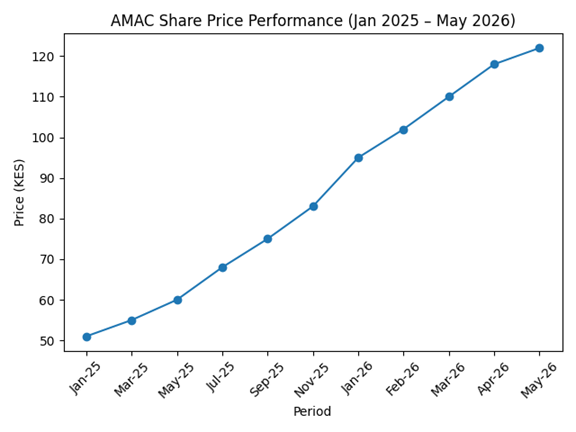

AMAC Share Price Performance (Jan 2025 – May 2026) | Source: Soko Directory Research Team
Read Also: How Ksh 100,000 in AMAC Became KES 160,638