


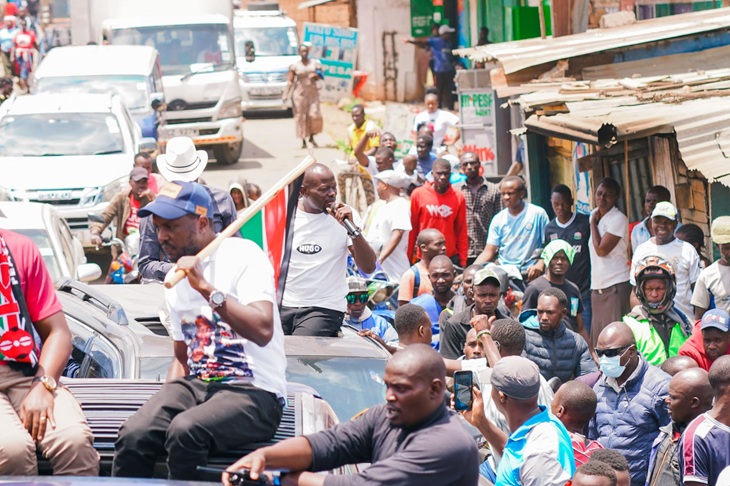
At the invitation of Karaya Mokaya, a young and promising leader from Dagoretti North, we visited the constituency with a simple but urgent message to residents: register as voters, claim your democratic power, and prepare to shape the future of your community. What we found on the ground was painful, disturbing, and impossible to ignore. This was not just a visit. It was an awakening. It was a confrontation with the harsh reality that far too many residents of Dagoretti North have been forced to normalize.
As we moved through the constituency, the heartbreak was immediate. The poverty was visible, heavy, and suffocating. Entire sections of the area seemed abandoned by the very people entrusted with leadership. The roads were poor, the drainage was broken, and in too many places, raw sewage flowed openly as if human dignity had no value. The stench in some parts was unbearable. Children played near filthy streams of waste. Families lived in conditions no Kenyan should ever be forced to endure. It was a brutal reminder that neglect is also a form of violence.
What stood out most was not just the lack of development, but the scale of abandonment. Critical infrastructure that should be basic in any serious constituency remains painfully absent. Clean piped water is still a struggle for many households. Proper sewage systems are either broken, missing, or overwhelmed. Sanitation is inadequate. The living conditions in many sections resemble a place that has been forgotten by government, forgotten by leadership, and forgotten by those who come asking for votes every election cycle only to disappear once power is secured.


It is impossible to walk through such conditions and not ask hard questions. What have the leaders elected before been doing? How can a constituency within the capital city of Kenya continue to suffer this level of decay, hopelessness, and indignity? How can mothers wake up every day worried about disease because of open sewage? How can young people dream big when their surroundings constantly remind them that leadership has failed them? How can families live without proper infrastructure in a country that collects taxes, elects representatives, and promises development?
Dagoretti North does not lack people. It does not lack energy. It does not lack potential. What it has lacked is leadership with seriousness, urgency, and a real understanding of what public service means. The suffering in the constituency is not because residents are weak or unwilling. It is because for too long, they have been led by a political class that has failed to turn representation into transformation. Elections came and went. Promises were made and forgotten. Yet the sewage still flows. The poverty still bites. The infrastructure still collapses. The people still wait.
This is why the call for voter registration is not a routine political message. It is a moral appeal. It is a call to the people of Dagoretti North to recognize that change will not come from silence, apathy, or resignation. It will only come when the residents themselves decide that enough is enough. A registered voter is not just a number. A registered voter is a citizen with power. A registered voter is a voice that cannot be ignored. A registered voter is a step toward breaking the cycle of failed leadership and public neglect.
In Karaya Mokaya, Dagoretti North has a rare opportunity to choose a different path. Here is a young leader who is not removed from the pain of the people, not insulated from the struggles on the ground, and not indifferent to the suffering that has become part of daily life in the constituency. He understands that leadership is not about speeches, titles, and ceremonies. It is about solving real problems. It is about restoring dignity. It is about ensuring that no child grows up surrounded by filth, neglect, and hopelessness while leaders posture and posture again.
Karaya Mokaya represents the kind of renewal that Dagoretti North desperately needs. He speaks to the frustrations of the people because he has seen them. He understands the urgency of fixing sanitation, expanding access to clean water, pushing for proper sewage systems, improving roads, and demanding infrastructure that reflects the worth of the residents. He embodies a generational shift away from empty politics and toward responsive, practical, people-centered leadership.
This is why the constituency must not treat the coming political moment lightly. This is not just about replacing one name with another. It is about rejecting a culture of neglect. It is about sending home an entire political class that has presided over suffering and stagnation while communities sink deeper into hardship. It is about making a bold statement that the people of Dagoretti North are no longer willing to live in conditions that rob them of health, dignity, and hope.
The slum conditions in parts of the constituency are deplorable and heartbreaking. They are an indictment of failed leadership. They are proof that representation without results is betrayal. No resident should have to step over raw sewage. No family should have to wonder whether safe water will be available. No community should be forced to beg for the most basic services in the capital city of a nation that claims to be moving forward. These are not luxuries. These are rights. And leadership that cannot secure them has failed its test.
The people of Dagoretti North must now rise with clarity and courage. They must register as voters in large numbers. They must organize. They must speak. They must refuse to be manipulated by recycled promises from leaders who had their chance and squandered it. They must look toward a new future with leaders who are ready to work, ready to listen, and ready to fight for development that can be seen and felt in the daily lives of ordinary residents.
Karaya Mokaya is that leader. He is the fresh force Dagoretti North needs. He is the voice of urgency in a constituency that has suffered too long. He is the kind of leader who can rally the people around a development agenda rooted in dignity, sanitation, infrastructure, opportunity, and accountability. He offers not just hope, but the possibility of action. Not just ambition, but commitment.
Dagoretti North stands at a crossroads. One road leads to more decay, more excuses, more broken systems, and more years of being taken for granted. The other leads to renewal, accountability, and a new kind of leadership anchored in the needs of the people. The choice now belongs to the residents.
Let every eligible resident register. Let every household recognize the power of the vote. Let every young person understand that political change begins with civic action. And let the people of Dagoretti North rally behind Karaya Mokaya, a leader whose rise could mark the beginning of a constituency finally choosing dignity over neglect, progress over stagnation, and hope over heartbreak.