


A KES230 million economic empowerment programme aimed at strengthening livelihoods while promoting environmental conservation has been rolled out across the Greater Mara Ecosystem in Narok County.
The Economic Empowerment and Gender Transformation in the Maasai Mara initiative, supported by I&M Bank, I&M Foundation, and GIZ through the develoPPP programme and implemented in partnership with The Maa Trust, is targeting youth and women in one of Kenya’s most ecologically and economically significant regions.


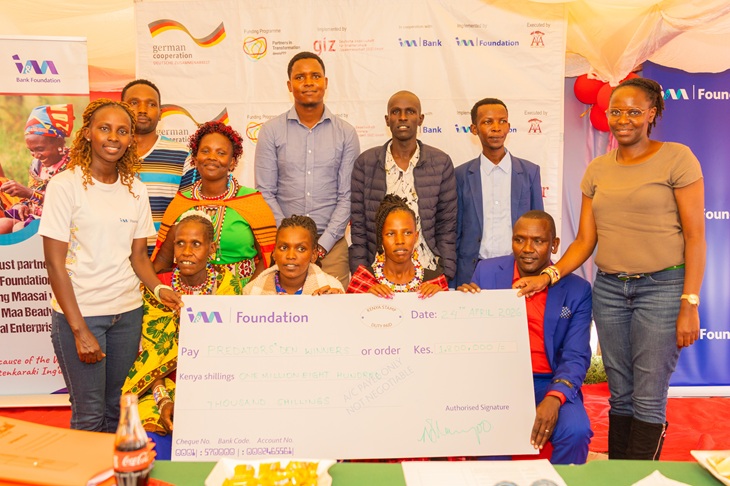
As part of the initiative, nine entrepreneurs have received a combined KES1.92 million in seed funding, scholarships, and business support after completing an intensive entrepreneurship programme that culminated in a live pitching competition dubbed The Predators’ Den.
The programme attracted 140 entrepreneurs drawn from seven communities within the Greater Mara Ecosystem. Out of these, 21 finalists advanced to a two-month mentorship and business training programme before presenting their enterprises before a panel of judges.
Participants were trained in business development, financial literacy, and pitching skills, with organisers emphasising the critical link between sustainable economic opportunities and conservation efforts within the Maasai Mara ecosystem.
Speaking during the awards ceremony, Dipnah Shah, Sustainability Lead at I&M Foundation, said empowering local entrepreneurs was central to achieving long-term social and environmental sustainability.
“We believe that empowering entrepreneurs is one of the most effective ways to create sustainable change. The Predators’ Den is rooted in the belief that sustainable conservation is only possible when communities have the skills, resources and confidence to thrive economically,” she said.
Kevina Wangai, Technical Advisor at GIZ, noted that sustainable economic growth and environmental stewardship must go hand in hand.
“Through The Predators’ Den, we are proud to support entrepreneurs building innovative businesses that strengthen livelihoods while preserving the Maasai Mara ecosystem,” she said.
The Maasai Mara, globally renowned for the Great Wildebeest Migration, remains a critical tourism and conservation hub supporting wildlife, pastoralist communities, and tourism enterprises. However, many residents, especially young people, continue to face economic exclusion from the benefits generated within the ecosystem.
The competition showcased enterprises addressing local challenges in areas such as food production, water access, eco-friendly innovations, and digital services.
Bakery entrepreneur Carl Leitato Naurori emerged as the overall winner and received KES250,000 to expand his business and create employment opportunities within the community.
Martin Kiok received a KES650,000 scholarship in recognition of his efforts to bridge the digital divide through his cyber café business.
Other winners included Ann Kamakia, David Kesierr, Noormeshuki Kamakia, Sylvia Sanaipei, Anthony Lenkume, Valentine Muteyian, and Joseph Maguta, each recognised for outstanding enterprises across various categories.
The awards programme was further supported by Uhama Foundation, Asilia, Aqua Nirvana Foundation, and Saruni Basecamp Foundation.