


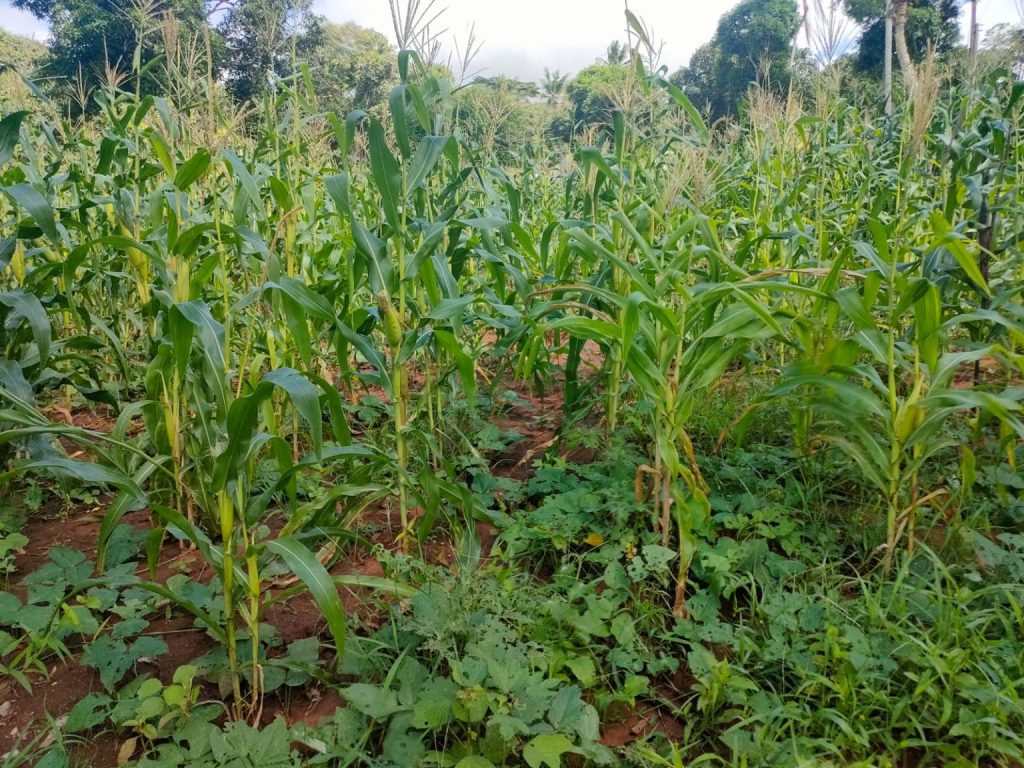
The Kenya Meteorological Service Authority (Kenya Met) has projected that agricultural production will remain relatively stable in several parts of the country over the next three months, despite weather conditions that may slow crop growth and development
According to Kenya Met Quarterly Weather Outlook for July to September 2026, released on June 1, much of Kenya’s key agricultural zones are expected to maintain favourable production levels due to sufficient soil moisture accumulated during the March-to-May long-rains season.
The report indicates that farmers in western Kenya, the Rift Valley and parts of north-western Kenya are likely to sustain crop production even as rainfall levels decline during the forecast period.


Kenya Met attributed this outlook to the near-average to above-average rainfall received across many of these regions earlier in the year, which helped replenish soil moisture and support crop establishment.
“Near-average to below-average rainfall in the Highlands West of the Rift Valley, the Lake Victoria Basin, the Rift Valley and North-western Kenya are expected to sustain agricultural production following the near-average to above-average rainfall received from March to May,” the authority stated in the report.
The weatherman noted that the residual moisture stored in the soil is expected to continue supporting crops through critical growth stages, reducing the immediate impact of the anticipated decline in rainfall.
Agricultural experts often view such moisture reserves as crucial for maintaining yields during periods of reduced precipitation.
At the Coast, farmers are also expected to benefit from favourable weather conditions during the July-to-September period. Counties including Kwale, Kilifi, Mombasa, Malindi and Lamu are forecast to receive near-average to above-average rainfall, creating conditions conducive to crop growth and development.
“The Coast is likely to benefit from near-average to above-average rainfall that is expected to provide moisture for the growth of crops,” Kenya Met noted.
The forecast is expected to offer relief to farmers in the coastal region, where adequate rainfall during the season could support food production and improve agricultural output.
However, Kenya Met cautioned that not all regions will experience ideal farming conditions. Several counties in the central highlands and parts of the Rift Valley are expected to face cool and cloudy weather, which could slow down crop development and delay maturity.
Areas likely to experience these conditions include Nairobi, Nyeri, Murang’a, Kiambu, Kericho and Bomet counties. Reduced sunshine hours and lower temperatures can limit photosynthesis, potentially extending the time crops take to reach harvest stage.
In addition to the cooler weather, the authority warned of strong winds that could affect farming activities in parts of eastern Kenya. Counties expected to experience these windy conditions include Embu, Isiolo, Kitui, Machakos, Makueni, Marsabit, Meru and Tharaka-Nithi.
The strong winds could pose a significant challenge to farmers by physically damaging crops, particularly those at sensitive growth stages. The winds are also expected to accelerate moisture loss from soils through evaporation, increasing the risk of water stress for crops in affected areas.
Regarding rainfall distribution, KMSA forecasts that counties such as Nandi, Kakamega, Bungoma, Kisumu, Narok, Nakuru and Uasin Gishu will receive near-average to below-average rainfall during the July-to-September season.
The authority further warned that these areas could experience intermittent dry spells, which may affect crop performance if the periods of dryness persist for extended durations.
In northern Kenya, Turkana and Samburu counties are expected to experience predominantly sunny and dry weather conditions throughout the forecast period. While isolated areas may receive near-average to below-average rainfall, most locations are likely to remain dry for much of the season.
Meanwhile, counties within the central highlands, including Nairobi, Nyeri, Kirinyaga, Embu, Meru, Laikipia and Tharaka-Nithi, are forecast to receive occasional light rainfall accompanied by fog. These conditions are typical during the cooler months but may influence farming operations and crop growth rates.
The outlook for Kenya’s arid and semi-arid lands remains largely dry. KMSA forecasts that counties such as Marsabit, Mandera, Wajir, Garissa and Isiolo will experience mainly sunny and dry weather, although light rainfall may occur in elevated areas.
Overall, the authority maintains that agricultural production across much of the country is likely to remain stable, supported by the favourable rainfall received earlier in the year.
Nevertheless, farmers are being encouraged to remain vigilant and adopt appropriate farming practices to mitigate the effects of dry spells, strong winds and prolonged cloudy conditions that could affect crop performance during the July-to-September period.
The latest forecast underscores the critical role weather patterns continue to play in Kenya’s agricultural sector, which remains a key contributor to the national economy and a major source of livelihoods for millions of households across the country.
Read Also: Kericho Farmers Make New Chance in Coffee as Production, Sales Rise