


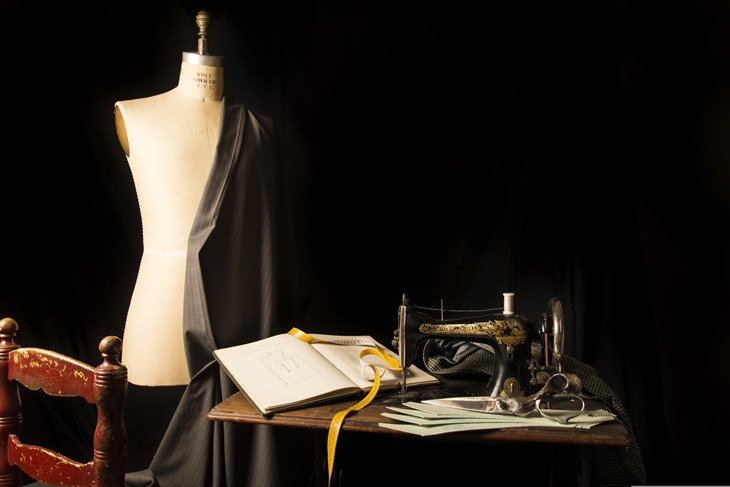
It is 5:30 a.m. in Kaptembwa market on the edge of Nakuru, and Esther Wanjiku is already at her stall. She switches on the single bulb above her sewing table, unrolls a bolt of grey-and-maroon checked fabric, and starts cutting the morning’s first school uniform. By the time the market properly wakes up, she will have measured three school children, cut two pairs of trousers, and gently turned away a mother who wanted to pay for a uniform in instalments that Esther cannot afford to extend.
Esther’s story is a composite, drawn from the everyday realities described by thousands of women entrepreneurs across Kenya. Women make up approximately 50.5 percent of Kenya’s population and own about 33 percent of the country’s micro and formal small and medium enterprises (SMEs). They carry a heavy share of household decision-making and agricultural labour. Yet owning a business and being able to grow it are two very different things — and for women like Esther, the distance between those two realities can feel impossible to cross.
The challenge is rarely a lack of ambition, creativity, or determination. The real barrier lies in the environment around them: uneven access to finance, networks, mentorship, and growth support. Here is what that looks like up close: one stall, one rejected loan application, and one school term at a time.


The Financing Gap
Eighteen months into running her tailoring business, Esther walked into a bank and asked for KSh150,000, enough for a second sewing machine and fabric to bid for a small school uniform contract. The loan officer asked for a title deed. Esther didn’t have one. Her stall sat on rented market space, and her only real assets were a sewing machine, a tape measure, and six years of loyal customers who knew her by name. Her application went nowhere.
This is not an unusual story. Only around 27 percent of women-owned businesses in Kenya can access formal banking services, compared with 45 percent of male-owned firms. A large majority of women entrepreneurs say a lack of capital, not a lack of ideas, is the single biggest barrier to growing their business. Most start up on personal savings alone, which leaves their enterprises undercapitalized from the very first day.
What women like Esther need is not charity. They need a financing system that assesses a business on what it actually is, its order book, its cash flow, its customer relationships, rather than on assets she was never in a position to accumulate. This is exactly the gap that Fanikisha was designed to close. Rather than a single loan product, it offers tiered financing built around where a business actually is in its journey: from Fanikisha Shaba for newer ventures (tailored loans of up to KSh10 million for businesses less than 12 months old) through to increasingly sophisticated working capital solutions for established enterprises. Crucially, it does not ask a woman like Esther to prove she already has wealth before it helps her build some.
The Isolation Problem
For most of her six years in business, Esther worked alone. She didn’t know any other tailors well enough to compare notes, had never set foot inside a fabric wholesaler’s warehouse, and had no idea that some Nairobi schools issue open tenders for uniform suppliers each January. Between the stall, her two children, and her elderly mother, there was simply no time left for the kind of networking that, for many entrepreneurs, opens doors to suppliers, mentors, and larger customers.
This isolation is common, and it compounds every other barrier. A woman who cannot access affordable fabric in bulk will always struggle to compete on price, no matter how good her stitching is. She is locked out not by her ability, but by the networks she was never given a path into.
Fanikisha’s mentorship and networking platforms exist specifically to address this. By connecting women entrepreneurs with established business owners and professionals across sectors, the program creates the kind of introductions and communities that most women in business never get by chance: a fabric supplier willing to sell at wholesale rates, a peer entrepreneur who has already navigated the same road, a trade mission to a market beyond the next town.
Read Also: IFC Partners With Equity To Empower Kenyan Women Entrepreneurs
Growing Pains: When Support Stops Too Soon
A few months after a first loan, a business like Esther’s might look very different: a small workshop instead of a single stall, two employees hired from the neighborhood, a second school contract won. But with growth comes a new set of needs, an industrial overlocker, larger fabric orders, and more working capital, which most financing programs were never built to meet.
This is where many support initiatives quietly fail women entrepreneurs. A product designed for start-ups rarely fits a growing business. Women are frequently left to start over, a new institution, a new application, a new relationship, every time they outgrow their current arrangement. The accumulated trust and repayment history they worked hard to build count for nothing.
Fanikisha was structured specifically to avoid this. Its tiered pathway, Shaba, Dhahabu, Almasi, and Platini, is designed to move with a business as it grows, allowing a woman to advance on the strength of the record she has already built, rather than beginning the process again from scratch each time she succeeds.
Markets, Digital Tools, and the World Beyond the Neighborhood
Esther’s workshop today is connected in ways it wasn’t two years ago. Digital payments for all transactions. A WhatsApp catalogue of fabric samples for parents who can’t visit in person. And last year, a trip with a group of fellow entrepreneurs to a regional trade fair in Kampala, her first time outside Kenya, and her first glimpse of suppliers and buyers beyond Nakuru.
These are not small things. Research on Kenyan women-owned enterprises consistently finds that female-run businesses are more financially constrained than male-run ones, and that wider access to digital financial tools is one of the most promising ways to begin closing that gap. Without intentional support, digital banking, e-commerce guidance, and trade missions, women entrepreneurs remain confined to local markets while their male counterparts expand outward.
Fanikisha’s digital and market access support gives women entrepreneurs like Esther a practical path into those broader opportunities, connecting them to tools and markets that most would never reach on their own.
The Hidden Cost: When Life Interrupts Business
None of this progress happens without vulnerability. Some months ago, Esther’s youngest daughter fell ill with malaria during the busiest week of the school term. With no health cover, Esther closed the stall for five days, paid the hospital bill from money she had set aside for fabric, missed a delivery deadline, and lost a customer.
Women entrepreneurs are rarely just entrepreneurs. They are caregivers, household managers, and community anchors, often simultaneously, and a single health emergency can quietly dismantle months of careful business-building. This is a structural reality that most business support programs treat as a personal problem, outside their remit.
It isn’t. Fanikisha’s inclusion of affordable health cover for women entrepreneurs and their families reflects an understanding that business resilience and personal wellbeing cannot be separated, and that a woman forced to choose between her child’s care and her livelihood has already lost something that no loan can fully restore.
What Happens When the System Finally Works
Multiply Esther’s situation across Kenya’s real economy and the stakes become clear. Women like her have the skill, the customers, the determination, and the ideas. What they have too often lacked is a system designed to meet them where they are.
Since its establishment in 2007, through a partnership between Equity Bank, UNDP, ILO, and UNIDO, Fanikisha has trained over 2.5 million women and youth in financial literacy and facilitated the disbursement of over KSh565.6 billion to women-led enterprises. Behind each of those figures is a woman who had what it took and needed the structures around her to finally catch up.
The challenges facing Kenya’s women entrepreneurs, including financing gaps, professional isolation, inadequate growth support, limited market access, and the invisible weight of caregiving, are well documented. They are also structural and therefore solvable. Fanikisha is not a gesture toward inclusion. It is evidence that when the architecture of support is built around the actual shape of women’s lives and businesses, something real becomes possible.
When women like Esther thrive, the effects travel outward: to the families they support, the young people they employ, and the communities that grow steadily around their work.
If you’re a woman in business or looking to venture into entrepreneurship, Fanikisha is a holistic, tiered, end-to-end financial solution for women at different stages. It’s tailored to today’s needs and reality. Women have access to financial solutions, capacity-building, network-building, comprehensive insurance, and digital convenience. To begin your journey, you can visit: https://equitygroupholdings.com/ke/fanikisha to complete the online form or send the word FANIKISHA, your FINANCIAL NEED, and your nearest BRANCH to 24990.
Read Also: Equity Emerges Best Financier For Women Entrepreneurs