


For years, the story of African television was one of managed decline. Streaming platforms captured the attention of young, urban viewers; linear TV was cast as legacy infrastructure, kept alive mostly by news bulletins and live sport. So, when a brand-new, free-to-air (FTA) English and drama channel with no existing subscriber base climbs into the top 10 nationally, in a market of more, of which close to 200 show active audience engagement, and does it within months of launch, the story deserves more attention than a passing headline. It is a case study of what happens when a broadcaster treats audience data not as a report card, but as a production brief.
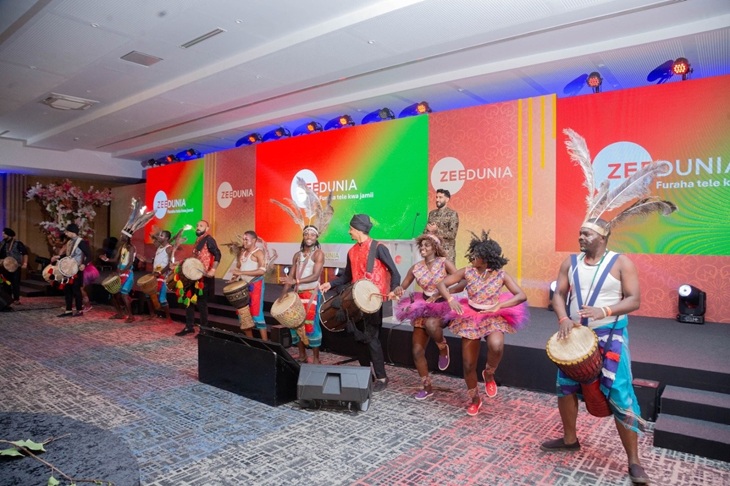
That channel is Zee Dunia, the Kenyan free-to-air arm of Zee Entertainment Enterprises, a global media and entertainment company, which launched in March 2025 offering Swahili and English dubbed drama with no decoder and no subscription fee attached.
According to the Ipsos Kenya Audience Tracker (IKAT) Q2 2026 (June) survey, the channel’s average daily audience grew from 95,664 viewers in December 2025 to 216,279 by June 2026, a jump of more than 125% sustained month-on-month growth rather than a single spike.


Average viewing time per person rose alongside it, from around 109 minutes a day in December 2025 to 120 minutes by June 2026. Zee Dunia has also climbed the national channel rankings, moving from 9th place in March to 7th by June 2026 among Kenya’s top 20 channels by reach, with Ipsos naming the Zee network the fastest-growing television brand in the country; sister channel Zee is gaining momentum ranking 17th by June 2026. For a channel operating in a market this saturated, that is not luck. It is the product of a deliberate, data-led content strategy.
Reading the Room Before Writing the Schedule
The first lesson Zee Dunia offers is that adapting content to audience taste is no longer a vague aspiration but measurable and actionable at a granular level. Broadcasters today have access to overnight and even hourly ratings, social listening data, watch-time analytics, and platform-level engagement metrics that tell them not just how many people are watching, but who they are, when they arrive, when they drop off, and what they talk about afterwards.
The latest Ipsos data, for June 2026, shows Zee Dunia’s growth is strongest in Western and Lower Eastern regions, alongside continued gains in Nairobi followed region, with Lower Eastern registering a particularly sharp boost. Growth is most pronounced among the C2 social class, rural audiences, and viewers aged 18 to 24 and 35 to 44, with more volatility among the upper social classes and other age groups. That is not incidental demographic detail; it is a signal that shapes scheduling and casting decisions in real time.
The channel’s evening block, a sequence of serialized dramas running from 7pm through 9pm, is built specifically around this audience’s habits: predictable timing, continuing storylines, and low “decision friction,” in contrast to the endless-scroll fatigue associated with streaming libraries. Where a streaming platform competes on choice, Zee Dunia is competing on routine, and the data on time-spent-viewing suggests that bet is paying off.
Turning Fandom into a Feedback Loop
The second lesson is about where the data actually comes from. Traditional audience measurement, people-meters, panel surveys, still matters, and IKAT’s quarterly numbers remain the industry benchmark in Kenya. But Zee Dunia’s rise has been amplified by a second, faster layer of data: social platforms. Interestingly, more than 80 active fan communities have sprouted organically across Facebook, TikTok, Instagram and YouTube, with combined social followings surpassing 1.1 million and YouTube subscribers alone surpassing a third of a million subscribers by June 2026. That is a live focus group running continuously, in public, for free. Viewers debate plot twists, predict outcomes, and signal, in near real time, which storylines and characters are landing and which are not. A broadcaster that is actually watching that conversation, rather than simply broadcasting into it, can adjust pacing, promote a breakout character, or reschedule a storyline beat long before the next quarterly ratings report arrives.
This is the deeper shift underway across the industry: content decisions that used to be made annually, around a single ratings book, are increasingly made weekly or even daily, informed by a blend of panel data and digital signal. Seema Sarkar Manji, Zee Entertainment Africa’s Kenya Business Head, framed the channel’s growth as the result of listening closely to what audiences want and backing it with content built to earn loyalty, a description that applies as much to the company’s use of data as to its programming choices.
Free-to-Air as a Data Strategy, Not Just a Pricing Strategy
It’s worth noting that removing the subscription barrier was itself a data-informed decision, not simply a market-entry tactic. In a price-sensitive market where decoder costs and subscription fees exclude large segments of the population, free-to-air distribution via platforms like PANG and Signet, combined with YouTube livestreaming, maximizes the addressable audience from day one, which in turn maximizes the volume and diversity of behavioral data a broadcaster can act on. More viewers mean more granular insight into what specific segments respond to, which accelerates the entire feedback loop described above.
The Bigger Signal
What Zee Dunia’s trajectory ultimately demonstrates is that the old dichotomy, “TV versus streaming,” “legacy versus digital”, is the wrong frame. The more relevant divide is between broadcasters who treat audience data as a lagging scorecard and those who treat it as an active input into scheduling, casting, storytelling and distribution. Kenya’s television market, with more than 130 Free- To-Air competing for finite attention, is about as unforgiving a test of that thesis as exists on the continent.
A new entrant reaching the top 10 within months, and doing so on the back of measurable, data-informed choices about who its audience is and what keeps them watching, is a strong early signal that the brands willing to let the numbers guide the narrative, rather than the other way around, are the ones best placed to win back the audiences that TV was supposed to have lost.