


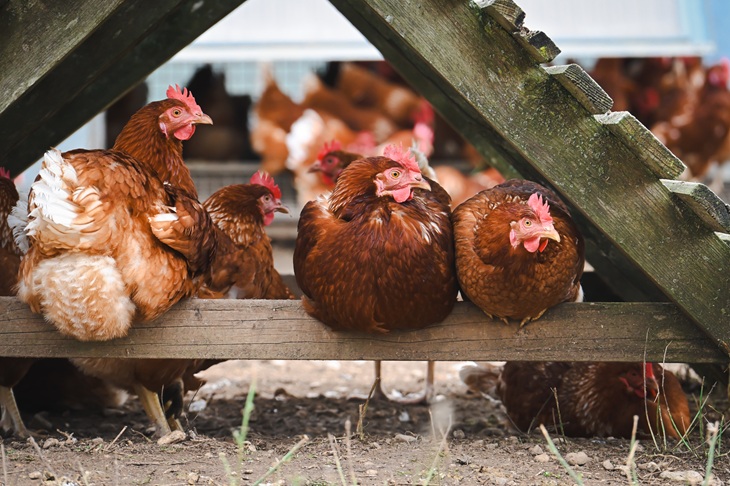
My mother built an empire with her bare hands. She woke before dawn, fed over 2,000 birds, negotiated with buyers, and still made sure we had food on the table and fees in the school office. We called her Mum. The market called her Mama Kuku, and she wore that name with quiet pride, even if she pretended it embarrassed her.
She was brilliant. She was tireless. And she did all of it without the financial scaffolding that her business truly deserved.
When she passed, the enterprise she had poured her life into began to unravel almost immediately. The flock started dying; disease, neglect, the chaos that comes when the one person who held everything together is suddenly gone. Thieves moved in on what remained. Within a short time, the business that had paid for every school uniform, every exam fee, every dream my siblings and I carried into adulthood was gone.


My education is literally the product of chicken. And that truth sits with me every time I think about what more support could have done for her, and for us.
When Equity Bank launched Fanikisha, its dedicated women’s banking initiative, I felt something I did not quite expect: grief, followed by hope. Grief because I kept thinking, she would have loved this. Hope because I know there are thousands of women across Kenya running businesses just like hers, and for them, it is not too late.
Fanikisha is not a standard loan product with a woman’s face on the poster. It is a tiered, end-to-end financial ecosystem built around the real journeys that women entrepreneurs live every day. It recognizes something that most financial institutions have historically ignored: that women are not underserved because they lack ambition or capability. They are underserved because the products available to them have never truly been designed with them in mind.
For a woman like my mother, running a business that had been going for years, managing suppliers, dealing with unpredictable markets, and trying to keep records while also raising children, Fanikisha Dhahabu would have been transformative. Designed for businesses with over 12 months of operation and a turnover of up to Kshs 50 million, it offers business loans based on actual cash flows rather than rigid collateral requirements that many women simply cannot meet. It provides access to up to 80% LPO financing, unsecured working capital solutions of up to Kshs 10 million, and instant mobile loans accessible right from your phone.
The health cover feature alone would have been a lifeline. For as little as Kshs 485 per month, a woman entrepreneur can protect herself and her family, because when the person running the business falls sick and cannot afford care, the business does not pause to wait.
But Fanikisha understands something even deeper: that money alone does not build a sustainable business. My mother’s challenges were not only financial. She struggled with access to reliable markets for her flock. She had no formal record-keeping system. She had no mentor who had walked the path before her and could tell her what to do when disease hit the chicken house at midnight. These are the invisible burdens that sink otherwise promising enterprises.
This is why Fanikisha’s three pillars go beyond credit. Financial solutions sit alongside capacity building and networks, and convenience, protection and wellness. Women enrolled in Fanikisha can access free business and entrepreneurship training, mentorship from top performers across sectors including agriculture, health, and education, and networking opportunities that connect them to markets and peers they would never find alone.
For a chicken farmer in a rural county trying to find bulk buyers, that network is not a nice-to-have. It is the difference between a business that survives and one that thrives.
Fanikisha has already demonstrated what is possible. Since its founding in 2007 in partnership with UNDP, ILO, and UNIDO, the initiative has trained 2.5 million women and youth in financial literacy and disbursed Kshs 565.6 billion to women-led enterprises. Those are staggering figures, but the more important measure, as the initiative itself acknowledges, is the transformation — the woman who started with a single market stall and now supplies a supermarket chain, the farmer who once lost her flock because she could not afford veterinary care and now has a health plan and a relationship manager at her local branch.
That is the story my mother deserved. That is the story that Fanikisha is making possible for the women she represents, women who are the economic backbone of their families, their communities, and this country.
If you are a Kenyan woman building a business right now, whether you are just starting out, growing steadily, or ready to scale beyond borders, Fanikisha meets you exactly where you are. You can visit www.equitygroupholdings.com/ke/Fanikisha, SMS “FANIKISHA” and your sub-county to 24990, or simply dial *247# to begin.
Mama Kuku built something real and lasting with nothing but her own determination and 2,000 birds. Imagine what she could have built with a listening, caring partner beside her.
That partner exists now. Use it.