


I’ve spent the better part of this year going through bank tariff guides, PesaLink fee tables, and M-Pesa charge sheets the way some people read football league tables. It’s tedious work, but it’s also revealing.
Kenyan banks talk a lot about “customer-centricity,” yet most of them still nickel-and-dime you every time you move your own money. So, when a bank actually strips out fees rather than adding them, it’s worth paying attention.
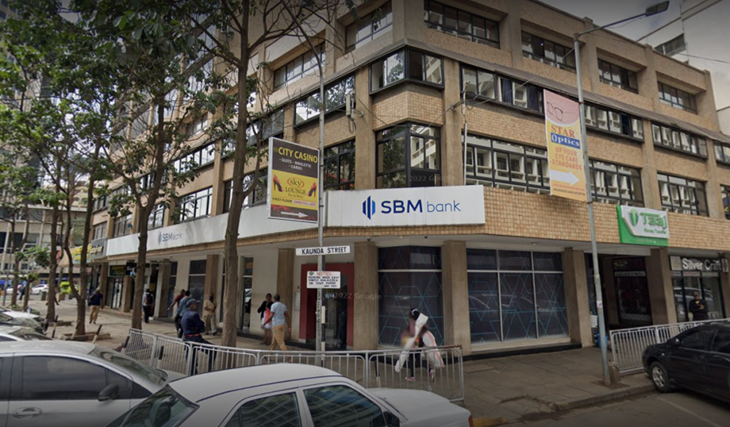
That’s the story with SBM Bank Kenya this year, and after comparing it against the rest of the market, I think it has quietly become the most affordable everyday bank in the country.


The PesaLink problem most banks won’t fix
PesaLink is supposed to be the great equalizer of Kenyan banking; instant, interbank, available around the clock, even on public holidays. In theory it should have killed off expensive interbank transfers years ago. In practice, most banks still charge for it once you cross a small threshold.
Equity charges up to Ksh 37 for transfers between Ksh 501 and 10,000, rising to as much as Ksh 162 for amounts near a million shillings. Co-op Bank’s tariff runs from Ksh 42 up to Ksh 112 across its bands. Bank of Africa’s fees climb to Ksh 200 at the top end. Even KCB, generally one of the cheaper options, still charges once you go past Ksh 500.
Against that backdrop, SBM’s move stands out. From the 1st of May this year, SBM made PesaLink transfers completely free for its customers, regardless of amount. This followed an earlier partnership with Integrated Payment Services Limited, the company that runs PesaLink, under which SBM had already been offering free transfers up to Ksh 1,000 and a flat Ksh 20 beyond that, itself the cheapest tiered rate in the market at the time.
Removing the fee altogether was the logical next step, and it’s one no other major bank has matched. SBM’s own leadership has been candid that this is a deliberate strategy to win transaction volume and build a “payments-led” bank, betting that free movement of money buys customer loyalty that fees never could.
ATM withdrawals, where most Kenyans quietly lose money
ATM fees are the charge nobody budgets for until they see it eat into their balance. Interbank ATM withdrawals in Kenya typically run Ksh 30 to Ksh 100 per transaction, and international withdrawals abroad usually carry a currency markup on top of a flat fee.
A handful of banks; Co-op, NCBA, DTB, I&M, GT Bank, Ecobank and Sidian among them, have built reputations for waiving ATM fees domestically, and that’s genuinely useful for anyone doing local banking only.
SBM goes a step further for its Mastercard-branded cardholders. Its premium debit and credit card holders get free withdrawals not just at SBM and Kenswitch machines locally, but at Mastercard ATMs internationally too, a real advantage for anyone who travels, sends children abroad for school, or does business outside Kenya.
SBM’s recent shift toward Mastercard as its primary card network, announced in partnership with Mastercard in November last year, has been rolling out to more customers as a seamless upgrade, which suggests this benefit is set to widen rather than stay a niche perk.
Mobile money deposits, the one thing that’s actually free everywhere
To be fair to Safaricom, M-Pesa deposits have always been free for everyone, regardless of which bank you use to fund your wallet. That part of SBM’s pitch isn’t a unique advantage; it’s simply reflecting a market-wide standard. Where SBM’s edge really shows is in how it treats the movement of money between your bank account and your mobile wallet, and in bundling that with free PesaLink and free premium ATM access, rather than any single M-Pesa deposit fee that never existed to begin with.
So, who actually wins?
If your banking life revolves around moving money between banks, paying suppliers, splitting rent, sending money to family with a different bank, SBM’s blanket free PesaLink policy alone will save you more over a year than most fee promotions from bigger, flashier banks.
Co-op Bank still deserves credit for consistently undercutting rivals on bank-to-M-Pesa transfers, and NCBA and Co-op remain strong if free domestic ATM withdrawals matter most to you. But no other Kenyan bank is currently offering the same combination: free interbank transfers with no cap, free premium ATM access that extends internationally, and a broader strategy clearly built around removing friction rather than monetizing it.
Banking fees in Kenya have quietly become a loyalty tax, charged to customers for doing nothing more than using their own money. SBM bets that customers will notice when that tax disappears. Based on the numbers, I think they’re right to bet that way, and I think more banks will be forced to follow before this year is out.
Read Also: SBM Bank Kenya Posts 171% Jump in Half-Year Profit as Deposits Hit Sh94 Billion