


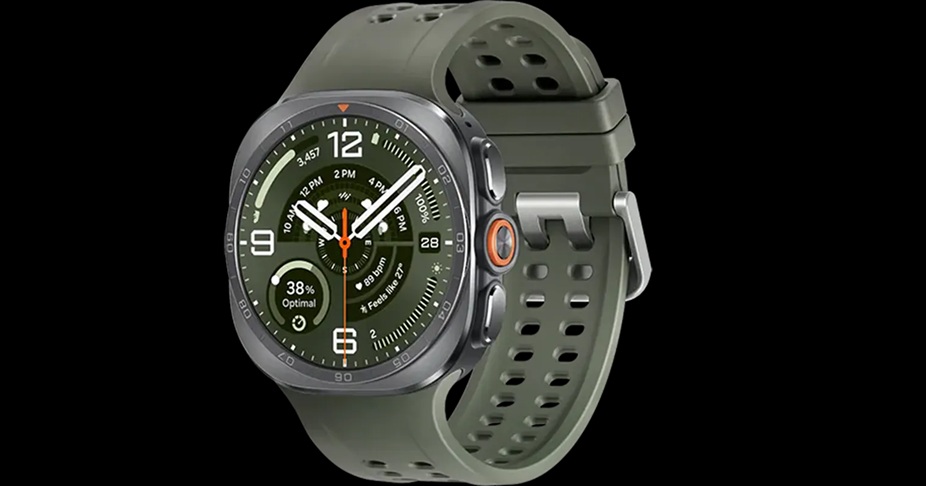
Samsung’s Galaxy Watch Ultra2 has been out for a few weeks now, and the marketing promises are big: precise GPS, smart AI health coaching, and rugged performance for people who like to push their bodies outdoors.
As someone who has worn a lot of sports watches over the years, I wanted to skip the spec sheet and actually put the watch through a real test. So, I laced up my running shoes, charged the watch, and headed out to a trail I know like the back of my hand.
Why a Trail Test Matters More Than a Spec Sheet


Any company can print big numbers on a box. What actually matters is whether the watch knows where you are when the trees get thick, the switchbacks get tight, and the elevation starts climbing. So, I ran a known 6-mile loop with rolling hills and a mix of open field and tree cover, wearing the Watch Ultra2 on one wrist and a well-known GPS sports watch on the other, side by side, for a direct comparison.
The Watch Ultra2 is the first Galaxy Watch to run on Qualcomm’s new Snapdragon Wear Elite chip, which Samsung says was built to deliver fast performance and precise GPS tracking. That’s a bold claim, so I wanted to see it in action rather than just read it.
How the Route Tracking Held Up
Right from the first turn, the map on the watch face updated smoothly, with barely any lag between my actual position and the dot on screen. Where things get tricky for most watches is under heavy tree cover, where satellite signals bounce around and cause that classic “zig-zag” line you sometimes see on a mapped run. On the shaded half of my loop, the Watch Ultra2 stayed impressively close to the actual path, only wandering off by what looked like a few meters here and there, nothing like the wide swings I’ve seen on cheaper watches.
Compared to the competitor watch on my other wrist, the two tracks were close to identical for most of the route. The competitor pulled slightly ahead in accuracy on one sharp switchback section, but honestly, the difference was small enough that most runners would never notice it in daily use. For a watch on just its second generation of this specific Ultra lineup, that’s a strong showing, especially against a brand that has spent years refining its GPS chips specifically for outdoor athletes.
Elevation, Pace, and the New Trail Tools
This is where the Watch Ultra2 quietly won me over. Samsung added a dedicated Trail Run mode to this model, which provides real-time insights, including detailed elevation data, climbing progress, and cumulative ascent and descent distances. On my hilly loop, that meant I could glance down mid-climb and immediately see how much more elevation I had left before the trail leveled out, rather than guessing based on how tired my legs felt. Pace splits update cleanly on screen, too, without the stutter or delay I’ve noticed on older Galaxy Watches when trying to process too much data at once.
What About the AI Assistant?
The AI side of things is more of a mixed bag. Samsung has leaned into raise-to-talk AI features on this watch, and it’s genuinely handy for quick things, checking the weather, logging how a run felt, or asking for a summary of your stats without pulling out your phone. But calling it a true “coach” might be overselling it a little. It’s good at reporting data back to you in a conversational way, but less good at giving you the kind of nuanced training advice a human coach or a dedicated running app might offer.
If you’re the kind of person who runs trails, hikes for hours, or just wants a watch that won’t lose you when the GPS signal gets tricky, the Watch Ultra2 earns its price tag. It’s not perfect, and it doesn’t fully dethrone watches that have been refining trail accuracy for over a decade. But side by side, on a real trail, it held its own, and the elevation and pace tools make it a genuinely useful training partner, not just a flashy screen on your wrist.
Read Also: Samsung Unveils Integrated Digital Classroom Ecosystem to Power Smarter, Connected Learning in Kenya