


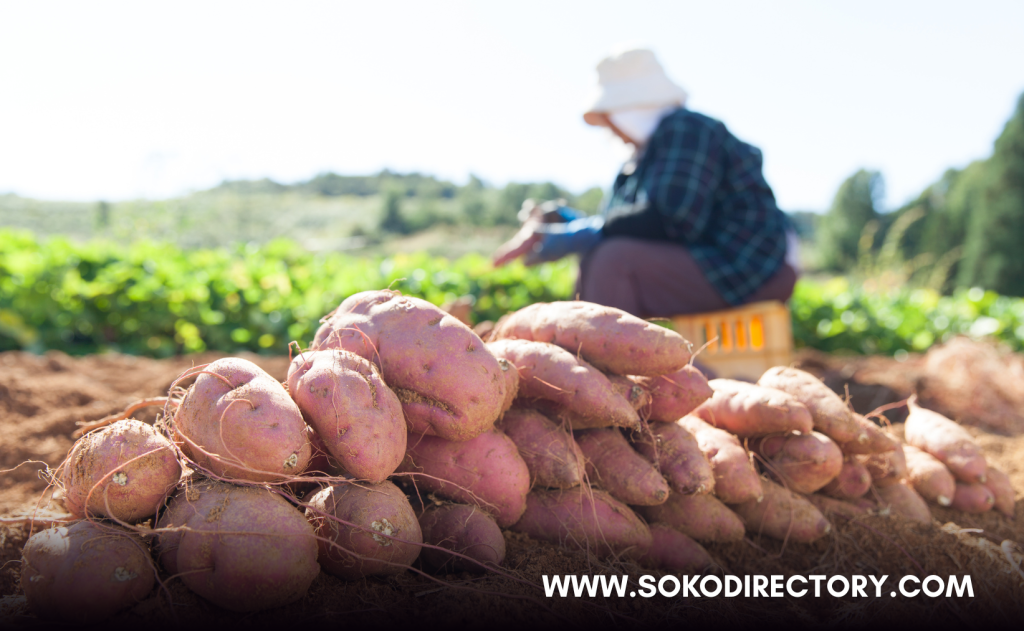
Sweet potato farming has quietly become one of the more attractive options for farmers looking to diversify, offering food security, a steady income and, increasingly, opportunities to process and sell more than just the raw crop.
It grows well across a range of climatic conditions in Kenya and doesn’t demand the intensive management that some other staples require. And with demand coming from households, traders, schools, processors and even livestock keepers, farmers who get into sweet potatoes aren’t relying on a single narrow market.
A Short Wait for Returns


Unlike crops that tie up land and capital for long stretches, sweet potatoes mature relatively quickly. Depending on the variety and growing conditions, farmers can start harvesting within just a few months, a real advantage for anyone who needs cash flow sooner rather than later.
Demand That Keeps Growing
Few crops are as woven into everyday Kenyan cooking as the sweet potato. Whether boiled, fried, roasted or worked into other dishes, it remains a household favourite.
That demand doesn’t stop at the kitchen door, either; schools, hotels and food vendors all need reliable supply, which opens up steady markets for farmers who can deliver consistent quality.
Plenty of Varieties to Pick From
Farmers aren’t limited to a single type of sweet potato. Orange-fleshed varieties tend to get the spotlight for their nutritional punch, but others are grown purely for taste, texture, how fast they mature, or simply because that’s what the local market wants.
A Genuine Income Stream
For both smallholders and larger commercial growers, sweet potatoes can become a dependable source of income. Farmers can sell straight to consumers, traders, retailers or institutions, and those who time their harvest for periods when supply is tighter often find themselves getting better prices.
Room to Add Value
Selling fresh roots is only the starting point. Some farmers are exploring how to turn their harvest into flour, crisps, baked goods and other processed products, a way to earn more from the same crop while tapping into markets that fresh produce alone can’t reach.
A Good Fit With Other Crops
Sweet potatoes also slot in comfortably alongside maize, beans and vegetables, depending on how much land a farmer has and local growing conditions. That kind of intercropping helps spread risk rather than betting everything on one crop.
Nutritional Value Worth Noting
Beyond the economics, sweet potatoes bring real nutritional benefits: carbohydrates, fibre, and in the case of orange-fleshed varieties, a good dose of beta-carotene, which the body converts into vitamin A. That nutritional profile is part of why demand has stayed strong among consumers looking for food that’s both affordable and healthy.
Even the Vines Have a Use
It’s not just the roots that matter. Vines and other parts of the plant can be used as livestock feed when properly prepared, giving farmers who also keep animals another way to get value out of the crop.
Accessible for Smallholders
You don’t need vast tracts of land to grow sweet potatoes, which makes the crop realistic for smallholder farmers. That said, profitability still comes down to the basics: cost of planting materials, labour, land preparation, yields, how much is lost after harvest, and what price the crop eventually fetches.
A Wider Business Opportunity
The opportunities don’t end at the farm gate. Beyond actually growing the crop, there’s room for entrepreneurs to get involved in supplying quality vines, aggregating produce, transport, storage, processing and marketing, an entire value chain waiting to be built out.
Anyone considering sweet potato farming would do well to research the market first, figuring out which varieties are in demand and who the likely buyers are.
Using quality planting material, choosing suitable land, preparing the soil properly, and staying on top of pests and diseases all matter too. And having a buyer lined up before harvest can go a long way toward cutting post-harvest losses and protecting profitability.
Read Also: Maize Shortage Pushes Flour Prices To Ksh163 As Kenya Plans Imports