


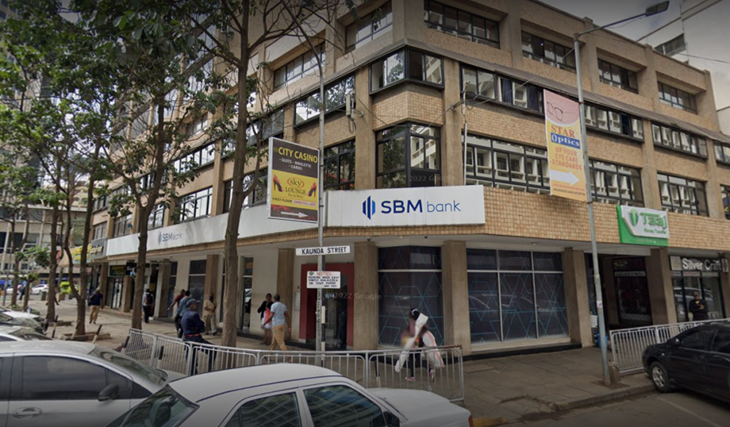
SBM Bank Kenya has staged a significant financial turnaround, moving from a Sh1.6 billion loss in 2024 to a Sh614 million profit in 2025, with the lender recording further strong growth in the first half of 2026.
Speaking during an interview on Citizen TV, SBM Bank Kenya CEO Bhartesh Shah attributed the bank’s improved performance to a combination of stronger business fundamentals, organisational culture, technology investments and a renewed focus on customer needs.
The bank’s profit increased by 171% in the first half of 2026, building on the return to profitability recorded the previous year.


The recovery has been supported by growth in both deposits and lending. Deposits increased by 23% while loans grew by 14% during the first half of 2026, pointing to stronger customer confidence and increased lending activity.
Shah said the turnaround was driven largely by people and organisational culture, arguing that having the right skills in the right positions had been critical to changing the bank’s performance.
According to the CEO, SBM Bank Kenya has also sought to differentiate itself through speed and flexibility in making lending and business decisions. The approach is intended to enable the bank to respond more quickly to customers, particularly businesses that may find larger financial institutions less flexible.
Expanding the Physical and Digital Footprint
Despite the rapid growth of digital banking, SBM Bank Kenya is continuing to expand its physical presence.
The lender recently opened its 34th branch in Nyuki, with two additional branches planned for Nairobi. The expansion forms part of the bank’s strategy to remain accessible to customers while strengthening its presence in key commercial markets.
At the same time, SBM has invested significantly in its digital infrastructure. The bank upgraded its core banking system in June, with Shah saying the new platform is designed to support the institution’s future growth and enhance its ability to deliver digital services.
Shah, however, acknowledged that increased digitalisation also brings greater cybersecurity risks. He identified security and customer confidence as critical factors in encouraging wider adoption of digital banking.
The bank therefore intends to maintain human interaction alongside digital services, recognising that technology can provide speed and scale while personal engagement remains important in building customer trust.
Focus on MSMEs and Productive Sectors
Beyond its own turnaround, Shah said SBM Bank Kenya intends to position itself as a catalyst for broader economic growth by supporting sectors with significant potential to create jobs and drive investment.
The lender is particularly focused on MSMEs, farmers and manufacturers, segments that Shah said can sometimes be underserved by larger financial institutions.
He expressed confidence that the bank’s renewed financial strength, combined with its focus on agility and customer service, would allow it to play a greater role in supporting businesses and investment across Kenya.
Predictability Key to Attracting Investment
Shah also used the interview to highlight what he believes Kenya needs to unlock greater long-term investment.
Drawing comparisons with Mauritius, he argued that economic predictability, institutional trust and policy consistency are more important to investors than individual incentives or isolated reforms.
“As long as we have that stability and predictability in Kenya, I think we have all the ingredients there,” Shah said.
His argument is that Kenya already possesses many of the fundamentals required to attract investment, including a large market, entrepreneurial businesses and established financial infrastructure. What investors need, he suggested, is greater certainty that allows them to make long-term decisions.
For SBM Bank Kenya, the challenge now is to sustain the momentum achieved over the past two years.
The movement from a Sh1.6 billion loss in 2024 to profitability in 2025, followed by a 171% increase in profit in the first half of 2026, marks a significant change in the bank’s fortunes.
The next phase will be determining whether the lender can translate that financial recovery into sustained growth, stronger market share and a larger role in financing Kenya’s businesses and productive sectors.
Read Also: The Free Transaction Race: Why SBM Bank Is Quietly Winning Kenya’s Banking Wars in 2026