



A short screenshot can sometimes say in a few lines what entire business schools struggle to explain in a semester. The image says that men can be sold lust, women can be sold beauty, the rich can be sold time, parents can be sold peace, children can be sold dreams, and poor people can be sold hope. It is deliberately provocative, and some of its categories are too broad to describe real people fairly. But beneath the provocation sits one of the oldest truths in commerce. Human beings rarely buy an object for the object alone. We buy what we believe that object will do to our lives, our emotions, our status, our confidence, our safety, or our future.
Think about the last thing you bought that mattered to you. It may have been a phone, a car, a meal, a course, a medical cover, a pair of shoes, a house, a holiday or even a simple cup of coffee after a difficult day. On the receipt there was a product. In your mind, there was a reason. The phone may have represented connection. The car may have represented dignity or convenience. The course may have represented a better career. The insurance policy may have represented the possibility of sleeping without fear that one hospital bill could destroy years of work. The coffee may have represented ten quiet minutes in a day that had taken too much from you. That invisible reason is where the real transaction happens.
This is why the strongest businesses do not begin with the sentence, what can I sell? They begin with a much more human question. What is this person trying to feel, avoid, protect, recover or become? Once that question is answered clearly, the product becomes a vehicle rather than the destination. A mattress is not merely foam and fabric. It is rest. A security system is not merely cameras and sensors. It is peace at two in the morning. A good school is not merely classrooms and examinations. To a parent it may represent a door into a future that the parent never had. A reliable delivery service is not merely movement from one location to another. To a busy executive it is recovered time. To a small trader it may be the difference between keeping a customer and losing one.


The statement about men and lust is crude, but its deeper lesson is about desire. Desire is one of the most powerful commercial forces because it makes people imagine a version of themselves that feels more attractive, more admired, more powerful or more alive. Entire industries are built around this. Fashion, fitness, entertainment, nightlife, luxury products and even parts of the technology industry all trade, in different ways, on the gap between who a person feels they are today and who they would like to be tomorrow. The ethical business does not manufacture shame in order to widen that gap. It helps a customer move toward a legitimate aspiration without humiliating them first.
The statement about women and beauty points to the same mechanism, but it should not be mistaken for a truth about women alone. Human beings across genders spend money on appearance because appearance is tied to confidence, belonging, identity, and social recognition. A person buying skin care may not be buying a cream. She may be buying the confidence to walk into a meeting without thinking about a problem that has embarrassed her for years. A man buying a tailored suit may not be buying fabric. He may be buying the feeling that he belongs in the room he has worked all his life to enter. The product is visible. The emotional outcome is private.
This is one reason perceived value can rise dramatically as an offer moves closer to a deep human need. A generic product competes mainly on price. A product associated with convenience can command more attention. One associated with confidence, security, identity, or hope may become far more meaningful. The graph below is not market research, and it should not be read as measured data. It is a simple model showing the direction of the idea. The closer a business gets to something a customer genuinely values, the less the conversation is about the physical object alone.
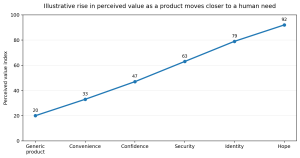

Figure 1. Illustrative model only. The index values explain a concept and are not measured market data.
The line about selling the rich time is perhaps the easiest to understand. Money can buy many things, but it cannot create another hour in a day. The more valuable a person’s time becomes, the more willing that person may be to pay for convenience, delegation, speed, access, and certainty. This is why premium services often sell fewer features than they sell fewer headaches. A busy founder may pay more for an accountant who responds immediately because the value is not just accounting. It is the removal of uncertainty. A family may pay more for a direct flight because the value is not only the seat. It is five hours of life not lost to connections, queues and exhaustion. Wealth changes the mathematics of inconvenience. When an hour of someone’s time is extremely valuable, wasting that hour can become more expensive than paying someone else to save it.
The line about selling parents peace goes even deeper because parents are often buying on behalf of someone they love more than themselves. That changes the emotional structure of the purchase. A parent choosing a school, a doctor, a house, a security service or even food is frequently asking a question that is larger than price. Will my child be safe? Will my child have a chance? Will I regret choosing the cheaper option? Can I sleep knowing I did what I could? Businesses that serve parents therefore carry a heavy responsibility. Fear is easy to exploit. Responsible companies turn that fear into clarity, evidence, reliability and care rather than panic.
Children buying dreams is another way of saying that aspiration begins early. A child does not look at a football shirt and see only fabric. The child may see the possibility of becoming the player whose name is printed on it. A young person does not always buy a laptop simply because of processor speed. That laptop may represent a first business, a first design portfolio, a first coding project or a first step out of unemployment. Dreams are powerful because they move the buyer mentally into the future. Great brands understand that future picture. Better brands make sure the dream they sell has a reasonable connection to what the product can actually deliver.
Then comes the most uncomfortable line in the screenshot: sell poor people hope. This is where business can become either deeply useful or deeply predatory. A person under financial pressure is not foolish because they want hope. Hope is often what keeps people working, applying, learning, saving and trying again. The danger begins when a company understands that desperation lowers a person’s ability to walk away and then uses that desperation against them. A fake investment scheme sells hope. A predatory loan can sell temporary relief while quietly creating a larger problem. A dishonest course can sell the fantasy of instant riches. A political scam can sell rescue without a plan. These businesses are not powerful because they understand human emotion. They are dangerous because they understand human vulnerability and choose to exploit it.
There is a crucial difference between selling hope and building a bridge to hope. The first can be empty language. The second requires substance. If a young person buys a training programme because they hope to get work, the programme should provide real skills, real support and honest expectations. If a farmer borrows money because they hope to increase production, the lender should structure the product in a way that recognises the farmer’s cash cycle instead of designing failure into the repayment schedule. If a low-income family buys insurance because they fear catastrophe, the terms should be understandable, and the claims process should work when catastrophe actually arrives. Hope becomes ethical when the business has done the hard work of making the promised future more possible.
This is where many entrepreneurs misunderstand the screenshot. They see the emotional triggers and think the lesson is manipulation. It is not. Manipulation can create a sale, but trust creates a business. You can frighten a person into buying once. You can flatter a person into buying once. You can exaggerate a dream and close a sale once. But if the product fails, the customer remembers. They tell friends. They refuse to return. The business begins spending more money replacing disappointed customers than it would have spent serving them properly in the first place. Emotion without trust can produce a dramatic beginning and a very expensive ending.
The next graph is again an illustrative model rather than measured market data. It shows a simple contrast. A business that relies heavily on emotion while failing to deliver value can look strong early because aggressive promises create attention. Over time, the relationship weakens. A business that combines emotion with real value and trust may grow more slowly at first, but its strength compounds because customers return, recommend it, and become less sensitive to competitors shouting louder.
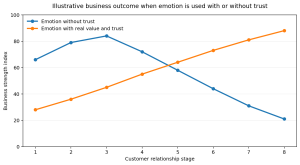

Figure 2. Illustrative model only. The two lines show how trust can change the durability of commercial growth.
This is why trust is not a soft idea. Trust has commercial value. It reduces hesitation. It lowers the amount of persuasion required. It gives customers the confidence to pay before they have experienced the full service. It helps a business survive mistakes because people are more willing to forgive a company they believe is acting in good faith. Trust also changes the effect of urgency. A customer with an urgent problem may desperately want a solution, but if they do not trust the seller, urgency alone may not close the sale. When urgent need meets high trust, action becomes much more likely.
The graph below shows that relationship in simple terms. It is conceptual, not empirical. The same customer need can produce very different outcomes depending on whether the business has earned credibility. That is why reputation, proof, consistency, referrals, transparent pricing, and honest communication matter. They do not sit outside sales. They are part of sales.
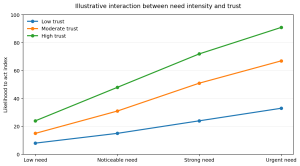

Figure 3. Illustrative model only. Higher trust can make the same level of customer need more likely to produce action.
At its core, every serious business is therefore in the business of human outcomes. A restaurant sells relief from hunger, but it may also sell belonging, celebration or memory. A bank sells financial services, but customers are really seeking access, safety, progress and control. A hospital sells medical care, but the family in the waiting room is buying competence, reassurance and the possibility of more time with someone they love. A media company sells information, but the reader may be buying clarity in a confusing world. A manufacturer sells physical goods, but the distributor may be buying reliability, margin and the confidence that shelves will not remain empty.
Once an entrepreneur sees business this way, market research changes. Instead of asking only what customers buy, you start asking why they buy it. Instead of measuring only price, you ask what risk the customer is trying to remove. Instead of looking only at demographics, you listen for frustration, fear, pride, ambition, and habit. Two customers with the same income and age can buy the same product for completely different reasons. One may want status. Another may want durability. One may want speed. Another may want certainty. The business that understands those differences communicates more precisely and designs better products.
This also explains why cheap is not always persuasive. If a mother is choosing a surgeon for her child, the cheapest option may actually increase anxiety. If a company is choosing a cybersecurity provider, an unusually low price may feel like added risk. If a bride is choosing a photographer for a day that cannot be repeated, reliability may matter more than saving a small amount. Price matters, especially when money is tight, but price is only one part of value. People constantly compare money against risk, time, emotion, convenience, identity, and future consequences.
The same principle explains premium brands. The physical difference between an ordinary product and an expensive product is sometimes smaller than the price difference. The rest of the price may be attached to design, service, scarcity, reputation, identity, experience and the story the buyer can tell about themselves after the purchase. This does not automatically make premium pricing dishonest. A brand can create genuine emotional and social value. The test is whether the customer understands what they are paying for and whether the company delivers what it implies.
For entrepreneurs, the practical lesson is simple but demanding. Know the human being before you perfect the pitch. Listen long enough to discover the real problem. Build an offer that solves enough of that problem to deserve payment. Explain the value in language the customer already uses. Remove unnecessary friction. Make the customer feel understood without making them feel exposed. Deliver what you promised. Then keep doing it until your name itself becomes a shortcut for trust.
There is also a moral lesson that business people should not avoid. The deeper your understanding of human psychology becomes, the greater your responsibility becomes. Knowing that a parent fears for a child does not give you permission to manufacture panic. Knowing that a young person desperately wants wealth does not give you permission to sell fantasy. Knowing that someone is lonely does not give you permission to engineer dependence. Knowing that a struggling family needs credit does not give you permission to hide the true cost of the loan. Insight can be used to serve people or to trap them. The difference is character.
The greatest businesses do not merely discover what people fear and then charge them for relief. They reduce the fear. They do not merely discover what people desire and then inflame the desire. They create something worthy of the desire. They do not merely discover what people hope for and then package empty promises. They build tools, systems, products, and opportunities that move people closer to that hope.
That is the part of the screenshot worth remembering. People are not wallets walking around waiting to be opened. They are human beings carrying private battles into public marketplaces. The man buying a suit may be nervous about his first major interview. The woman buying skin care may be rebuilding confidence after years of insecurity. The parent paying school fees may be sacrificing personal comfort for a child. The wealthy executive buying convenience may be trying to recover time with family. The struggling entrepreneur buying a course may be trying to keep a business alive. Behind the transaction there is almost always a story.
If you understand the story, you understand the market. If you respect the person inside the story, you can build something that lasts. The easiest money may indeed sit close to desire, beauty, time, peace, dreams, and hope. But the best money is earned when the customer can look back after paying you and say, this made my life better. That is the line between a clever seller and a great business. One captures attention. The other earns trust, creates value, and becomes part of a person’s progress.
Read Also: Starting Early: The Wealth Advantage Many Young Kenyans Ignore