


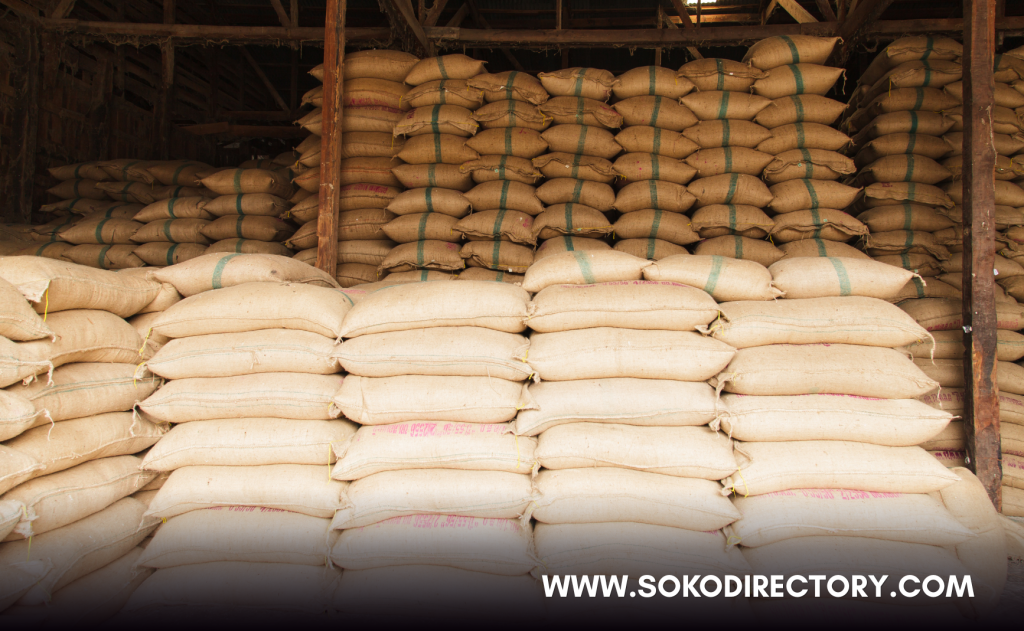
Kenya is looking to bring in more maize from Uganda as the two countries try to deepen agricultural trade under the African Continental Free Trade Area, but one issue keeps coming up as a sticking point: aflatoxin.
Agriculture Cabinet Secretary Mutahi Kagwe says Uganda has the capacity to cover a meaningful chunk of Kenya’s maize needs, but he’s pressing Kampala to fix how the grain is dried before it ever reaches the border.
The comments came during a luncheon with Uganda’s Parliamentary Committee on Agriculture, where Kagwe framed the issue as one that cuts both ways: solve it, and Ugandan farmers get a bigger market next door while Kenyan households get maize they can actually trust.


“We need a system in Uganda where maize is dried before it crosses the border. We can buy, but we need aflatoxin-free maize,” Kagwe told the delegation.
Kagwe pointed out that worries about moisture content and aflatoxin contamination have already made a number of Kenyan millers hesitant to buy Ugandan maize at all. Fix the drying process at the source, he argued, and that hesitation goes away, along with a real barrier to trade.
Kenya is currently working to bring in one million 90-kilogram bags of maize to top up its strategic reserves, after poor weather battered the 2026 harvest. Officials are bracing for a shortfall that could hit 5.4 million bags by the end of September.
Kagwe was clear that Kenya isn’t about to relax its food safety standards just to keep the maize flowing. “Kenya will continue enforcing food safety and quality standards for agricultural products entering the country, even as we work with neighbouring states to remove barriers to regional trade,” he said.
He also used the meeting to push a bigger point: African countries, he said, need to get serious about knocking down both tariff and non-tariff barriers that still get in the way of agricultural trade across the continent.
Different countries have different strengths, he argued, and trade should reflect that instead of everyone competing to grow the same things.
The Ugandan side echoed the sentiment. Members of the delegation noted that despite AfCFTA being in place, African nations still aren’t trading with each other nearly as much as they could be.
They called for harmonising agricultural and trade protocols, including within the East African Community, so produce can move across borders more easily without compromising on safety or quality.
Beyond maize, the two delegations touched on a longer list of shared headaches: climate change, water access for farming, pest and disease control, energy, cold storage, extension services, weak markets, and the need for more investment in value addition and agribusiness generally
Money came up too. The Ugandan delegation flagged that agriculture currently receives only about 2.2 percent of their national budget, a figure that came up as evidence of how underfunded the sector remains relative to its potential.
Kenya isn’t doing much better, according to John Mutunga, who chairs the National Assembly’s Agriculture Committee. He argued that Kenya needs to put more money behind agriculture too, given how many jobs the sector could generate if it were properly resourced.
“If we fund agriculture at less than 5 percent, we are constraining the sector that would create those jobs,” Mutunga said.
Read Also: Government Unveils Plan To Import 25 Million Bags Of Maize Amid Looming Food Shortage