


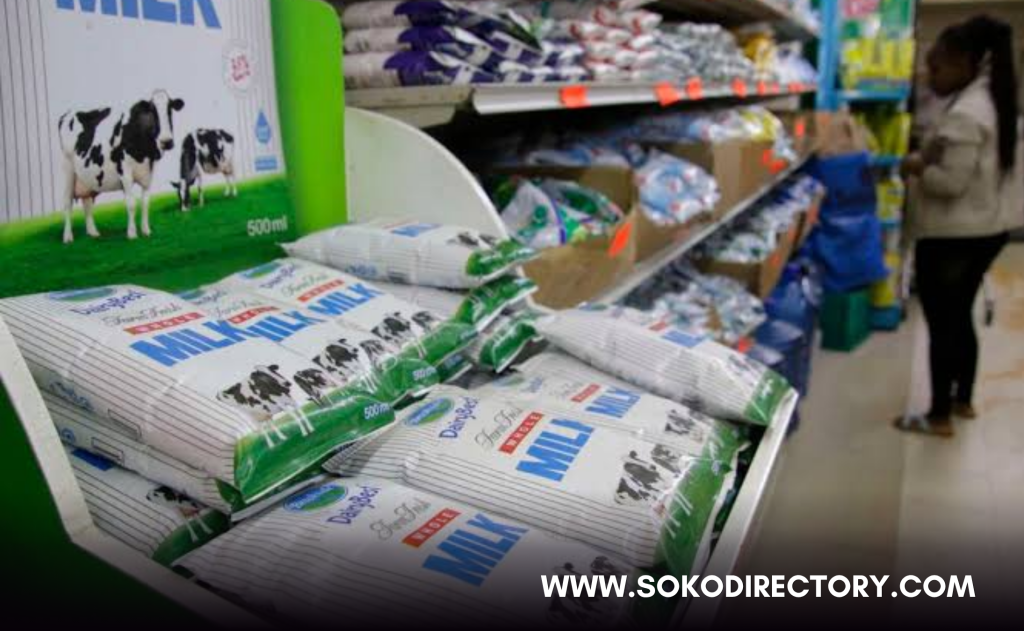
Dairy farmers will be paid Ksh65 for every litre of milk they deliver starting this month, President William Ruto has said, even as the country struggles with a milk shortage.
Addressing Kenyans at the 63rd Mashujaa Day celebrations at Kipchoge Keino Stadium in Eldoret on Tuesday, October 20, Ruto said the changes his government has made in agriculture are meant to put more money in farmers’ pockets.
“Beginning this month, dairy farmers will earn Ksh65 per litre, with a bonus of Ksh2 to be paid every quarter,” he said.


The President recalled that farmers were earning Ksh35 per litre before the reforms, and that the figure had since climbed to Ksh60. He said the new rate pushes it higher still. He added that the country’s milk output had increased by a billion litres.
Official figures point the same way. The Kenya National Bureau of Statistics (KNBS) Economic Survey 2026, published on April 30, shows fresh milk production reaching a record 5.5 million tonnes (about 5.5 billion litres) in 2025.
That is a 3.5 per cent rise on the year before and the third year in a row that output has grown. Milk taken in by industrial processors also passed 1 billion litres for the first time, up 11.5 per cent from 909 million litres in 2024.
Still, the announcement lands at a time when milk is hard to find and costly. Households, hotels and dairy outlets have all felt the pinch as supplies tightened and shop prices rose. Farmers blame expensive animal feed and falling production, and some now sell straight to consumers because they get a better price than processors offer.
The government therefore has to balance two things: raising what farmers earn without pushing prices out of reach for consumers.
A few days ago, Ruto announced plans to decentralise the eight New Kenya Cooperative Creameries (New KCC) factories so that each can run on its own and supply milk directly to markets in its region.
He said this would lessen dependence on the Nairobi plant for distribution and cut transport costs. The government expects the arrangement to ease the shortage and bring prices down for consumers.
The President also promised that the roughly Ksh400 million owed to dairy farmers will be paid by the end of October.
Read Also: Milk Prices Surge As Shortage And Rationing Persist Across The Country