


Africa may be building the world’s largest free-trade area, but agreements alone will not create trade.
Someone still has to manufacture products, grow food, provide services, move goods, and finance transactions.
That is why United Bank for Africa is placing small and medium-sized enterprises at the centre of its African growth strategy.


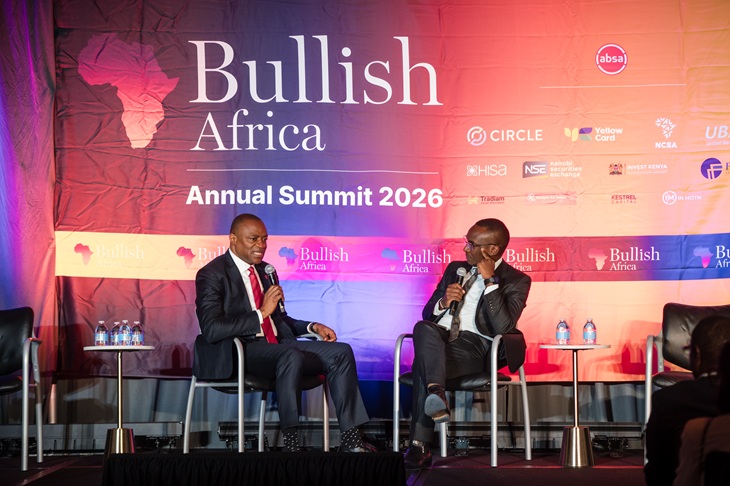
UBA Group Managing Director and CEO Oliver Alawuba says the African Continental Free Trade Area will only deliver on its promise if African businesses have the capacity and capital to take advantage of the larger market it creates.
UBA is backing that position with a commitment of up to US$6 billion towards SMEs across the continent.
AfCFTA’s Next Challenge
AfCFTA has fundamentally changed the conversation about Africa’s economic potential.
Instead of businesses thinking only about their domestic markets, the agreement presents the possibility of accessing customers across the continent.
For a Kenyan manufacturer, for example, the opportunity is no longer necessarily limited to Kenya’s domestic market. In principle, markets in West, Central, Southern and other parts of East Africa become part of a much larger commercial opportunity.
But access to a market and the ability to compete within it are two different things.
Businesses need working capital.
They need machinery and production capacity. They need reliable logistics. They need payment solutions. They need trade finance. They need knowledge of different markets and regulatory environments.
Most importantly, they need financial institutions that can support them beyond their home countries.
Why UBA’s Footprint Matters
This is where UBA believes its African footprint provides an advantage.
The banking group operates in 20 African countries, creating a network through which businesses can potentially access financial services as they expand across borders.
That network becomes increasingly relevant as AfCFTA moves from policy into actual commerce.
A business trading between Kenya and another African market should not have to approach cross-border expansion as though it is entering an entirely disconnected financial ecosystem.
The role of a Pan-African bank increasingly becomes one of connecting those markets — helping businesses navigate payments, financing, foreign exchange and local market requirements.
This is particularly important for SMEs, which rarely have the resources of multinational corporations to establish sophisticated financial and operational structures in every new country.
Financing the Businesses Behind AfCFTA
UBA’s US$6 billion SME commitment is therefore significant beyond its headline value.
The larger question is what that capital can enable.
Financing a manufacturer to increase production capacity can allow that company to serve customers beyond its home market.
Providing working capital to an agricultural processor can help it buy more produce from farmers.
Trade finance can allow an importer or exporter to execute larger orders.
Cross-border payment infrastructure can make it easier for businesses to receive and make payments across African markets.
The multiplier effect extends to employment, suppliers, distributors and communities.
For Alawuba, this connection between financing businesses and improving livelihoods is central to Africa’s economic transformation.
“We can begin to de-risk those areas and then deploy capital to it and allow that to grow,” he said. “And with that, we begin to create employment and change the livelihood of the people of Africa.”
Removing the Friction From African Trade
Capital, however, is only one part of the equation.
African businesses still operate across different currencies, regulatory systems and payment environments.
Reducing that friction will be crucial if intra-African trade is to scale.
Payment infrastructure such as the Pan-African Payment and Settlement System (PAPSS) is part of that transition, allowing participating institutions to facilitate cross-border payments using African currencies and reducing some of the dependence on traditional correspondent banking and foreign-currency conversion routes.
For SMEs, developments such as these can have very practical consequences.
The easier it becomes to pay a supplier, receive money from a customer or access financing across borders, the more realistic the idea of one African market becomes.
From African SMEs to African Champions
Perhaps the biggest opportunity is what happens when today’s SMEs successfully scale.
Africa needs more businesses capable of growing from domestic enterprises into regional companies and eventually into African multinationals.
That will require more than entrepreneurship.
It will require patient capital, financial infrastructure, market access and institutions willing to grow alongside those businesses.
UBA’s bet is that strengthening African SMEs today will create the companies capable of powering African trade tomorrow.
That makes the US$6 billion commitment more than an SME financing programme.
It is a bet on what African businesses could become.
AfCFTA has created the framework for a much larger African marketplace.
The next challenge is ensuring African businesses are strong en
Read Also: Kenyan Tea Farmer Eye Beyond Borders With Free Trade Agreements