



For traders who already use USDT and want to add stock futures trading to their crypto activity, BYDFi offers a practical starting point. Its stock contracts use USDT margin and a trading interface consistent with its perpetual futures products. Its markets also include gold and silver perpetuals, giving users several traditional-market exposures within one platform.
OKX, Coinbase and Binance deserve consideration for different requirements. OKX publishes detailed commodity benchmarks, Coinbase offers portfolio-level margin choices through its international derivatives service, and Binance supports continuous TradFi perpetual trading with cross and isolated margin.
The best fit depends on the contracts you need, when you trade and how you allocate collateral. These derivatives provide price exposure without ownership of the underlying shares or physical commodities. Perpetual contracts have no scheduled expiry and differ from conventional dated futures.


Comparing stock and commodity futures platforms
This comparison uses published product features, rather than investment returns or independently tested execution quality. Product access depends on the operating entity, jurisdiction and account eligibility.
| Platform | Relevant markets | Documented margin choices | Practical fit |
| BYDFi | US stocks; gold and silver perpetuals | Stock futures use isolated margin | USDT-based stock trading alongside crypto and metals |
| OKX | Stocks, gold, silver, WTI and Brent crude, among others | Isolated and cross margin; additional account modes | Comparing several stock and commodity benchmarks |
| Coinbase Advanced Trade Global Derivatives | Equity and commodity perpetuals | Cross or segregated margin, combined with standard or portfolio margin | Managing related exposures under a chosen margin model |
| Binance TradFi Perps | Stocks, ETFs and commodities, including precious metals | Cross and isolated margin, subject to contract rules | Around-the-clock TradFi trading with a choice of margin modes |
Stock-contract rules should not be assumed to apply to every commodity contract on the same platform.
BYDFi: a familiar USDT workflow for stocks and metals
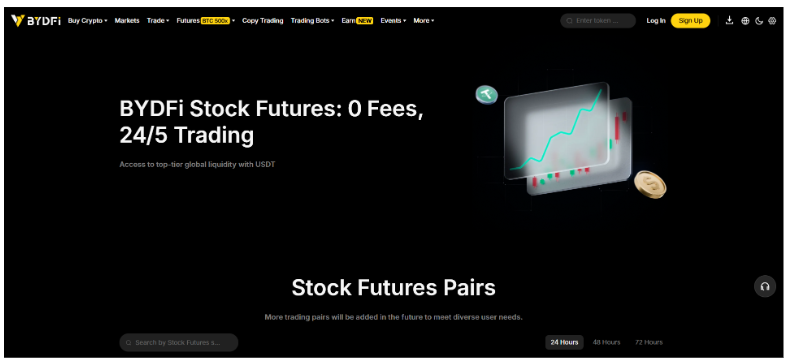

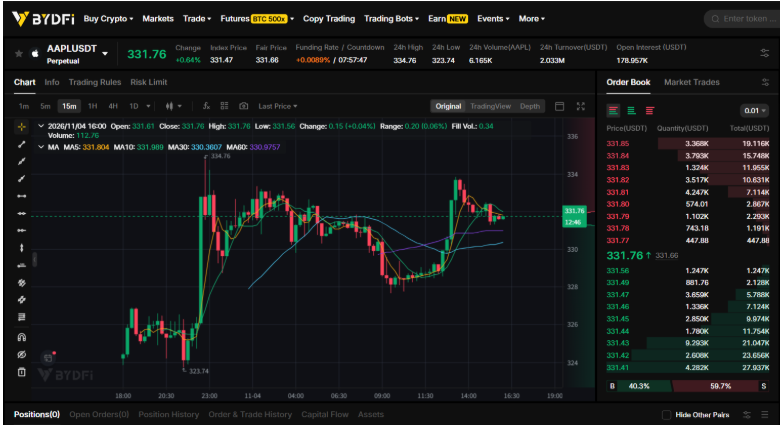
BYDFi stock futures let eligible users trade US share-price movements with USDT as margin. For someone already using USDT for crypto futures, this keeps the collateral currency familiar when adding stock exposure.
The interface is another practical consideration. BYDFi describes its stock futures experience as consistent with its perpetual futures trading interface. Existing users can approach stock orders through familiar controls, while still checking each contract’s specifications.
Its market listings also include XAUUSDT and XAGUSDT perpetuals for gold and silver. A trader following stocks and crypto can therefore consider metals exposure within the same platform. This makes BYDFi relevant to a broader comparison than stock trading alone.
Stock futures use isolated margin, allowing traders to allocate collateral separately to each position. That suits an approach in which each stock trade has its own margin budget, although liquidation remains possible.
BYDFi is most relevant here to USDT users whose stock trading centres on weekdays: its published stock schedule is 24 hours on weekdays. During contract-market closures, users can cancel unfilled orders and add margin, but cannot place new orders or close positions.

OKX: defined benchmarks for gold and oil exposure
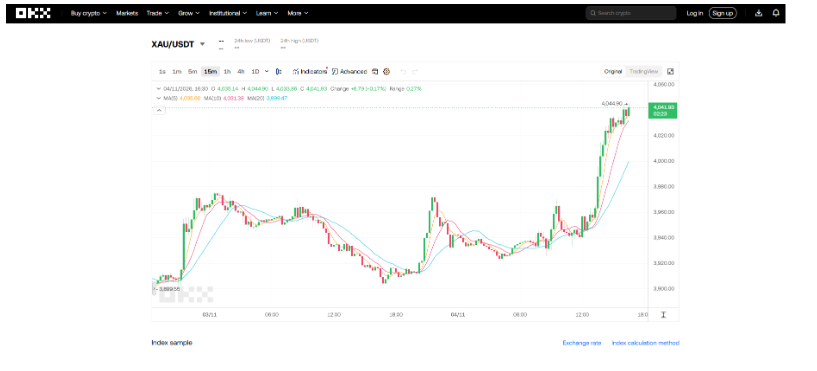
OKX offers USDT-margined stock and commodity perpetuals with isolated and cross margin. Its documented stock and commodity products trade 24/7.
For traders comparing commodity exposure, its contract references provide useful detail. XAUUSDT uses spot gold as an external pricing source, while CLUSDT and BZUSDT reference WTI and Brent crude futures.
Those distinctions matter for oil futures trading. A perpetual position can remain open while the underlying index gradually shifts between dated futures contracts. Differences between contract-month prices can affect the index and unrealised profit or loss.
OKX is worth considering when the choice of commodity benchmark is central to the strategy. Its weekend pricing mechanisms and regional availability still need checking.

Coinbase: margin choices for related positions
Coinbase Advanced Trade’s Global Derivatives service offers equity and commodity perpetuals through a Deribit-powered gateway. This international service is separate from Coinbase’s US futures offering.
Its documentation describes cross and segregated margin, combined with standard or portfolio margin. Cross margin pools collateral across positions; segregated margin separates it. Portfolio margin assesses the combined risk of related exposures.
That structure may appeal to traders managing several positions together. It also requires attention to which collateral is shared and how margin requirements change. Users should confirm the instruments, settlement assets and margin models available to their particular account.

Binance: continuous access to TradFi perpetuals
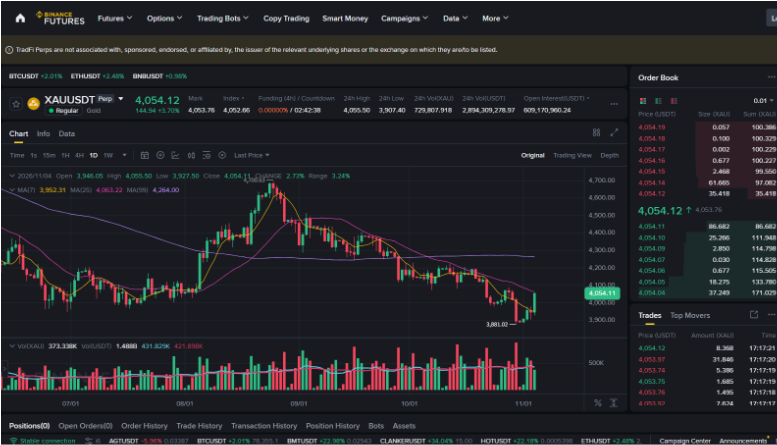
Binance TradFi Perps cover stocks, ETFs and commodities such as gold and silver. The contracts settle in stablecoins and offer cross or isolated margin under the applicable product rules.
They trade 24/7, including when the underlying traditional exchange is closed. This supports weekend position management, although pricing conditions can change outside the underlying market’s trading session.
Binance applies off-market index-pricing mechanisms, including smoothing. Its current guide also specifies four- or eight-hour funding intervals, depending on the contract, and different fee schedules by settlement currency.
These details make Binance relevant to traders prioritising continuous access. The trade-off is the need to understand off-hours pricing and recurring funding costs.

Choosing a multi-asset trading platform
Identify what the contract tracks
Before trading gold futures, establish whether the product references spot gold, a dated futures contract or a gold-backed token. A gold futures trading platform should clearly identify its benchmark, contract size and settlement rules.
For oil, distinguish WTI from Brent and read any index-roll methodology. For stocks, check the treatment of dividends, splits, trading halts and delistings. Holding a derivative does not automatically provide the rights or adjustments associated with owning shares.
Compare costs for your intended holding period
The best futures trading platform for short holding periods may differ from the best choice for positions held across several funding settlements.
Compare maker and taker fees for the exact instrument and account tier, then add expected spread, slippage and funding payments. Funding is calculated on position value under the contract’s rules, not simply the margin deposited.
Check the current applicable rate before opening a position. A headline fee offer may have conditions and does not eliminate funding costs or liquidation risk.
Match futures trading hours to your exit plan
A weekday schedule can suit a trader who plans to close stock positions before the weekend. A trader who needs weekend access should look for a contract that supports it.
Continuous trading does not guarantee consistent liquidity. When the reference market is closed, spreads may widen and index prices can depend more heavily on other perpetual markets or the platform’s order book. Confirm the timezone, holiday arrangements and behaviour of conditional orders during any closure.
Which platform fits your trading approach?
BYDFi merits a place on the shortlist for traders who value USDT-based stock exposure, familiar futures controls and access to metals on the same platform. OKX provides explicit commodity benchmarks, Coinbase offers portfolio-level margin choices, and Binance supports continuous TradFi trading.
Before depositing, confirm product eligibility and compare the exact contracts you intend to trade. The most useful choice is the one whose collateral arrangements, costs and exit rules match your trading plan.