


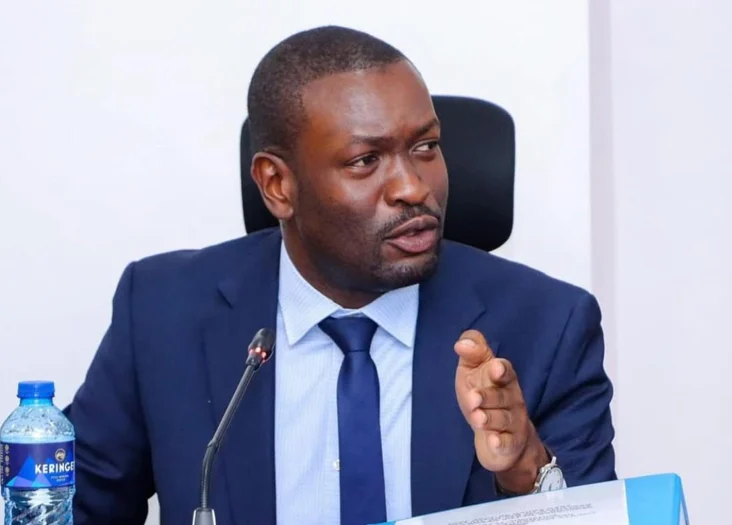
The case for an Edwin Sifuna presidency—and the character, constitutional courage and hard economic choices that would determine whether it can change the country.
Kenya has perfected an extraordinary contradiction: a politician enters public office promising to fight poverty and emerges wealthy enough to buy an entire conversation about it. The people get speeches. The connected get contracts. The ordinary citizen gets another explanation of why there is no money.
Meanwhile, the mother at a public hospital is not asking whether the minister arrived in a Mercedes-Benz or a Land Cruiser. She is asking whether the medicine is available. The young graduate with a folder full of certificates is not asking for another launch ceremony. He is asking for work. The trader who has paid tax, county fees, electricity bills and three mysterious charges is not begging for a motivational speech. She is begging for enough margin to keep her shop open.


This is the country in which Nairobi Senator Edwin Watenya Sifuna is making a serious bid for the presidency in 2027. And this is why his candidacy deserves more than the usual analysis of coalition arithmetic, rally crowds and whose helicopter landed first. The central question is more demanding: could Kenya finally elect a president who regards power as a duty to discharge rather than a prize to consume?
My answer is that Sifuna could change Kenya’s trajectory—if the discipline visible in his public advocacy becomes the discipline of a working government. Not because any man is a saint. Not because a sharp tongue is an economic programme. But because the presidency is first a test of what a person believes the state is for.
The man before the microphone
Born in 1982 in Kakamega County and raised in a working family, Sifuna studied law at the University of Nairobi and later completed professional legal training at the Kenya School of Law. He was admitted to the Roll of Advocates in 2008. He went on to practice law, became a prominent figure within the Orange Democratic Movement (ODM), and was elected Nairobi senator in 2022. His parliamentary profile records a legal education at the University of Nairobi and a history of party leadership. [1][2]
Those details matter because a presidency is not a radio debate with a longer microphone. A lawyer should know that a government cannot announce its way around a court order, that constitutional rights are not favours from a benevolent ruler, and that an office-holder’s oath is a legal obligation, not decorative calligraphy.
A simpler image has also followed him in accounts of his student years at the Parklands law campus: a man who did not seem desperate to advertise himself through material possessions. That is an admirer’s recollection, not a certified balance sheet. But it raises a worthwhile question about political character. What happens when a leader does not appear to need every appointment, motorcade and expensive watch to convince himself he is important?
It is a quietly radical idea in a country where a politician can move from the language of sacrifice to the lifestyle of a small oil-producing state in one electoral cycle.
The most dangerous politician is not the loudest. It is the one whose price cannot be found.
Politics has a market. Loyalties are traded, principles are discounted, and yesterday’s sworn enemies can become today’s business partners so quickly that the ink on the insults has barely dried. In that environment, a politician who is willing to lose an office rather than abandon a position changes the negotiating table. The familiar question—“What does he want?”—suddenly becomes difficult to answer.
Sifuna’s break with ODM’s leadership gave this question national urgency. His departure from the secretary-general’s office followed an internal disciplinary dispute; subsequent tribunal proceedings upheld the party’s later disciplinary process. That is an important legal fact and should not be airbrushed away. His supporters see resistance to political accommodation; critics see party indiscipline. Both interpretations deserve examination. But what is beyond dispute is that his political career did not end when the office ended. [3]
The lesson is not that Sifuna has been scientifically proven unbuyable. No public figure can be awarded an incorruptibility certificate by admirers, by a church, or by a newspaper. The lesson is that an electoral candidate willing to make accountability central to his appeal invites a very specific test: publish your interests, explain your funding, disclose your associates, make procurement transparent, and keep the same standards when the people being questioned are your friends.
A leader who wants less for himself may leave more room for the country. But the only convincing proof is what happens when he controls the budget.
Why Sifuna brings Patrick Njoroge to mind
The comparison with former Central Bank of Kenya governor Dr Patrick Njoroge is revealing. Njoroge, a Catholic and a Yale-trained economist, attracted attention for turning down expensive official privileges and keeping a notably modest personal lifestyle. That frugality became a public story precisely because it was so unusual among senior office-holders. [4]
Sifuna also describes his upbringing as strongly Catholic. There is a moral thread in the comparison: the possibility that a person may have a life large enough that public office does not have to become a substitute for self-worth. Faith, however, is not a substitute for audits, competence or the Constitution. Kenya has never suffered a shortage of leaders photographed outside places of worship. A rosary cannot reconcile a missing payment voucher, and an eloquent prayer cannot repair a broken oxygen machine.
Njoroge’s relevance is therefore not that he and Sifuna belong to the same church. It is the sharper proposition that restraint can be a governing virtue. If modesty is genuine, it lowers the temptation to turn state assets into personal trophies. If competence accompanies it, it helps create an institution that can outlast the individual.
He has asked the sort of questions that inconvenience comfortable offices
Consider the unglamorous business of water. In June 2023, Sifuna asked the Senate for answers about chronic shortages in Nairobi, including in Lang’ata, Embakasi and the central business district. He sought an account of what the water utility was doing about supply failures, ageing infrastructure and alleged water-cartel activity. This was not the kind of issue that produces a shiny billboard. It is the kind that determines whether a household can bathe, cook or keep a small business open. [5]
In 2026, as the Senate examined Nairobi County’s accounts, Sifuna pressed for scrutiny of Auditor-General findings concerning unsupported expenditure. Parliamentary reporting cited, among other audit queries, KSh 840 million in personnel costs without supporting documentation and seven withdrawals totalling KSh 1.9 billion lacking specified records. These are audit concerns, not findings that named individuals stole those sums. The public interest lies in demanding a full explanation and the proper accounting records. [6]
Here is the distinction between performance and performance art. Asking hard questions about money is not, by itself, evidence that every shilling has been recovered. Yet a senator who pursues the audit trail is working closer to the heart of constitutional oversight than one who confines his ambition to spectacular speeches about “development”.
A country does not become clean when its leaders declare themselves clean. It becomes harder to steal from when expenditure can be traced, auditors can do their jobs, and public officers are expected to answer questions without treating them as personal insults.
The Constitution is not a campaign prop
Article 73 of Kenya’s Constitution is unusually clear: public authority is a trust and the responsibility is to serve the people, not to rule them. Article 75 addresses conflicts between personal and public duties. These are not sentimental suggestions. They are standards against which the holder of presidential power must be judged.
Sifuna has made constitutionalism, accountability and human rights prominent themes of his emerging presidential platform. As he organised the Linda Mwananchi Movement in late October 2026, he called for greater openness around public contracts and promised to reduce wasteful expenditure. In his political telling, roads, stadia and other projects cannot justify secrecy about the contracts that finance them.
This is the argument Kenya must recover: a government can build something and still govern badly. A road is important. So is the legality of the tender, the quality of the asphalt, the value for money, and the right of citizens to ask whose companies were paid. A stadium is not a substitute for a functioning hospital. A ribbon-cutting ceremony cannot become a presidential pardon for abuse of power.
Rights are not an obstacle to development. They are part of development. A mother whose son fails to come home after a demonstration does not experience the state as a set of GDP projections. She experiences it as a terrifying silence. A president who takes the right to life seriously would understand that no infrastructure project can compensate a family for a child who is gone.
What a Sifuna presidency would have to do—not merely promise
His policy direction has begun to take shape. In October 2026 interviews and public appearances, Sifuna argued for reducing waste and selective taxes, improving the reliability of educational data, and settling legitimate hospital claims promptly. One proposal envisages payment to hospitals within 30 days for verified services, alongside consequences for fraudulent claims. He has also discussed a national data system to improve planning and accountability in education. These are campaign proposals, not implemented outcomes. [9]
There is an attractive governing logic here. When a hospital is paid on time, it can buy medicines and pay staff. When policymakers know how many learners and teachers actually exist, the country can plan classrooms and capitation more honestly. When procurement records are accessible, the contractor who delivered the road has less to fear from the politically connected competitor who delivered an invoice.
But a serious presidency must go beyond applause lines. Sifuna has cited potential expenditure reductions ranging from KSh 500 billion to KSh 1.8 trillion. Such figures are political estimates that require line-by-line publication, independent assessment and a credible timetable; they should not be treated as money already recovered. Eliminating a tax can ease households’ burdens, but the arithmetic of public services, debt and county transfers still has to balance. [9]
A reforming president would begin with a public inventory of projects, debt commitments, pending bills and procurement contracts. He would publish measurable cost-saving targets, protect the Auditor-General’s independence, support lawful investigations without calling prosecutors from State House, and require every ministry to show the outcomes bought with its allocation. His own appointees would face the same scrutiny as those he replaced.
For small businesses, the test would be equally practical: predictable tax administration; fewer overlapping levies; clear payment periods for government contracts; fair public tenders; and an economic strategy that helps production, energy, transport and trade—not merely consumption. If the entrepreneur must wait months to be paid while the government demands its taxes on time, the state is financing itself with the entrepreneur’s working capital. That is not partnership. It is extraction dressed in a tie.
The measure of a good presidency is not how richly the presidency lives. It is how many ordinary lives become less precarious because the presidency did its work.
Why this argument is emotional—and why it should be
We sometimes discuss corruption as though it were an abstract defect in a spreadsheet. It is not. Behind a missing allocation is a patient told to buy medicine elsewhere. Behind a stalled water project is a girl carrying jerrycans before school. Behind a delayed supplier payment is a workshop that sends its apprentices home. Behind a captured police institution is a citizen who hesitates before speaking the truth.
The tragedy is not only money lost. It is trust spent. It is the parent who stops believing a public school can work. The nurse who begins to think that the system is designed to exhaust the decent. The young person whose greatest career plan becomes leaving the country. A nation can borrow money from international markets; it cannot borrow belief from a generation that has run out of reasons to believe.
That is why the moral disposition of a president matters. If the president regards public money as a private cookie jar, every office beneath him receives a terrible invitation. If the president treats a single questionable payment as an affront to public trust, the invitation changes. Institutions are still essential, but leadership tells the system which behaviour is rewarded.
I find something profoundly hopeful in the possibility of a president who does not appear fascinated by the furniture of power. The chair at State House is not sacred. The child at the public hospital is. The convoy is not the country. The taxpayers stuck behind it are.
The questions he must answer before Kenyans entrust him with State House
Admiration should sharpen scrutiny, not suspend it. Kenya should ask Sifuna for a fully costed manifesto, an explanation of how proposed tax cuts would coexist with debt service and essential spending, a transparent account of campaign finance, and clear criteria for appointing a Cabinet. He must explain how he would work with a potentially fragmented Parliament, protect the independence of institutions, and reject the old habit of rewarding coalition partners with procurement access.
He must also answer difficult questions about alliances. The 2027 opposition is being assembled from politicians with competing histories, including figures Sifuna once opposed. His role in the Senate proceedings concerning former Deputy President Rigathi Gachagua is one part of his record that deserves principled explanation as political relationships change. A politician who asks the country to value constitutional consistency cannot make consistency optional whenever a new alliance becomes electorally useful. [10]
His Linda Mwananchi organisation, launched into a more formal national campaign structure in late October, has ambitious plans for a presence across all 47 counties. Building a movement is difficult. Building a government that can manage procurement, health, education, policing and public debt is harder. Kenya will need more than a charismatic candidate: it will need capable colleagues, transparent choices and the willingness to dismiss even a close ally who violates the public trust. [8][11]
Nor should modest private habits be mistaken for a complete integrity record. A simple lifestyle may be admirable, but it does not exempt a public figure from asset disclosure, audit, conflict-of-interest rules or the duty to account for every decision. The most convincing anti-corruption policy begins with the president volunteering for scrutiny.
The difference between wanting to be president and wanting the presidency to mean something
In a country exhausted by grand slogans, it is tempting to make any promising figure into a messiah. That would be unfair to Sifuna and dangerous for Kenya. No single politician can replace functioning institutions. No man is permanently immune to temptation. A presidency changes a country only when its values become systems: clean appointments, published contracts, independent enforcement, reliable services, and public spending that survives examination.
Still, Sifuna represents a compelling possibility. A lawyer who speaks the language of constitutional obligation. A senator who has asked inconvenient questions about services and accounts. A politician whose recent conflict with party structures forced him to seek his own mandate. An aspirant who has placed the cost of government, rights and accountability near the centre of his national argument.
The opportunity is not to give him a crown. It is to give Kenya a different contract with power—one in which the president is not the richest spectator at a national emergency, but the first person required to explain what government is doing about it.
If Sifuna can translate character into institutions, conviction into an affordable programme, and opposition rhetoric into accountable administration, then his presidency could mark a real turning point. Not because his name would appear on a new portrait in every office, but because the ordinary Kenyan might finally discover that the office on the wall exists to serve them.
Imagine that for a moment: a government whose greatest achievement is not making the president look powerful, but making the citizen feel less powerless.
That is the Kenya worth arguing for. And it is the standard Edwin Sifuna must be willing to meet.
Read Also: Sifuna Must Run Because We Did Not Order a Deputy, PERIOD. Its Either Sifuna, Edwin Or Watenya