


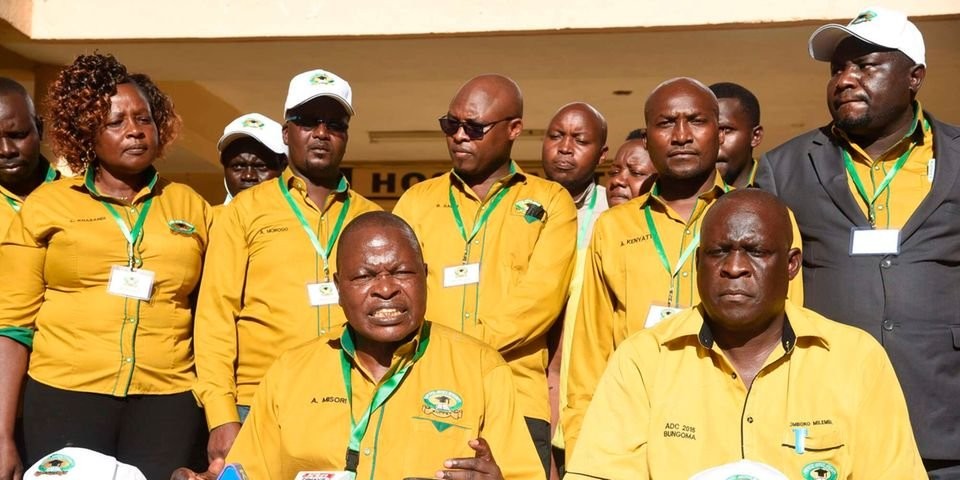
The teachers’ union, the Kenya Union of Post Primary Teachers (KUPPET), has told the government to drop, or at least rethink, the Comprehensive School Model, insisting that junior secondary schools must stand on their own.
Addressing delegates at the KUPPET 2026 annual conference in Diani, officials said that putting Grades 7 to 9 under primary school headteachers overlooks the fact that junior school teachers deliver a secondary-level curriculum.
Secretary General Akelo Misori and Chairman Mboko Milemba said junior schools need their own administration, headed by principals who have actually worked at the secondary level.


“This model should be rethought by all means necessary. It is not only unfair for our teachers in many elements, but its repercussions will mostly be felt by the learners,” Milemba said.
The union does not object to junior schools sharing compounds with primary schools to save on infrastructure costs. Its concern is that shared space should not turn into shared management, or erase the separate identity of junior schools.
The model is President William Ruto’s idea. It would bring pre-primary, primary and junior secondary under a single administration. On November 11, 2026, he instructed the Ministry of Education to come up with proposals within 90 days to amend the Basic Education Act, creating a legal framework for how these schools are governed, staffed and funded.
Under the plan, primary headteachers would stay in charge of the whole institution and oversee the junior section with help from deputies and other management structures.
Ruto also wants capitation for primary and junior schools merged so that institutions can manage money under one framework. He further directed that school funds be released before the start of each term from 2027.
KUPPET is unmoved. It wants junior schools to have substantive principals and deputy principals so that teachers have leadership structures matching the level they teach.
The union also warned that the arrangement could narrow promotion prospects for post-primary teachers and make it harder to move between junior and senior schools. It questioned the model’s legality too, arguing that current education laws do not recognise comprehensive schools and that constitutional questions remain unanswered.
On staffing, KUPPET called for more teachers to be hired. It noted that 24,000 teachers have so far been given permanent and pensionable terms, with another 20,000 expected to follow, but said it wants at least 116,000 additional teachers recruited next year.
The plan does have a backer in the Kenya National Union of Teachers (KNUT), which says a single administration would improve coordination and cut duplication in management.
Read Also : TSC Names New CEO, Bringing Months Of Acting Leadership to An End