


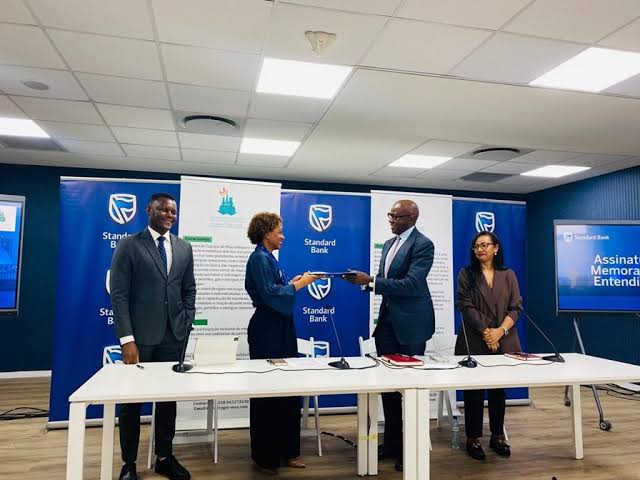
Standard Bank and the Mozambique Oil and Gas Chamber have signed a memorandum of understanding (MoU) to support the development and integration of micro, small and medium-sized enterprises (MSME) across the country’s energy value chain. Combining business capacity building, access to finance and connections with major operators, the partnership aims to help Mozambican companies compete for contracts as multi-billion-dollar projects advance toward commissioning.
Representing the voice of the African energy sector, the African Energy Chamber (AEC) recognizes the partnership as a vital step toward strengthening local participation across the energy sector. Signed in Maputo this week, the MoU addresses one of the biggest challenges faced by the industry: ensuring that domestic companies have the financial resources, technical capabilities and commercial connections needed to benefit from large-scale investments. By bringing financial institutions and leading operators together, the initiative offers a practical model for translating Mozambique’s growing energy investment pipeline into sustainable opportunities for local businesses.
“Mozambique is attracting billions of dollars into LNG development, but the true measure of success will be how much of that investment reaches local companies, creates jobs and builds lasting industrial capacity. Standard Bank and the Mozambique Oil and Gas Chamber are demonstrating exactly the kind of partnership Africa needs to turn major energy investments into opportunities for African businesses,” states NJ Ayuk, Executive Chairman of the AEC.


The partnership comes as Mozambique advances a series of major LNG projects toward commissioning. TotalEnergies’ Mozambique LNG project, designed to produce 13.1 million tons per annum (mtpa), is targeting first production by 2029. Development is progressing, with more than 4,000 workers currently mobilized at the Afungi site. ExxonMobil is also advancing the Rovuma LNG project toward a 2028-start. The company recently selected an engineering and procurement contractor for the planned 18.6-mtpa project.
Meanwhile, at African Energy Week 2026, Eni announced that it would begin drilling at the $7.2 billion Coral Norte FLNG project in early November. With a planned capacity of 3.6 mtpa, the project will double Mozambique’s LNG output to approximately 7 mtpa. Eni currently produces from the Coral Sul project, which came online in 2022. These projects are not only cementing the country’s position as a global LNG exporter, but are creating a substantial pipeline of opportunities for local MSMEs.
Stepping into this picture, the recent partnership between Standard Bank and the Mozambique Oil and Gas Chamber positions local companies at the forefront of these projects. According to Florival Mucave, President of the Mozambique Oil and Gas Chamber, the partners “aim to ensure that, as business opportunities emerge in connection with the supply chains of LNG projects, Mozambican companies not only know about these opportunities but are also increasingly prepared.”
Financing is at the core of the MoU. Mucave cited a MozUp 2024 study which showed that out of 104 suppliers surveyed, only 27% had bank loans, while 84% relied on informal financing avenues that covered about half of their business needs. The partnership addresses this challenge by connecting companies directly to financiers, while providing broader support across training and business preparation.
“A Mozambican entrepreneur should not lose a contract simply because they cannot access working capital or meet procurement requirements without support. We commend Standard Bank and the Mozambique Oil and Gas Chamber for moving beyond commitments to local content and putting practical solutions in place to help domestic businesses compete and grow,” Ayuk added.
Read Also : DNV research finds cooling set to account for 13% of global electricity demand by 2035