
Africa Was Pushed to The Margins at Davos – Africa Business Roundup

New African Railways Ride on Chinese Loans
Experts say Chinese infrastructure investment in Africa is not about altruism. Funding railways benefits China by connecting ports and facilitating the movement of raw commodities that are badly needed to fuel China’s development.
“East Africa, particularly the ports in Kenya, ports in Tanzania and especially ports in Djibouti, these are very important for the Chinese just for the exports,” says Jyhjong Hwang, a senior research assistant at Johns Hopkins’ China-Africa Research Initiative.
Chinese investments reach every part of the African continent. Billions of Dollars spread over all types industries. #China #Africa pic.twitter.com/iDBlPIx4Az
— AR3_Magazine (@AR3Mag) January 24, 2017

Kenya railway line almost done
It is the latest in China’s massive infrastructure investment in Africa. A $13-billion railroad in Kenya, financed by the Export-Import Bank of China and built by the state-owned China Road and Bridge Corporation, is nearly complete. Other railway lines are planned to stretch into East African countries including South Sudan, Uganda, Rwanda and Burundi. Read:
Related:
- SGR is a Win-Win Cooperation, not a Friendship with Kenya, says China
- SGR expected to be Completed by June 2017
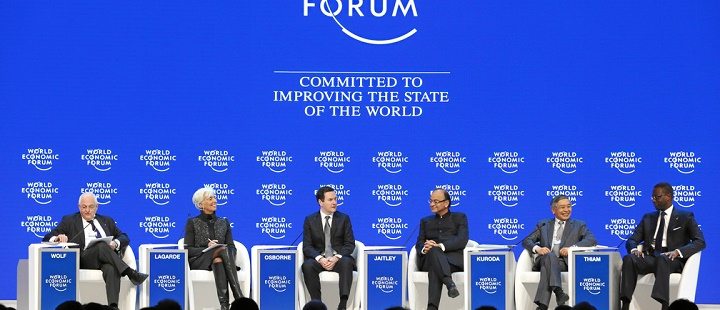
Why Africa Was Pushed to The Margins at Davos
Not too long ago, in around 2010-2014, Davos attendees were captivated by the Africa Rising narrative.
Inspired by buoyant oil and commodity revenues, investors seized on faster economic growth than in the past and compared with the developed world, rising incomes and even peaceful political transitions, as proof of a structural shift.
Now, that optimism has reversed.
Nigeria, Africa’s biggest economy, is in recession, and in danger of a currency crisis. The continent’s most industrialized economy, South Africa, celebrated for its post-apartheid democratic transformation, is struggling with sluggish growth and political squabbles that could see it lose its investment grade credit rating this year. Read:

Inflation, Growth Fears Keep S. Africa, Nigeria Rates Steady
The central banks of Africa’s two largest economies held borrowing costs steady on Tuesday as they face accelerating inflation and tepid growth.
South Africa’s Reserve Bank left the benchmark rate at 7 percent for a fifth straight meeting, and Nigeria’s monetary policy committee kept its key lending rate at 14 percent. Read:
 The smart way to help African farmers tackle climate change
The basic recipe for boosting performance is well known: more investment, better access to financial services, improved seeds, and a lot more fertiliser (appropriately applied).
What is less appreciated is the key role played by agricultural extension workers. They link small-scale farmers to