
Five Major Pointers to Look Out for in the G20 Summit-CNBC
By Amina Faki,
U.S President Donald Trump is set to meet in person for the first time with the Russian President Vladimir Putin on Friday which marks the 12th annual G-20 meeting in Hamburg, Germany.
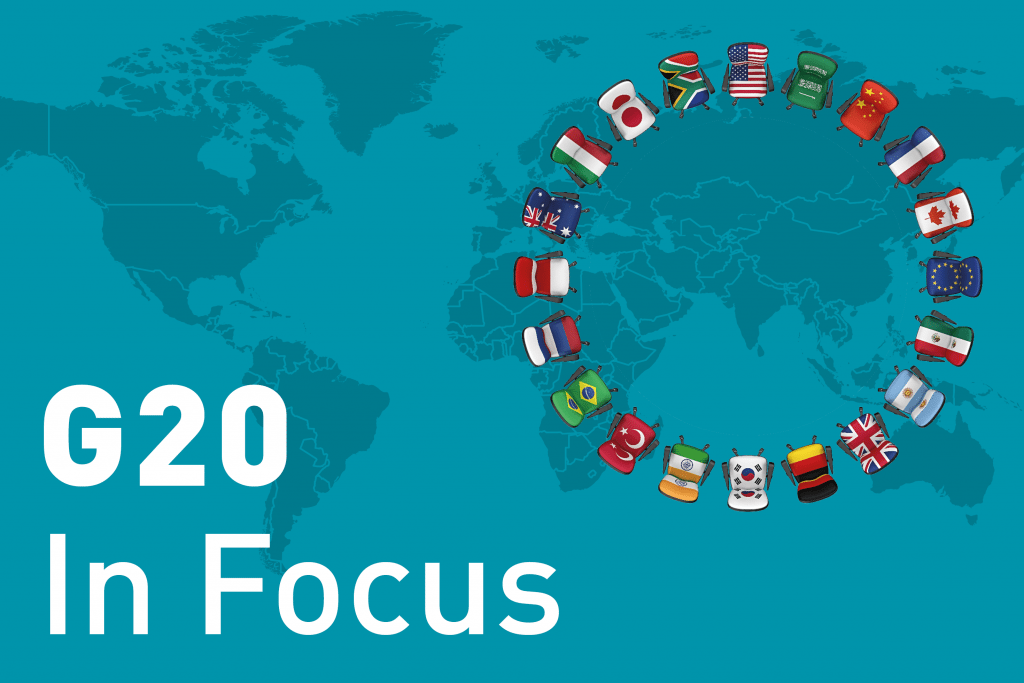
The annual meeting brings together 20 heads of state from the world’s 20 major influential economies.

The summit that will be held today is the most anticipated meeting on the sidelines of the G20 due to geopolitical tensions in major world economies.
Even by the standards of international summitry, the annual meeting of G20 leaders – scheduled for July 7 and 8 in the northern German port city of Hamburg – tends to be a bland, tightly scripted affair.
Heads of state and government from developed and emerging economies issue a joint statement highlighting areas of consensus on issues ranging from financial regulation and taxation reform to economic development and international trade.
According to an article in the CNBC, below are some of the five pointers one should expect from the two-day G20 summit:
Defense
Emerging developments from North Korea in the recent might lead to the renewal urgency of defense.
Japan and South Korea will be eager to see the U.S.’s commitment to Article 5 of the NATO treaty, which guarantees collective defense from members in the case of an attack. But with the U.S. now potentially a direct target of North Korean President Kim Jong-Un’s increased military capabilities, it is likely to want to discuss increased defense – and potentially new military measures – against the totalitarian regime.
“It means that more measures might result from talks at the G-20 meetings in Hamburg from China and Russia.”
The talks will come at a time of ongoing tension for NATO members with claims from U.S. President Donald Trump that EU members must do more to bring their defense contributions in line with those of the U.S.
Terrorism
Combating terrorism will be central to talks as leaders look for new ways to fight the increasingly unpredictable attacks which have taken place over recent months and years.
Europe, in particular, has come under pressure from a series of attacks which have been conducted by Islamist extremists, and although leaders have stepped up their security measures, they will be focused on implementing new counter-terrorism measures.
On Tuesday, French President Emmanuel Macron announced that he would lift the state of emergency, in place since a terror attack on Paris in November 2015, by November 1, 2017. He also set out a five-year military program to be adopted in 2018 and new laws to strengthen the country’s anti-terrorism arsenal.
Last week, NATO members met to discuss increased security measures, including continued efforts to combat the so-called Islamic State.
Trump meets Putin
This weekend marks a number of hotly anticipated first encounters between world leaders, but chief among them will be that of Trump and Russian President Vladimir Putin.
The pair’s first face-to-face meeting, due to take place on the summit’s sidelines on Friday morning, will be closely watched at a time when ties between the two countries have grown increasingly fraught after Russian interference in the U.S. election campaign and continued conflict in Syria.
The Kremlin said on Wednesday that the meeting would be used as an opportunity to establish an “effective working dialogue” between the two world leaders.
“This is the first meeting, the first time the two presidents will get acquainted – this is the main thing about it,” Kremlin spokesman Dmitry Peskov told a conference call with reporters.
“The expectation is that a working dialogue will be established, which is vitally important for the entire world when it comes to increasing the efficiency of resolving a critical mass of conflicts.”
The two premiers have so far had a tumultuous relationship.
Trade
Trade will also be a hot topic on the agenda as world leaders try to strike a resolve on their differing approaches to the movement of goods.
As with May’s G-7 meeting in Taormina, Italy, Trump will likely find his protectionist policies at odds with other member states who favor international economic cooperation.
Merkel outlined on Wednesday that she was prepared for “difficult negotiations” between G-20 members, while Chinese President Xi Jinping signaled that free trade would continue, even if Trump stood on the sidelines. Since then, Germany’s Foreign Minister Sigmar Gabriel has spoken out about his concerns over a potential trade war between the U.S. and the EU.
Trump has previously come to loggerheads with Germany over the latter’s trade surplus, which his administration has claimed is the result of currency manipulation. The clash has come as the EU is in the midst of talks with both China and Japan to establish free trade agreements.
The International Monetary Fund on Wednesday urged G-20 leaders to avoid “myopic” nationalistic policies and to work together in agreed forums to resolve their trade and economic differences.
Climate change
Environmental issues will also come to the fore following Trump’s decision to withdraw from the Paris climate accord.
The move attracted widespread consternation from Europe and Asia, as well as individual U.S. states, and G-20 leaders will be under renewed pressure to persuade the leader of the world’s largest economy of the merits of increased e