
Masoko: Connecting the Smallest of Vendors to a Nationwide Market
By Bob Collymore
For centuries, trade has defined borders, moulded communities and broken barriers.
In the early days, smoke signals and drum beats may have been the first indication that people were willing to trade.

Later, using dug-out canoes and dhows, ocean liners, aircrafts, cars and more recently, through computers, the internet, and the mobile phone, humans have continuously worked to improve their means of exchanging goods and services.
One thing has remained constant throughout this evolution. The balance of power has typically favoured those groups that have the widest reach, the deepest pockets and who were logistically-savvy.
But there are some new rules of trade that are emerging, defined by an increasingly digital landscape. This means that anyone can now sell or buy, as long as they can access a platform.
And those platforms come in a growing number of formats these days.
From the mammoth e-commerce platform Alibaba, which is leveraging the latest in deep learning AI to deliver faster, further and better; to start-ups like Dfter, which exist solely on Instagram, the concept of the ‘platform economy’ is increasingly influencing the world of commerce.
Much of this growth will come from emerging markets. These are markets that are just starting to get a glimpse of the vast possibilities brought about by digital technologies as they become more connected.
According to Credit Suisse, online retail spending in these markets is expected to rise from the current USD 1 trillion to USD 2.5 trillion by 2025.
Over the next few years, emerging markets are going to be essential for e-commerce growth, as retailers in developed markets may soon reach saturation in terms of consumer growth.
For years, the biggest beneficiaries of this new Platform ecosystem have been the largest and biggest producers of goods and services.
We all know that the largest firms anywhere in the world today have the market power to purchase the best logistics services to move goods or pay for the best services, technologies or talent from anywhere in the world.
But there’s another more powerful story that’s unfolding.
This opportunity to use technology to open new doors for trade means that cottage industries, rural farmers, artistes and basically anyone who has access to a data connection can now participate in the global market from the comfort of their homes.
In an instant, the traditional barriers of trade like distance and language are being broken down and forming a new landscape for more inclusive and sustainable growth.
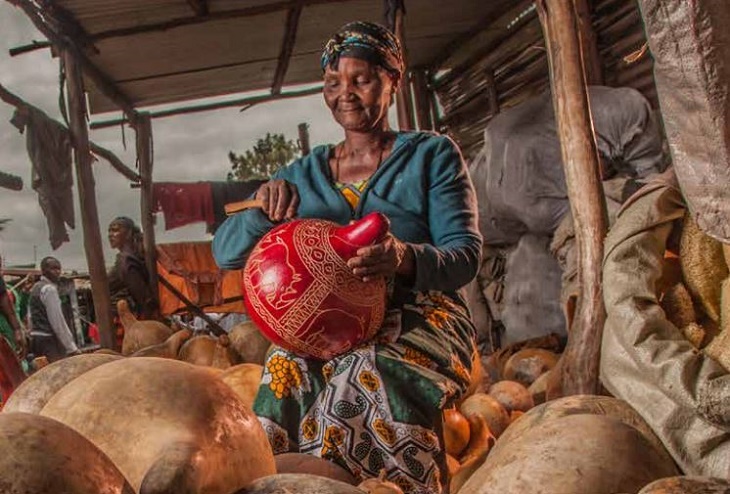
For instance, a kiondo weaver in Karatina Market, East Africa’s largest open air market who produces three kiondos a week can find any market across the world on her mobile phone without breaking the bank, thanks to the platform economy.
It’s the evolution of trade, and it means that we must adopt a new focus on how we can create a more equal world alongside this democratization of access, which is powered by new technologies.
To build more inclusive economies that can withstand the pressures of a changing world, business must work alongside governments to ensure that equitable growth for all does not get left behind by the e-commerce boom.
In fact, the e-commerce model lends itself more easily to sustainable thinking – because most small companies in emerging markets who are keen to get online will be able to define their own business norms and create business models that are beneficial to their communities. This convergence of technology and shifts in trade gives the world the opportunity to reboot its thinking around how to source and supply goods sustainably.

This realization is the underlying philosophy behind Masoko (Kiswahili for markets) which Safaricom launched a few months ago to link buyers to markets.
Masoko hopes to unlock the untapped e-commerce market in Kenya by connecting consumers, merchants and vendors to each other using a powerful online portal.
It offers customers the opportunity to make payments for services using M-PESA, enjoying the service’s speed, scale, security and reliability and reaches all market segments through the power of the mobile phone.
But the sweet spot lies with the people whose lives we can potentially impact. Because through our portal, a lady selling shea butter in the lakeside town of Kisumu has the opportunity to reach the world.
By leveraging the strength and reach of our network, our customer base, and a number of partnerships with vendors, we hope to create a solution that can power the next phase of growth for the Kenyan economy.
We hope to create a universal platform that will connect the smallest of vendors in Kenya to a nationwide market, sustainably.
When the story of the platform economy and the Internet of things is told; when the Fourth Industrial Revolution finally takes root, when the digital revolution plugs in full form into the exchange of goods and services, humanity might just have found a way of spreading economic of benefits to even those who have traditionally been at a disadvantage from not having large economies of scale.
Bob Collymore, is the CEO of Safaricom Limited. Article first appeared on his Linkedin page

About Soko Directory Team
Soko Directory is a Financial and Markets digital portal that tracks brands, listed firms on the NSE, SMEs and trend setters in the markets eco-system.Find us on Facebook: facebook.com/SokoDirectory and on Twitter: twitter.com/SokoDirectory

- January 2026 (220)
- February 2026 (248)
- March 2026 (287)
- April 2026 (207)
- May 2026 (192)
- June 2026 (238)
- July 2026 (279)
- August 2026 (224)
- September 2026 (33)
- January 2025 (119)
- February 2025 (191)
- March 2025 (212)
- April 2025 (193)
- May 2025 (161)
- June 2025 (157)
- July 2025 (227)
- August 2025 (211)
- September 2025 (267)
- October 2025 (297)
- November 2025 (230)
- December 2025 (220)
- January 2024 (238)
- February 2024 (227)
- March 2024 (190)
- April 2024 (133)
- May 2024 (157)
- June 2024 (145)
- July 2024 (136)
- August 2024 (154)
- September 2024 (212)
- October 2024 (255)
- November 2024 (196)
- December 2024 (143)
- January 2023 (182)
- February 2023 (203)
- March 2023 (322)
- April 2023 (297)
- May 2023 (267)
- June 2023 (214)
- July 2023 (212)
- August 2023 (257)
- September 2023 (237)
- October 2023 (264)
- November 2023 (286)
- December 2023 (177)
- January 2022 (293)
- February 2022 (329)
- March 2022 (358)
- April 2022 (292)
- May 2022 (271)
- June 2022 (232)
- July 2022 (278)
- August 2022 (253)
- September 2022 (246)
- October 2022 (196)
- November 2022 (232)
- December 2022 (167)
- January 2021 (182)
- February 2021 (227)
- March 2021 (325)
- April 2021 (259)
- May 2021 (285)
- June 2021 (272)
- July 2021 (277)
- August 2021 (232)
- September 2021 (271)
- October 2021 (303)
- November 2021 (364)
- December 2021 (249)
- January 2020 (272)
- February 2020 (310)
- March 2020 (390)
- April 2020 (321)
- May 2020 (335)
- June 2020 (327)
- July 2020 (333)
- August 2020 (276)
- September 2020 (214)
- October 2020 (233)
- November 2020 (242)
- December 2020 (187)
- January 2019 (251)
- February 2019 (215)
- March 2019 (283)
- April 2019 (254)
- May 2019 (269)
- June 2019 (249)
- July 2019 (335)
- August 2019 (292)
- September 2019 (306)
- October 2019 (313)
- November 2019 (362)
- December 2019 (318)
- January 2018 (291)
- February 2018 (213)
- March 2018 (275)
- April 2018 (223)
- May 2018 (235)
- June 2018 (176)
- July 2018 (256)
- August 2018 (247)
- September 2018 (255)
- October 2018 (282)
- November 2018 (282)
- December 2018 (184)
- January 2017 (183)
- February 2017 (194)
- March 2017 (207)
- April 2017 (104)
- May 2017 (169)
- June 2017 (205)
- July 2017 (189)
- August 2017 (195)
- September 2017 (186)
- October 2017 (235)
- November 2017 (253)
- December 2017 (266)
- January 2016 (164)
- February 2016 (165)
- March 2016 (189)
- April 2016 (143)
- May 2016 (245)
- June 2016 (182)
- July 2016 (271)
- August 2016 (247)
- September 2016 (233)
- October 2016 (191)
- November 2016 (243)
- December 2016 (153)
- January 2015 (1)
- February 2015 (4)
- March 2015 (164)
- April 2015 (107)
- May 2015 (116)
- June 2015 (119)
- July 2015 (145)
- August 2015 (157)
- September 2015 (186)
- October 2015 (169)
- November 2015 (173)
- December 2015 (205)
- March 2014 (2)
- March 2013 (10)
- June 2013 (1)
- March 2012 (7)
- April 2012 (15)
- May 2012 (1)
- July 2012 (1)
- August 2012 (4)
- October 2012 (2)
- November 2012 (2)
- December 2012 (1)