
How Does the Water Carbon Cooling System Prevent Galaxy Note9 from Heating Up?
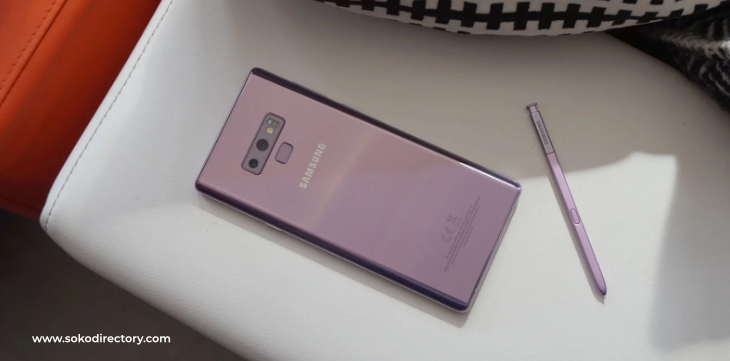
The Samsung Galaxy Note9 is remarkably designed for those who want to do more and get more in a smartphone. It is powered by faster chips, robust graphics cards, and enough RAM to game like a console. It is more of a laptop in your pocket than a phone.
The Note9 pushes the envelope further, featuring the latest and greatest chipsets, up to 8GB RAM, and a 4,000mAh battery.
But with all that power under the hood, it takes some engineering magic to make sure that all the components stay cool while you’re gaming or doing some intense multitasking. Samsung has innovated smartphone cooling on the Galaxy Note9 with its all-new Water Carbon Cooling system.

“The Note9 is a game changer in many ways. It’s packed with power that will undoubtedly give South Africans the freedom to accomplish more and do it effortlessly,” says Charles Kimari, Head of Mobile Division at Samsung Electronics.
The system, which first debuted on the Galaxy S7, has been improved in terms of capacity and efficiency in the Galaxy Note9. So how was this made possible?
Making phones with batteries that can last all day and play console-quality games comes at a cost; heat. When a phone’s internals become too hot, the CPU slows down – a problem known as thermal throttling – and leads to a loss in performance.
Sluggish gameplay and poor multi-tasking are two major problems that a good cooling system addresses.
The Galaxy Note9 accomplishes the ambitious set of goals it had; a battery that could last all day, provide a PC-like experience with Samsung DeX and handle graphic-intense games like Fortnite.
It features a 4,000mAh battery and the latest 2.7GHz mobile processor, which would have challenged the phone’s performance. This called for the new cooling system to be both faster and more efficient than previous generations.
When the Galaxy S7 was launched it came with a new type of water-based in-phone based cooling system. It used a porous thermal spreader filled with water, which absorbed the heat and turned into steam and then carried the heat away through a pipe.
Once the heat dissipated, the steam condensed into water again. This system was the blueprint for the Water Carbon Cooling system.
The most difficult part of improving the cooling system was to make it more efficient. The original system was thin and used two Thermal Interface Materials (TIM), one made of highly conductive carbon fiber, to transfer heat away from the processor.
The answer was to add a layer of copper between the two TIMs, making it possible to transfer more heat between the two materials for more efficient heat dissipation. The thermal spreading pipe was also made wider, coming in at 350mm3 compared to the Galaxy S9’s 95mm3, to dissipate heat over a wider surface area.
Thanks to the improved Water Carbon Cooling system, the Galaxy Note9 can effectively manage heat generated from its powerful processor. With the wider thermal spreader and enhanced Carbon Fiber interface, the cooling system conducts and transmits heat efficiently to the surface of the device, allowing the Galaxy Note9 to operate at peak performance consistently. When compared to the Galaxy Note8, the upgraded cooling system’s heat absorption is three times greater and the thermal conductivity is 3.5 times higher.

About Soko Directory Team
Soko Directory is a Financial and Markets digital portal that tracks brands, listed firms on the NSE, SMEs and trend setters in the markets eco-system.Find us on Facebook: facebook.com/SokoDirectory and on Twitter: twitter.com/SokoDirectory

- January 2026 (220)
- February 2026 (248)
- March 2026 (287)
- April 2026 (208)
- May 2026 (191)
- June 2026 (238)
- July 2026 (279)
- August 2026 (83)
- January 2025 (119)
- February 2025 (191)
- March 2025 (212)
- April 2025 (193)
- May 2025 (161)
- June 2025 (157)
- July 2025 (227)
- August 2025 (211)
- September 2025 (267)
- October 2025 (297)
- November 2025 (230)
- December 2025 (220)
- January 2024 (238)
- February 2024 (227)
- March 2024 (190)
- April 2024 (133)
- May 2024 (157)
- June 2024 (145)
- July 2024 (136)
- August 2024 (154)
- September 2024 (212)
- October 2024 (255)
- November 2024 (196)
- December 2024 (143)
- January 2023 (182)
- February 2023 (203)
- March 2023 (322)
- April 2023 (297)
- May 2023 (267)
- June 2023 (214)
- July 2023 (212)
- August 2023 (257)
- September 2023 (237)
- October 2023 (264)
- November 2023 (286)
- December 2023 (177)
- January 2022 (293)
- February 2022 (329)
- March 2022 (358)
- April 2022 (292)
- May 2022 (271)
- June 2022 (232)
- July 2022 (278)
- August 2022 (253)
- September 2022 (246)
- October 2022 (196)
- November 2022 (232)
- December 2022 (167)
- January 2021 (182)
- February 2021 (227)
- March 2021 (325)
- April 2021 (259)
- May 2021 (285)
- June 2021 (272)
- July 2021 (277)
- August 2021 (232)
- September 2021 (271)
- October 2021 (304)
- November 2021 (364)
- December 2021 (249)
- January 2020 (272)
- February 2020 (310)
- March 2020 (390)
- April 2020 (321)
- May 2020 (335)
- June 2020 (327)
- July 2020 (333)
- August 2020 (276)
- September 2020 (214)
- October 2020 (233)
- November 2020 (242)
- December 2020 (187)
- January 2019 (251)
- February 2019 (215)
- March 2019 (283)
- April 2019 (254)
- May 2019 (269)
- June 2019 (249)
- July 2019 (335)
- August 2019 (292)
- September 2019 (306)
- October 2019 (313)
- November 2019 (362)
- December 2019 (318)
- January 2018 (291)
- February 2018 (213)
- March 2018 (275)
- April 2018 (223)
- May 2018 (235)
- June 2018 (176)
- July 2018 (256)
- August 2018 (247)
- September 2018 (255)
- October 2018 (282)
- November 2018 (282)
- December 2018 (184)
- January 2017 (183)
- February 2017 (194)
- March 2017 (207)
- April 2017 (104)
- May 2017 (169)
- June 2017 (205)
- July 2017 (189)
- August 2017 (195)
- September 2017 (186)
- October 2017 (235)
- November 2017 (253)
- December 2017 (266)
- January 2016 (164)
- February 2016 (165)
- March 2016 (189)
- April 2016 (143)
- May 2016 (245)
- June 2016 (182)
- July 2016 (271)
- August 2016 (247)
- September 2016 (233)
- October 2016 (191)
- November 2016 (243)
- December 2016 (153)
- January 2015 (1)
- February 2015 (4)
- March 2015 (164)
- April 2015 (107)
- May 2015 (116)
- June 2015 (119)
- July 2015 (145)
- August 2015 (157)
- September 2015 (186)
- October 2015 (169)
- November 2015 (173)
- December 2015 (205)
- March 2014 (2)
- March 2013 (10)
- June 2013 (1)
- March 2012 (7)
- April 2012 (15)
- May 2012 (1)
- July 2012 (1)
- August 2012 (4)
- October 2012 (2)
- November 2012 (2)
- December 2012 (1)