
How Kenyan Homes Are Embracing The ‘Internet of Things’
KEY POINTS
The Internet of Things (IoT) describes the network of physical objects — “things”—that are embedded with sensors, software, and other technologies for the purpose of connecting and exchanging data with other devices and systems over the internet.
The Internet has transformed many aspects of our lives today and continues to disrupt our normal way of doing things. It has made the world “smaller” and enhanced access to things like information and new opportunities.
The Internet has become such a fundamental part of our lives and it, therefore, becomes hard to imagine our lives before it or even the fact that there might be companies in the world today that do not use an element of digitization in any part of their business processes.
Kenya has one of the most progressive ICT sectors in Sub-Saharan Africa that has enabled growth while creating new opportunities for consumers and businesses alike.

One of the latest trends that seem to be taking over Kenyan homes is the “Internet of Things” (IoT). For years, the term IoT was only associated with the first world, and sometimes with a certain class in society. But it has now become a reality and a necessity.
What is the “Internet of Things”?
The Internet of Things (IoT) describes the network of physical objects — “things”—that are embedded with sensors, software, and other technologies for the purpose of connecting and exchanging data with other devices and systems over the internet.
These devices range from ordinary household objects to sophisticated industrial tools. With more than 7 billion connected IoT devices today, experts are expecting this number to grow to 22 billion by 2025. In this grace of IoT, Kenya has not been left behind.
Over the past few years, IoT has become one of the most important technologies of the 21st century. Now that we can connect everyday objects—kitchen appliances, cars, thermostats, baby monitors—to the internet via embedded devices, seamless communication is possible between people, processes, and things.
By means of low-cost computing, the cloud, big data, analytics, and mobile technologies, physical things can share and collect data with minimal human intervention.
In this hyperconnected world, digital systems can record, monitor, and adjust each interaction between connected things. The physical world meets the digital world—and they cooperate.
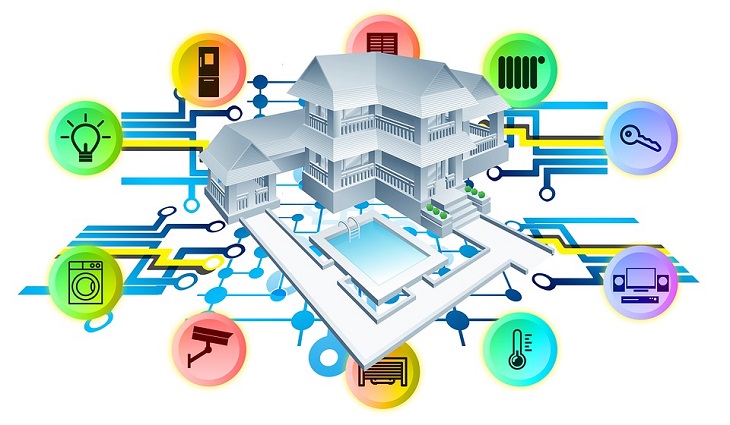
It is common nowadays to walk into a Kenyan home and find almost every electronic in the house is interlinked to another. You find one using a remote to turn lights on and off, use the TV to operate a vacuum machine, a fridge is operated via a mobile app, doors opening and closing by use of a mobile phone among others.
At the same time, electronic manufacturers are moving with the changing times. Almost all of them are coming up with electronics such as TVs, washing machines, refrigerators, and others that have Artificial Intelligence embedded in them, making it easy for the Internet of Things.
How is 5G accelerating IoT in Kenya?
The launch of the 5G network in the major urban centers of the country, Nairobi, Kisumu, Kisii, and Kakamega, and to more than 150 areas in nine towns across Kenya in the next 12 months, by Safaricom in partnership with Nokia and Huawei, is bound to come with faster internet.
The latest sector statistics from the Communications Authority of Kenya show that there are currently 43.7 million internet/data subscriptions in Kenya, slightly less than the country’s population, with more than 90 percent of these using mobile phones.
This increased access to the internet has piqued the interest of Kenyans in IoT as well. Apart from individual businessmen like Alex, who started importing the smart bulbs because of increased demand from his customers, established businesses have begun to take notice.
This year, Securex Agencies, a regional security provider for technology-driven security solutions across East Africa launched a kit ‘Rafiki by Securex’ retailing at Kshs 6,500 that enables users to access their home security from anywhere using their home Wi-Fi connection.
The kit works by connecting motion detectors and sensors through WiFi to an app on the user’s phone that they can then use to access the system and receive alerts when doors or windows, wherever the sensors have been placed, are opened.
Users also have the ability to purchase additional security accessories that suit their different needs, such as door contact sensors, motion sensors, cameras, and even smart lighting. Costs for setting up a smart home can be rather steep, and uptake is therefore low.
However, as the technology becomes widely available and Kenyans get more access to global e-commerce, these costs may gradually come down. On the utility side, companies like Upepo Technology are pioneering the installation of smart meters to stem losses of water provided by service providers.

About Soko Directory Team
Soko Directory is a Financial and Markets digital portal that tracks brands, listed firms on the NSE, SMEs and trend setters in the markets eco-system.Find us on Facebook: facebook.com/SokoDirectory and on Twitter: twitter.com/SokoDirectory