
Equity Pumps Kshs 678 Billion Into Private Sector Economic Recovery
KEY POINTS
The plan targets agricultural transformation by enhancing value chain coordination, capacity building of smallholder farmers-anchoring them better to formal value chains, financing mechanization, and credible inputs.
KEY TAKEAWAYS
The plan conceives that the 5 million businesses largely comprising MSMEs will create 50 million jobs, 25 million jobs directly and an equal number of jobs indirectly as the ecosystems of business become more cohesive, connected, and ultimately synergize and grow.
Equity Group has launched a private sector-focused stimulus package to accelerate economic recovery and resilience in the Eastern and Central Africa region as it recovers from the devastating health, social, humanitarian, and economic impacts of the COVID-19 pandemic.
Equity’s Eastern and Central Africa Recovery and Resilience Plan is envisaged to provide financing of up to 2 percent of the combined GDP of the six economies, in which the Group operates, to the private sector in the form of blended financing of short-term overdrafts.
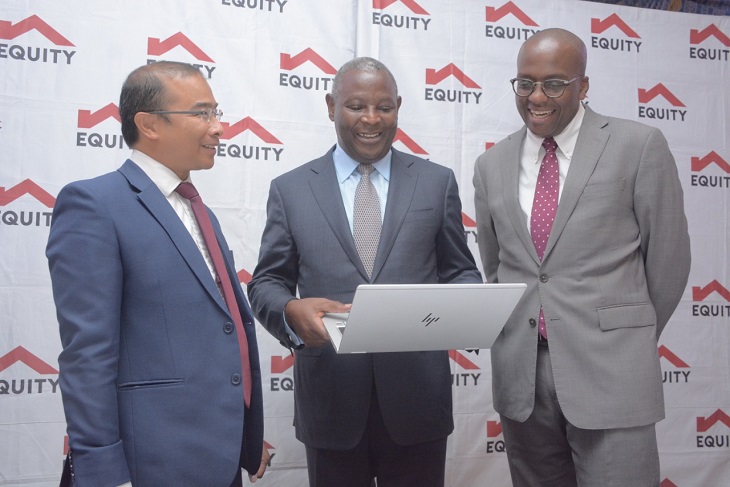
While launching the Recovery and Resilience Plan Dr. James Mwangi, Equity Group Managing Director and CEO said, “A total of 678 billion shillings (USD 6 billion) will be available to 5 million MSMEs and 25 million individual borrowers for the next 5 years.

The plan conceives that the 5 million businesses largely comprising MSMEs will create 50 million jobs, 25 million jobs directly and an equal number of jobs indirectly as the ecosystems of business become more cohesive, connected, and ultimately synergize and grow.”
“The recovery plan will have a special focus on youth and women, supporting them to be the primary drivers of creating and expanding opportunities in the real economy. Under the Young Africa Works Initiative in partnership and collaboration with the Mastercard Foundation, the plan will build capacity in young people through financial literacy, entrepreneurship training, and digital literacy,” added Dr. Mwangi.
Under the primary sectors, principally Food and Agriculture, the focus will be on unlocking productivity gains and value addition ecosystems to achieve food security for the region while increasing value creation in the primary sectors, which are the highest employers, highest foreign exchange-earners and the highest contributors of export goods.
The plan targets agricultural transformation by enhancing value chain coordination, capacity building of smallholder farmers-anchoring them better to formal value chains, financing mechanization, and credible inputs.
A significant plank of the plan is agro-processing which adds and enhances the value of agricultural exports while processing food for easy access by an urbanizing population and production of building materials to support construction and housing development.
The recovery and resilience plan seeks to leverage productive capacities and comparative advantages to transform the region into a manufacturing hub that converts agricultural raw material into finished products for export and national use.
The plan covers value addition for all primary products including retaining value in mineral processing to export semi-finished and finished products. The plan targets financing of in-country manufacturing and regional supply chains to replace broken global supply chains following COVID-19 disruptions.
“We learned and developed a lot of knowledge while setting up PPE production and manufacturing in Kenya during the early days of the COVID-19 pandemic. In order to replace the broken global PPE supply chains, Equity Group Foundation donated Kshs 1.1 billion (USD 11 million) jointly with its partners to protect doctors and medical staff of 116 national referral, county, and faith-based hospitals for the last two years,” said Dr. Mwangi.
Focus on trade and investments will enable expansion of markets for the primary sectors of Food and Agriculture and manufactured products, along with the realization of investments to support the growth of the two sectors. The East African Community, following the inclusion of DRC (the Democratic Republic of the Congo), will provide an expanded regional market with similar characteristics and requirements.
The African Continental Free Trade Area Agreement (AfCFTA) presents the opportunities that the Plan seeks to fully utilize by signing an implementation and collaboration partnership with the AfCFTA Secretariat to position Equity Group as an implementation partner.
The plan also seeks to fully utilize existing Trade and Investment Agreements such as the European Union Trade Agreement, the United States of America’s AGOA (African Growth and Opportunity Act) framework, and the capacities of the Commonwealth community.
Pilot testing of these initiatives was undertaken with the December 2021 Kenya DRC Trade Mission between the Governments of the DRC and the Government of Kenya with the support of Equity Group. The mission which has generated a sizeable deal pipe provided us invaluable lessons on how to mobilize, organize and support the private sector in stimulating cross-border trade and investment for purposes of scaling,” said Dr. Mwangi.
Micro, Small, and Medium Enterprises (MSMEs) are the largest vehicles for indigenous capital and entrepreneurship and will contribute significantly to local capital formation and employment. Mass market and MSME financing is a key strength of Equity Group with 72 percent of its loan and credit portfolio held in this segment.
The Group has rolled out a plan to lend and advance loans to 5 million MSMEs and 25 million individuals to stimulate the participation of the local community and population, with a bias to young people and women.
To enhance the success rate among MSMEs and young people, the plan involves credit risk-sharing mechanisms