
The Next Frontier Explores How The Cities Of Tomorrow Are Taking Shape
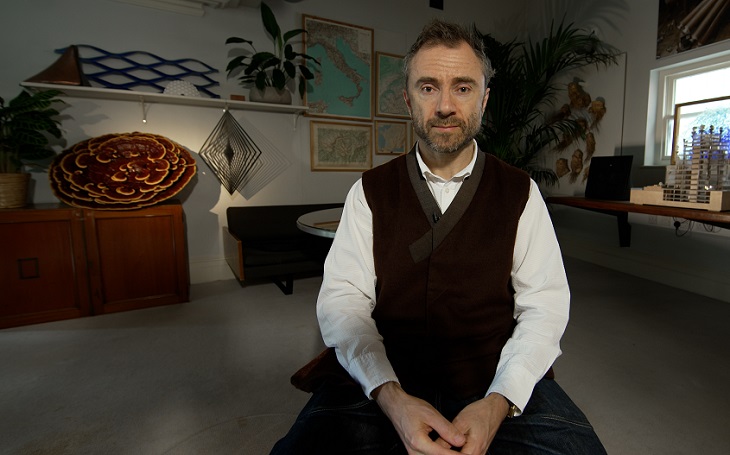
In the new series The Next Frontier, CNN’s Rahel Solomon explores the future of living and how tomorrow’s cities are being imagined.
In the first episode, Solomon examines the topic of ‘How We Will Live. With populations expected to rise, and most people projected to live in urban areas, CNN meets the architects, designers, and dreamers behind the future way of life. From soaring skyscrapers to subterranean designs, and cities floating on water to urban rewilding, a new world of possibility is already being prepared for.
Oceanix is the first-ever floating city, currently being built in Busan, South Korea. Bjarke Ingels, the creative director of BIG, the architects behind Oceanix, explains why climate change has accelerated the need to design floating cities, “In many ways, the idea of floating cities has crept up on us over the years. All coastal cities in the world face a new reality.”

Ingels talks about the design potential of floating cities, “The cities are anchored onto the seabed, but they’re flexible. So literally, if something about the city does not work, maybe where you place the school and you want to place it in a different location, you could unplug that platform and move it to a different location, which is impossible to do on land. So, this means that this city is alive and listens to the needs of the community and responds to them.”
Oceanix’s founder Itai Madamombe believes that floating cities are a solution to teach people to live in harmony with the oceans, “We believe that people living on the water is inevitable. Not only is it inevitable, but it’s also imminent. I mean, think about it, the ocean makes up over 71% of the earth’s surface. So, we are really living on planet ocean, and the ocean offers us so much to meet our needs for shelter, for food, for energy, and for mobility as well.”
Floating cities are just one possibility for the future, another is life among the clouds. Dutch architect Stefan Al says that the next frontier is more sustainable skyscrapers. He tells CNN, “What I think is probably more important than getting taller is getting greener. How can we build more sustainably and how can we be more inclusive with our buildings? In New York, for instance, a lot of the tallest buildings are playgrounds for the uber-rich, but if you look at the history of skyscrapers, very often they were also seen as examples of social housing, of affordable housing. And I think that’s the legacy of the skyscraper.”
From the clouds to life underground, subterranean cities are also a possibility for our future lives. In Singapore, a series of tunnels could shape the future of urban planning all over the world. Peter Stones, associate engineer at Arup, leading the Civil Water and Resources team, explains, “The next frontier is how to plan and develop our underground spaces in a way that is sustainable, and takes into account their permanence and longevity, and really delivers on the promise that they provide to enhance liveability in our cities.”
Stones details how different layers of subterranean life are already in action, “Typically, the layers that are shallowest, closest to the surface, are given over to more human-centered uses, which is why we see underground pedestrian networks, or underground malls maybe at basement one, and basement two in our cities. And as we go further deeper, typically, we find transport infrastructure such as rail tunnels. So, we see an interesting layer cake of the underground space development, where those human-centered uses are really prioritized at the shallowest levels, and the deeper levels are reserved for those uses which require less human contact.”
In the future, Stones believes we will see further expansion of underground developments, “Globally as our cities grow in terms of population, in terms of number, in terms of density, that will inevitably push us to use underground space for our transport, and other uses. So, I envisage a future reality where the topside is prioritized for people, for ecology, for nature, for plants, and underground space can service that topside through infrastructure and through other uses.”
More space for nature is a recurring theme for urban centers of the future, with green designs already starting to take shape. In Nottingham, England a rewilding project is aiming to bring nature back to the city. Designer Thomas Heatherwick discusses the project, “There’s an opportunity to heal the heart of the city, but also make new green space. And we can use the old structures to bring it alive and not just make any old park but make something really distinctive and unusual and unlike anywhere else in the world.”
Rewilding is beneficial not only for the people who live in a city but also for the planet as a whole, with trees and green spaces absorbing more carbon than they release. Heatherwick hopes that Nottingham will become a blueprint for other cities, “We forget that you can be ambitious, you can be artistic while adapting things rather than destroying them. And you might just not be soulless because you’re borrowing all that history and texture, which is so precious, and everyone values it.”
Keeping pace with the times, while also designing for the future. Whether it’s incorporating nature, floating on water, soaring through the sky, or exploring underground, The Next Frontier explores the ways our cities will evolve in years to come.

About Soko Directory Team
Soko Directory is a Financial and Markets digital portal that tracks brands, listed firms on the NSE, SMEs and trend setters in the markets eco-system.Find us on Facebook: facebook.com/SokoDirectory and on Twitter: twitter.com/SokoDirectory

- January 2026 (220)
- February 2026 (248)
- March 2026 (287)
- April 2026 (207)
- May 2026 (192)
- June 2026 (238)
- July 2026 (279)
- August 2026 (224)
- January 2025 (119)
- February 2025 (191)
- March 2025 (212)
- April 2025 (193)
- May 2025 (161)
- June 2025 (157)
- July 2025 (227)
- August 2025 (211)
- September 2025 (267)
- October 2025 (297)
- November 2025 (230)
- December 2025 (220)
- January 2024 (238)
- February 2024 (227)
- March 2024 (190)
- April 2024 (133)
- May 2024 (157)
- June 2024 (145)
- July 2024 (136)
- August 2024 (154)
- September 2024 (212)
- October 2024 (255)
- November 2024 (196)
- December 2024 (143)
- January 2023 (182)
- February 2023 (203)
- March 2023 (322)
- April 2023 (297)
- May 2023 (267)
- June 2023 (214)
- July 2023 (212)
- August 2023 (257)
- September 2023 (237)
- October 2023 (264)
- November 2023 (286)
- December 2023 (177)
- January 2022 (293)
- February 2022 (329)
- March 2022 (358)
- April 2022 (292)
- May 2022 (271)
- June 2022 (232)
- July 2022 (278)
- August 2022 (253)
- September 2022 (246)
- October 2022 (196)
- November 2022 (232)
- December 2022 (167)
- January 2021 (182)
- February 2021 (227)
- March 2021 (325)
- April 2021 (259)
- May 2021 (285)
- June 2021 (272)
- July 2021 (277)
- August 2021 (232)
- September 2021 (271)
- October 2021 (303)
- November 2021 (364)
- December 2021 (249)
- January 2020 (272)
- February 2020 (310)
- March 2020 (390)
- April 2020 (321)
- May 2020 (335)
- June 2020 (327)
- July 2020 (333)
- August 2020 (276)
- September 2020 (214)
- October 2020 (233)
- November 2020 (242)
- December 2020 (187)
- January 2019 (251)
- February 2019 (215)
- March 2019 (283)
- April 2019 (254)
- May 2019 (269)
- June 2019 (249)
- July 2019 (335)
- August 2019 (292)
- September 2019 (306)
- October 2019 (313)
- November 2019 (362)
- December 2019 (318)
- January 2018 (291)
- February 2018 (213)
- March 2018 (275)
- April 2018 (223)
- May 2018 (235)
- June 2018 (176)
- July 2018 (256)
- August 2018 (247)
- September 2018 (255)
- October 2018 (282)
- November 2018 (282)
- December 2018 (184)
- January 2017 (183)
- February 2017 (194)
- March 2017 (207)
- April 2017 (104)
- May 2017 (169)
- June 2017 (205)
- July 2017 (189)
- August 2017 (195)
- September 2017 (186)
- October 2017 (235)
- November 2017 (253)
- December 2017 (266)
- January 2016 (164)
- February 2016 (165)
- March 2016 (189)
- April 2016 (143)
- May 2016 (245)
- June 2016 (182)
- July 2016 (271)
- August 2016 (247)
- September 2016 (233)
- October 2016 (191)
- November 2016 (243)
- December 2016 (153)
- January 2015 (1)
- February 2015 (4)
- March 2015 (164)
- April 2015 (107)
- May 2015 (116)
- June 2015 (119)
- July 2015 (145)
- August 2015 (157)
- September 2015 (186)
- October 2015 (169)
- November 2015 (173)
- December 2015 (205)
- March 2014 (2)
- March 2013 (10)
- June 2013 (1)
- March 2012 (7)
- April 2012 (15)
- May 2012 (1)
- July 2012 (1)
- August 2012 (4)
- October 2012 (2)
- November 2012 (2)
- December 2012 (1)