
Conservancies Are Key To Tackling Kenya’s Wildlife Extinction
Paula Kahumbu, a renowned conservationist and the Rolex National Geographic Explorer of the Year for 2021 winner, has shed light on some of Kenya’s most remarkable conservation heroes who are working to protect and restore the country’s diverse but threatened, ecosystems.
As CNN’s Call to Earth Guest Editor, Kahumbu has chosen three stories to highlight Kenya’s current drought is affecting wildlife and how the country’s conservancy movement can be a solution to these kinds of climate catastrophes, efforts to eradicate elephant and rhino poaching, a focus on Kenya’s marine life, and a look at sustainable wildlife tourism.
“The program has allowed us to highlight Kenya’s efforts to tackle the current environmental crisis. The achievement so far puts Kenya as a global leader in wildlife and environmental conservation”, said Paula Kahumbu, WildlifeDirect CEO.

The stories highlighted ran individually on air, but also collectively as a half-hour special Call to Earth: Voice of the Wild which can be watched in full here. The links to individual stories:
- Paula Kahumbu: Voice of the wild
- How an underwater film inspired a marine protected area off Kenya’s coast
- Why the world needs African wildlife filmmakers
As climate events such as drought grow more extreme in Kenya, conservancies will become increasingly important for the survival of wildlife. Conservancies make up 13% of Kenya’s land area and are managed and protected by the people or communities who own the land. A conservancy, defined by Dickson Kaelo, CEO of Kenya Wildlife Conservancies, “tackles the underlying factors that are driving biodiversity loss.”
Kenya is currently in the midst of its worst drought in 40 years. Kaelo explains the impacts of drought on both people and wildlife, “When you have perennial, long-term, severe droughts happening like this one, people have limited choices and they end up selling the land to survive, it has a big impact on tourism and a big impact on wildlife.”
“If wildlife is not able to move over large distances, they affect the environment in a way that negatively impacts them. If the territories of lions are much smaller and have little prey, the lions fight, and feelings of pride kill each other as a result. The conservancy actually expands the area available for wildlife. In the [Maasai] Mara now it has doubled by the creation of the 22 conservancies,” Kaelo adds.
The success of the conservancies movement not only helps wildlife but also the local community, according to Kaelo. “When the community begins to see wildlife as their own asset and that actually the benefit that accrues are actually also flowing into them, we’ve seen stewardship coming in back to what it was a few decades back.”
Kahumbu visits the fishing community in the village of Kuruwitu, which has become a model for community-led marine conservation as the locals manage and regulate their own marine sanctuaries.
Environmental Program Manager of Oceans Alive, Ledama Masidza, highlights the importance of community-led conservation efforts within marine life, “Through appreciating and recognizing the authority of the elders, this led to a massive comeback in the fish by almost 400% fish biomass increase, a huge recovery in the seagrass by 17% recovery, and 30% recovery in the coral reefs, bringing back that color.”
Jawahi Bertrolli, a filmmaker using art to increase awareness in his community, later tells Kahumbu later how his film inspired change. In response to community screenings of the film, local beach management units agreed to begin setting up a new marine protected area.
Kahumbu admires all types of conservation efforts and is hopeful for Kenya’s future, “What really gives me hope is when I see so many people getting on with conservation in their own way. There’s a lot of, not just ownership, but pride in conservation now in Kenya.”
The stories further emphasize the importance of education surrounding wildlife and marine conservation and how community-led conservation is making a difference in Kenya, both on land and underwater.
Kahumbu believes that education is key to conservation efforts and will inspire people to take action, “This is not so much about advocacy, it’s really about educating people about our animals, our traditional knowledge, our forests and what’s happening to our rivers.”
She encourages young people to get involved by giving them a platform to learn about wildlife and marine conservation. The result, Kahumbu hopes, will be that young people “will be the voice for the animals that can’t speak for themselves, the voice for nature, the voice for rivers, the voice for mountains.”
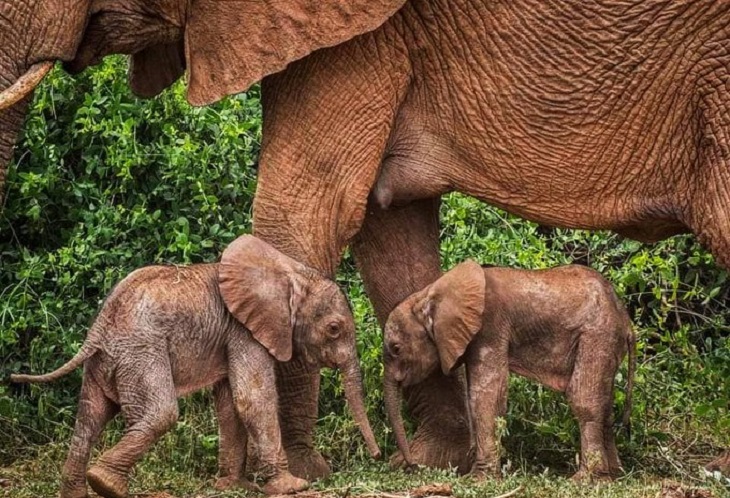
Kahumbu has devoted her career to protecting elephants from environmental changes and poachers. During her career, Kahumbu has worked as CEO of WildlifeDirect and mounted a national campaign in 2014, ‘Hands Off Our Elephants’, which has since seen elephant poaching decrease by 80%.

About Soko Directory Team
Soko Directory is a Financial and Markets digital portal that tracks brands, listed firms on the NSE, SMEs and trend setters in the markets eco-system.Find us on Facebook: facebook.com/SokoDirectory and on Twitter: twitter.com/SokoDirectory

- January 2026 (220)
- February 2026 (248)
- March 2026 (287)
- April 2026 (208)
- May 2026 (191)
- June 2026 (238)
- July 2026 (279)
- August 2026 (83)
- January 2025 (119)
- February 2025 (191)
- March 2025 (212)
- April 2025 (193)
- May 2025 (161)
- June 2025 (157)
- July 2025 (227)
- August 2025 (211)
- September 2025 (267)
- October 2025 (297)
- November 2025 (230)
- December 2025 (220)
- January 2024 (238)
- February 2024 (227)
- March 2024 (190)
- April 2024 (133)
- May 2024 (157)
- June 2024 (145)
- July 2024 (136)
- August 2024 (154)
- September 2024 (212)
- October 2024 (255)
- November 2024 (196)
- December 2024 (143)
- January 2023 (182)
- February 2023 (203)
- March 2023 (322)
- April 2023 (297)
- May 2023 (267)
- June 2023 (214)
- July 2023 (212)
- August 2023 (257)
- September 2023 (237)
- October 2023 (264)
- November 2023 (286)
- December 2023 (177)
- January 2022 (293)
- February 2022 (329)
- March 2022 (358)
- April 2022 (292)
- May 2022 (271)
- June 2022 (232)
- July 2022 (278)
- August 2022 (253)
- September 2022 (246)
- October 2022 (196)
- November 2022 (232)
- December 2022 (167)
- January 2021 (182)
- February 2021 (227)
- March 2021 (325)
- April 2021 (259)
- May 2021 (285)
- June 2021 (272)
- July 2021 (277)
- August 2021 (232)
- September 2021 (271)
- October 2021 (304)
- November 2021 (364)
- December 2021 (249)
- January 2020 (272)
- February 2020 (310)
- March 2020 (390)
- April 2020 (321)
- May 2020 (335)
- June 2020 (327)
- July 2020 (333)
- August 2020 (276)
- September 2020 (214)
- October 2020 (233)
- November 2020 (242)
- December 2020 (187)
- January 2019 (251)
- February 2019 (215)
- March 2019 (283)
- April 2019 (254)
- May 2019 (269)
- June 2019 (249)
- July 2019 (335)
- August 2019 (292)
- September 2019 (306)
- October 2019 (313)
- November 2019 (362)
- December 2019 (318)
- January 2018 (291)
- February 2018 (213)
- March 2018 (275)
- April 2018 (223)
- May 2018 (235)
- June 2018 (176)
- July 2018 (256)
- August 2018 (247)
- September 2018 (255)
- October 2018 (282)
- November 2018 (282)
- December 2018 (184)
- January 2017 (183)
- February 2017 (194)
- March 2017 (207)
- April 2017 (104)
- May 2017 (169)
- June 2017 (205)
- July 2017 (189)
- August 2017 (195)
- September 2017 (186)
- October 2017 (235)
- November 2017 (253)
- December 2017 (266)
- January 2016 (164)
- February 2016 (165)
- March 2016 (189)
- April 2016 (143)
- May 2016 (245)
- June 2016 (182)
- July 2016 (271)
- August 2016 (247)
- September 2016 (233)
- October 2016 (191)
- November 2016 (243)
- December 2016 (153)
- January 2015 (1)
- February 2015 (4)
- March 2015 (164)
- April 2015 (107)
- May 2015 (116)
- June 2015 (119)
- July 2015 (145)
- August 2015 (157)
- September 2015 (186)
- October 2015 (169)
- November 2015 (173)
- December 2015 (205)
- March 2014 (2)
- March 2013 (10)
- June 2013 (1)
- March 2012 (7)
- April 2012 (15)
- May 2012 (1)
- July 2012 (1)
- August 2012 (4)
- October 2012 (2)
- November 2012 (2)
- December 2012 (1)