Africa’s Digital Independence: Why Our Own Internet Backbone Changes Everything

For decades, Africa’s internet story has been one of dependency. A simple email sent from Lagos to Nairobi would first travel thousands of miles through London or Frankfurt before returning home. It was like two neighbors having to shout across the ocean just to say hello. This arrangement was slow, expensive, insecure, and disempowering. But today, something historic has begun to shift—the launch of the Continental Internet Exchange (CIX), keeping African data in Africa.
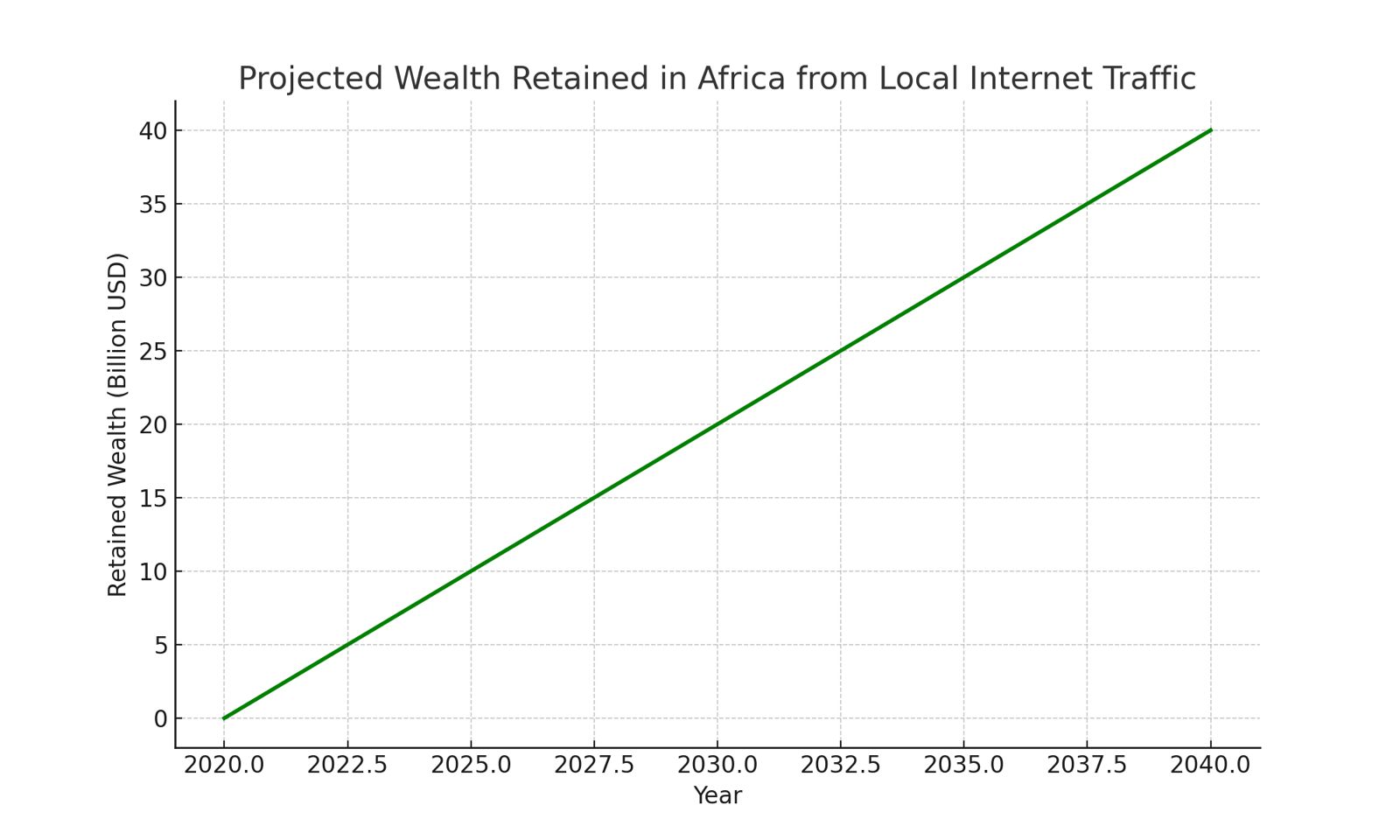
This step is not just technical progress; it is digital liberation. For the first time, African nations are building the backbone to control their own data flows. Instead of paying Europe to process African traffic, we can now handle it locally. That means faster apps, smoother calls, stronger digital security, and money saved. Every shilling, naira, cedi, or rand that once left our continent in bandwidth bills can now stay at home and strengthen our economies.
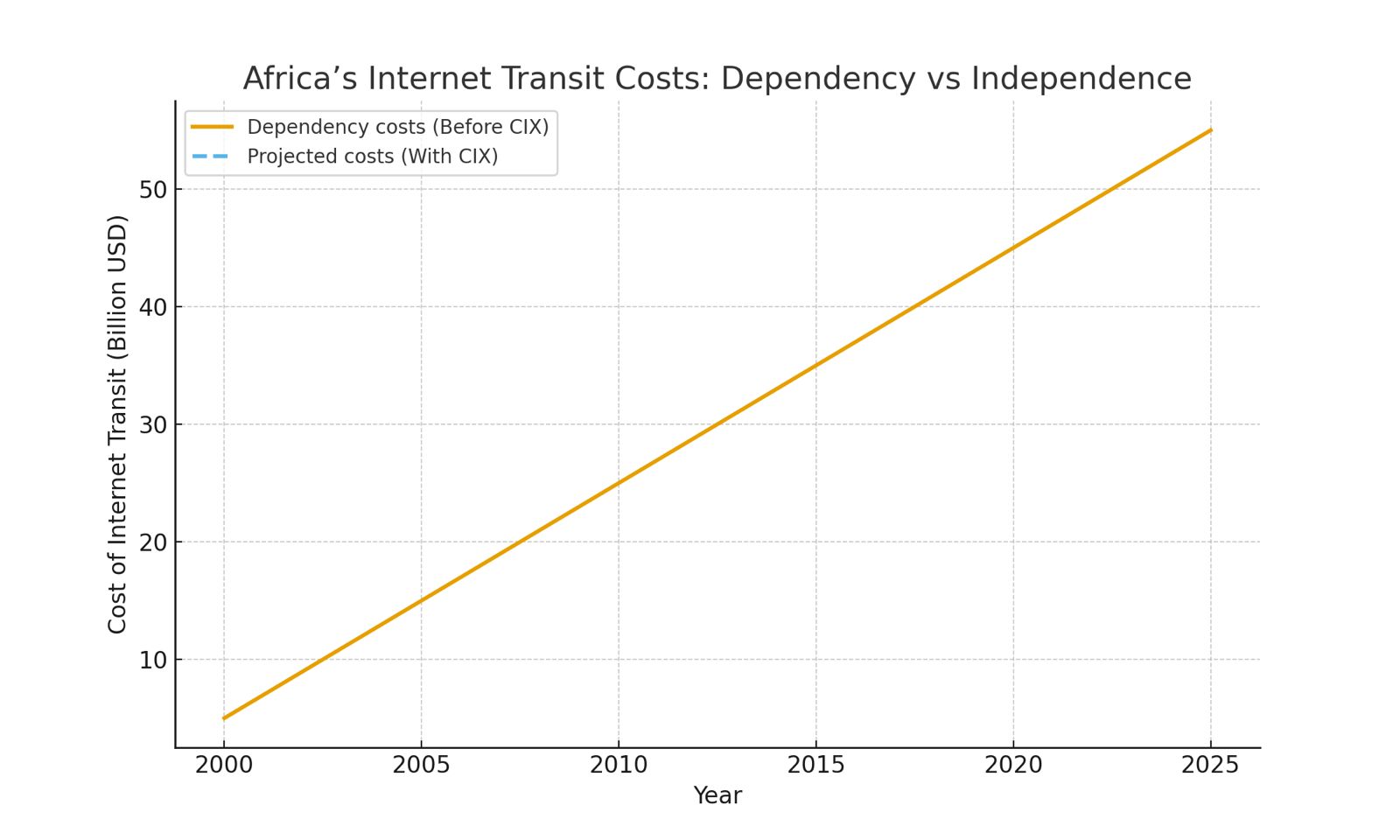
Think about the cost of this dependency. According to data from the African Union, African countries spend billions annually on foreign transit costs because our data has to pass through overseas servers. Picture a linear graph: on the x-axis, the years from 2000 to 2025; on the y-axis, the cost in billions of dollars. The line rises sharply, showing how our dependency kept growing. Now, with CIX, that curve can bend downward, keeping more wealth within Africa.

Read Also: Safaricom Retains Lead As Choice For Kenyans Seeking Home Internet

But this is not just about money. It is also about sovereignty. When African data flows through foreign hubs, it becomes subject to foreign laws, surveillance, and interception. That means our businesses, governments, and citizens are exposed. By routing traffic within Africa, we protect sensitive information, shield government communications, and build trust in local digital systems. Data sovereignty is national sovereignty in the 21st century.
For governments, this is a strategic breakthrough. Hosting their own data locally means reducing reliance on foreign-owned servers. It means lowering the risk of espionage. It means faster communication in times of crisis. Imagine if, during a security threat, Kenyan intelligence must send encrypted data through servers in Europe before responding—dangerous delays that could cost lives. With CIX, that time is cut drastically.
Startups stand to benefit even more. Young innovators who once had to pay exorbitant fees to host apps abroad will now be able to host locally with lower latency. A fintech app in Accra can now serve a user in Dakar without the frustrating delays of global routing. That opens new opportunities for African developers to build solutions designed for African markets. Innovation thrives when infrastructure supports it.
And for ordinary Africans, this means smoother calls, faster apps, and cheaper services. Every WhatsApp call between two African cities will no longer hop across continents. Every YouTube video streamed from Lagos to Nairobi will load faster. The frustrations we have long normalized—buffering, call drops, slow downloads—can now be drastically reduced. Connectivity is not just about convenience; it is about dignity.
Consider the potential for education. Online learning platforms will become more reliable, affordable, and accessible. Universities across Africa can share lectures, research, and knowledge directly, without paying international transit fees. Students in rural Kenya can attend a digital class hosted in South Africa without delays. This is how digital infrastructure translates directly into human capital development.
Healthcare is another sector that will feel the difference. Telemedicine platforms rely on stable, fast connections. Imagine a patient in Malawi consulting a specialist in Nigeria in real time, without lag. Or regional disease surveillance systems sharing data instantly across borders to prevent pandemics. With African data hosted in Africa, lives can literally be saved.