


By Esther Murigi
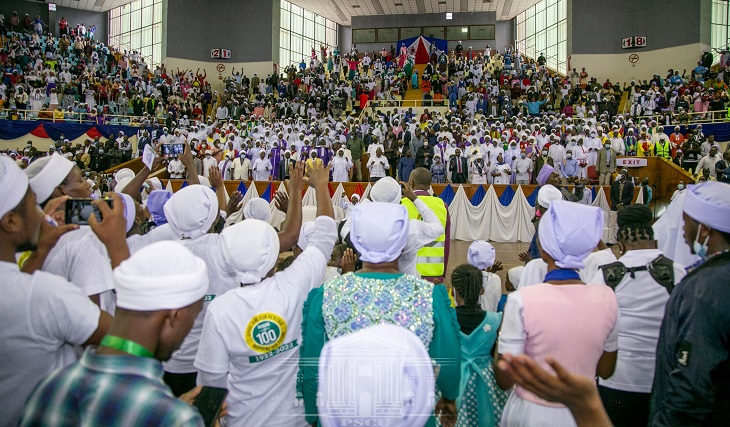
Early in the morning, in places like Murang’a and Thika, the sound of songs, drums, and heartfelt prayers fills the air. These sounds rise from Akurinu churches, humble buildings that may be simple in structure but powerful in spirit. Inside, men dressed in white turbans and long robes worship beside women in flowing white dresses and head coverings. Their attire, symbolic of respect and purity, reflects the deep reverence that defines their faith.
Many Kenyans recognize the Akurinu by their distinctive white garments, yet few truly understand their form of worship. For the Akurinu, praise is not a performance; it is sacred, sincere, and woven into the fabric of their daily lives. As Elder Josiah Karanja from Thika explains, “We praise God with our whole life, through our clothes, our voices, and our language.”


The Akurinu movement began in the 1920s among the Kikuyu people during the colonial era, a time of hardship and cultural suppression. Seeking a more personal and distinctly African expression of faith, believers turned to dreams and visions, convinced that God spoke directly to them. Over time, they formed groups known as dominions—community-based fellowships where worship, teaching, and tradition thrived. Today, these dominions stretch across Kenya, from Murang’a and Kiambu to Nairobi, Nakuru, Embu, Meru, and beyond.
A typical Akurinu service, especially on Sundays, can last for hours. The gatherings are filled with prayer, song, testimonies, and readings from the Bible. Their music stands apart from modern gospel styles, while many churches now use electric keyboards, guitars, and loudspeakers, the Akurinu still hold fast to their drums, shakers, and flutes. Their songs, sung in Kikuyu, Kiswahili, or both, draw inspiration from Bible verses and personal experiences.
“We don’t sing to entertain,” says Jemimah Wairimu, a youth member from Dohnholm, Nairobi. “We sing to feel God near us.”
Their worship often follows a call-and-response rhythm, one voice leading, the congregation answering. Sometimes the faithful stand barefoot on mats, clapping, spinning slowly, or lifting their hands in unison. At other times, silence fills the room as they wait for the Holy Spirit’s whisper.
The Akurinu’s white garments are more than a uniform; they are a spiritual statement. Men wear long kanzu and turbans; women cover their heads and wear long dresses; even children keep their heads covered during prayer. “The white color reminds us to remain clean in heart,” says Elder Karanja. Variations exist; some regions add coloured borders, while coastal congregations use lighter fabrics suited to the heat, but the symbolism remains the same: purity and humility before God.
Akurinu worship is deeply rooted in local languages and traditions. In Murang’a, preachers weave Kikuyu proverbs into their sermons; in Embu, prayers use local sayings to make scripture relatable. In urban centers like Nairobi and Nakuru, Kiswahili unites members from different ethnic backgrounds. Their testimonies are also profoundly Kenyan—stories of surviving matatu accidents, overcoming job losses, or finding hope after hardship.
“One person was saved from alcohol, another survived a crash on Thika Road,” recalls Pastor Anne Nyambura from Nairobi’s Eastlands. “We thank God for His presence in our everyday struggles.”
The younger generation has found ways to blend tradition with technology. They use WhatsApp, Facebook, and even YouTube to share hymns, announce meetings, and coordinate fundraising. Yet inside the church, the old ways prevail—no bright lights or flashy performances, just the beat of the drum and the power of the human voice. “You can use a phone to call members,” says Mary Wanjiku, “but in church, the drum and the voice are enough.”
In recognition of their contribution to Kenya’s spiritual and cultural heritage, June 26 is now celebrated nationally as Akurinu Day. On such occasions, and during national prayers, you will see them in their gleaming white attire, singing and praying for the nation.
Back in Murang’a, the Sunday service stretches into its third hour. The drums quicken. The singing grows louder. A young man prophesies in Kikuyu, and elders rise to interpret his words. Children clap and hum along, learning by watching their parents. For the Akurinu, this is not mere noise; it is communion with God.
Their worship may seem old-fashioned to some, but to them, it is holy, African, and alive. They are not out to impress the world; they are walking faithfully in the footsteps of their ancestors, slowly, reverently, and with devotion. Through their white turbans, simple songs, and unshakable faith, the Akurinu tell a uniquely Kenyan story—one that continues to grow, one drumbeat at a time.
Read Also: The Gospel According To Ruto: Turning Water Into Billion-Shilling Churches
The Author is Esther Murigi certified Broadcast Journalist