
Honouring the Muhoroni Man: NCBA Celebrates the Unpaid Years, Unbroken Spirit, and Unmatched Resilience of Sugar Factory Workers
In the heart of Muhoroni, where the scent of crushed cane lingers in the morning air and the hum of machinery has long been the town’s unofficial anthem, stands a community shaped by resilience. For decades, life in Muhoroni has revolved around its iconic sugar factory; a landmark older than many of the men who have given their lives to it.
Founded in 1964 under the name East Africa Sugar Industries Ltd and beginning operations in 1966 with a modest capacity of 800 tonnes of cane per day, the factory grew into a powerhouse, expanding progressively and eventually achieving an installed crushing capacity of 2,200 tonnes per day.
But behind the impressive numbers and industrial milestones lies a human story, one of quiet endurance, sacrifice and an unwavering belief in tomorrow. For the men of Muhoroni Sugar Factory, especially those who have worked there for decades, the factory is more than a place of employment. It is a lifeline, a legacy, a source of dignity. Yet even the most seasoned among them could not have imagined the test of spirit that awaited in recent years.

Before the takeover by the Kipchimchim Group, salaries went unpaid, not for a month, not for a year, but almost five years. Five years of showing up every morning, clocking in, operating the boilers, cutting the cane, repairing the machinery, knowing very well that a payslip would not come at the end of the month. Still, they stayed. Still they worked. Still they believed.
For many, the decision to remain was not born of convenience, but of responsibility. Families needed feeding. Children needed schooling. The factory’s own school, where many employees’ children are enrolled, became both a reminder of their struggles and a reason to endure them. And so they pressed on, motivated not by the promise of payment, but by the conviction that one day, things would get better.
That day finally came. With the Kipchimchim Group’s takeover and a renewed commitment to revitalise the once-struggling factory, the workers received their first salary in nearly half a decade. It was not just a transaction, it was a restoration of dignity, a validation of sacrifice, a reminder that resilience does not go unnoticed.
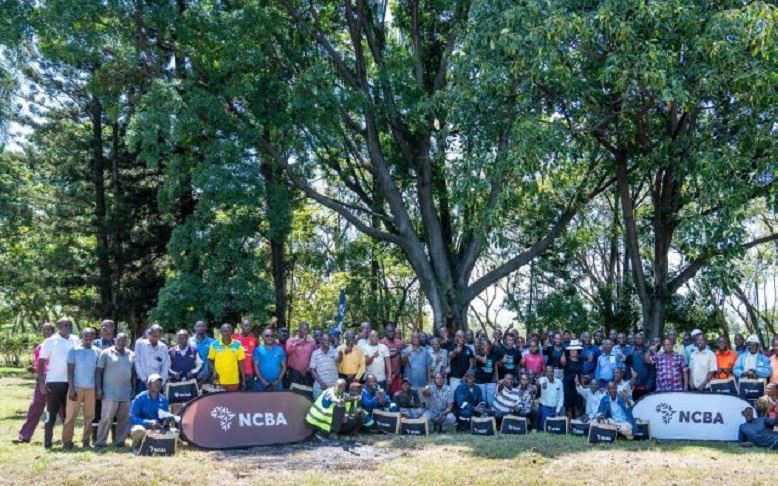
And it is in honour of this remarkable resilience that NCBA Bank chose Muhoroni as the venue for a special Men’s Day celebration, a heartfelt initiative designed to recognise the longest-serving employee and celebrate the spirit of the Muhoroni man.
Beyond the numbers lies a deeply human story, one carried for 33 years on the shoulders of Jeremiah Okello. When Jeremiah walked into Muhoroni Sugar Factory more than three decades ago, the workforce was overwhelmingly male with just 2% of the workers being women. It was a different era, one defined by hard, physical labour and little room for hesitation. But Jeremiah stepped into it with commitment, humility, and the quiet strength that would later define him.
Over the years, the factory became more than just a workplace. It became a second home. A place where he built friendships, gave his best years, and earned the respect stamped firmly behind his name. When tough times hit the factory, they hit hard. Jeremiah, like many of his colleagues, showed up every single day. Punctual. Dedicated. Unwavering. His son, speaking emotionally during NCBA’s Men’s Day celebration, revealed a detail so profound it silenced everyone. “My father never showed any form of struggle. Not once.”
For five long years without pay, Jeremiah shielded his family from the harsh realities he faced. He carried the weight of uncertainty with grace, never letting it spill into his home. His son admitted that he only learned the full extent of the hardship much later. It was the kind of resilience that cannot be taught in a classroom. It is lived, witnessed, and absorbed. And he passed it on.
This year’s celebrations carried special meaning for the Okello family. Jeremiah’s birthday had fallen just days before the NCBA engagement and he had not expected any fuss about it. But when NCBA and Muhoroni management honoured him as the longest-serving employee, he was caught by surprise. His son said it was one of the happiest moments he had seen in his father in a long time.
The appreciation, the grooming experience, the tokens of care, and the recognition of his 33-year journey touched him deeply. This was not the kind of corporate engagement staged solely for the cameras. It was a warm, human interaction. A reminder that every institution, no matter how large, is powered by ordinary people with extraordinary stories
The bank also distributed 100 care packages filled with supplies sourced from Muhoroni, an intentional gesture symbolising solidarity with the community that has carried this industry on its back for generations. The management team did not come empty-handed either; they presented tokens of appreciation, acknowledging the sacrifices these men had made silently for years.
What made the day even more meaningful were the messages shared by the factory’s Chairman and Managing Director, who took time to speak to the men about mental