
From Planting Trees to Building Climate Infrastructure: How the Mwatsumbo Mangrove Project Redefines Restoration in Kenya
As climate risks intensify and nature-based solutions move from the margins to the mainstream of climate policy, mangrove restoration is increasingly being recognized not just as an environmental intervention but as critical climate infrastructure.
The recent mangrove restoration initiative implemented by the I&M Foundation in the Mwatsumbo Forest Ecosystem in Kwale County offers a compelling case study of how science-led design, community ownership, and digital accountability can converge to deliver durable environmental and socio-economic outcomes.
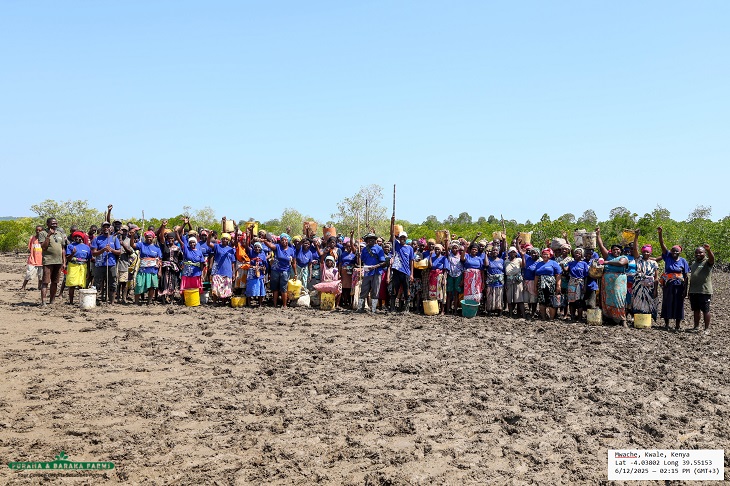
Between 7th and 18th October 2025, the I&M Foundation, through its Environment Conservation Program, undertook a large-scale restoration of degraded mangrove areas within the Mwache Block of Mwatsumbo Forest. Delivered in partnership with Furaha & Baraka Farms as the implementing partner and the Mwatsumbo Community Forest Association (CFA), the project restored 60 hectares of mangrove forest through the planting of 500,000 seedlings. Beyond the impressive scale, however, the true significance of the initiative lies in how it was executed—and what it signals for the future of conservation in Kenya.

Science-Driven Restoration, Not Symbolic Planting
One of the most persistent failures of mangrove restoration efforts globally has been the emphasis on planting numbers rather than ecological suitability. In Mwatsumbo, species selection was deliberately guided by site-specific ecological conditions.
The project deployed 425,000 Rhizophora mucronata seedlings and 75,000 Ceriops tagal, two species well-suited to the hydrological and sediment conditions of the area.
This scientific approach matters. Rhizophora mucronata is known for its robust stilt root systems, which enhance shoreline stabilization and wave attenuation, while Ceriops tagal thrives in slightly higher intertidal zones, contributing to species diversity and ecological resilience. By aligning species choice with micro-site conditions, the project significantly improves survival rates, long-term forest structure, and carbon sequestration potential—key indicators of restoration success that go far beyond short-term planting metrics.
Community at the Center, Not the Periphery
Equally important is the project’s strong community-led framework. All seedlings were sourced from community-managed nurseries, ensuring the use of native ecotypes while creating direct economic benefits for local households. This approach embeds restoration within the local economy, transforming conservation from an external intervention into a livelihood opportunity.
Over the 12-day planting period, between 120 and 400 community members participated daily, including youth and women’s groups. This level of engagement did not happen by chance. The project followed a structured Free, Prior and Informed Consent (FPIC) process, fully aligned with Kenya’s Forest Conservation and Management Act (2016) and the CFA Regulations (2021). Through participatory planning, transparent communication, and equitable involvement, the initiative fostered strong community ownership and accountability.
From an expert perspective, this is critical. Mangrove restoration fails when communities are treated as labor rather than partners. Mwatsumbo demonstrates that when communities are involved from design to implementation, restoration efforts benefit from local ecological knowledge, stronger protection against future degradation, and long-term stewardship.
Digital Monitoring and the Future of Accountability