
The Weight of Emergence: Why Edwin Sifuna Represents a Leadership Moment Kenya Cannot Ignore
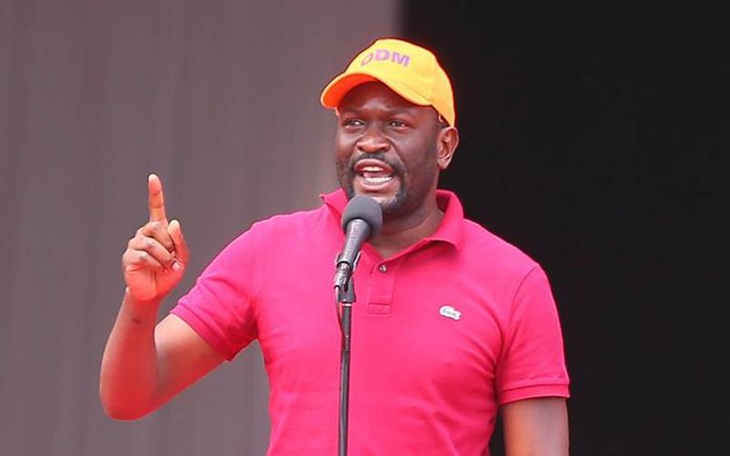
History does not announce itself with trumpets. It moves quietly at first — through language, through posture, through the shifting confidence of a people searching for direction. In Kenya’s political evolution, there are periods of noise and there are periods of formation. We are currently in a period of formation. And in such moments, certain figures begin to carry more than titles. They begin to carry expectation.
Edwin Sifuna’s rise cannot be understood merely through the lens of party office. Secretaries General come and go. Political spokespersons rotate. Parliamentary debates fill Hansard volumes. But occasionally, a public figure transitions from position-holder to symbol. That transition is subtle, but unmistakable when it happens.
Kenya today is restless. The economy is strained. The youth are impatient. Trust in institutions has thinned under the pressure of debt, taxation disputes, governance questions, and a widening gap between promise and performance. In such an atmosphere, leadership is not about comfort. It is about clarity.

Sifuna has increasingly positioned himself as a voice of constitutional assertiveness. In a republic where executive power often expands unless checked, legislative courage becomes indispensable. The country does not need silent parliamentarians. It needs articulate ones. It needs leaders who understand that oversight is not rebellion; it is duty.
There is something historically significant about leaders who emerge during economic tightening. Kenya is navigating a period where fiscal policy has direct consequences on households. Tax enforcement is intensifying. Public borrowing remains under scrutiny. The social contract between citizen and state is being renegotiated in real time. In such an environment, rhetoric must be matched with intellectual discipline.
Sifuna’s legal grounding has allowed him to frame political debates within constitutional parameters rather than emotional outbursts. That distinction matters. Kenya’s democracy has matured beyond personality contests; it now demands institutional literacy. Citizens want leaders who understand procedure, law, and the mechanics of governance.
But intellectual capacity alone does not create political momentum. What is increasingly visible is resonance. The language he employs — direct, unembellished, unapologetic — connects with a demographic that feels unheard. Youth engagement in Kenya has shifted from passive observation to active identity formation. They are not merely consuming politics; they are internalizing it.
This is where responsibility becomes heavy. When citizens begin to project themselves into a leader, that leader’s daily decisions acquire national significance. Words must be weighed. Alliances must be evaluated. Strategy must be disciplined. Momentum without architecture dissipates.
Kenya has experienced charismatic leaders before. Some built movements that reshaped the republic. Others burned brightly and faded under the weight of inconsistency. The difference has always been discipline. Emergence is not enough; endurance defines legacy.
Sifuna operates within a political tradition shaped by figures who challenged entrenched power structures. That lineage carries both opportunity and expectation. It offers institutional depth but demands strategic maturity. The challenge for any leader emerging from such a tradition is evolution without imitation.
The country does not need replicas of its past. It needs adaptive leadership suited to current realities — digital economies, demographic shifts, global financial pressures, and an electorate that is increasingly informed. Kenya’s political discourse is no longer confined to rally grounds; it is dissected online, debated in real time, and archived permanently.
What distinguishes leaders in this era is consistency. The ability to maintain clarity under provocation. The capacity to critique without descending into recklessness. The discipline to convert crowd energy into policy influence. This is the crucible through which Sifuna must pass daily.
There is also a generational undertone to his emergence. At a time when younger Kenyans question succession politics and demand relevance, leaders who embody both experience and relatability carry unusual leverage. But leverage without responsibility destabilizes. Leadership requires self-regulation.
Kenya’s democracy thrives when opposition voices are strong yet constructive. Oversight is not obstruction. It is balance. A republic tilts dangerously when one side dominates unchecked. In this sense, figures like Sifuna serve as institutional counterweights — necessary for equilibrium.
However, public expectation is unforgiving. Those looked upon as future possibilities are scrutinized more intensely. Every misstep is amplified. Every silence is interpreted. Every alignment is analyzed. The burden of expectation is often heavier than the burden of office.
Why are Kenyans increasingly attentive to him? Because they sense assertiveness. Because they see articulation. Because in moments of political ambiguity, clarity feels stabilizing. Because in times of economic anxiety, confidence attracts.
But admiration is fragile. It must be earned repeatedly. Leadership is not secured in one speech or one rally. It is built in incremental decisions — how one responds to internal party disputes, how one navigates national crises, how one balances loyalty with principle.
History teaches that countries do not change through slogans alone. They change when rhetoric is institutionalized into reform. If Sifuna is to become the leader many project him to be, he must transition from symbolic momentum t