Doing Good Through Deliberate Partnership: The I&M Foundation Story
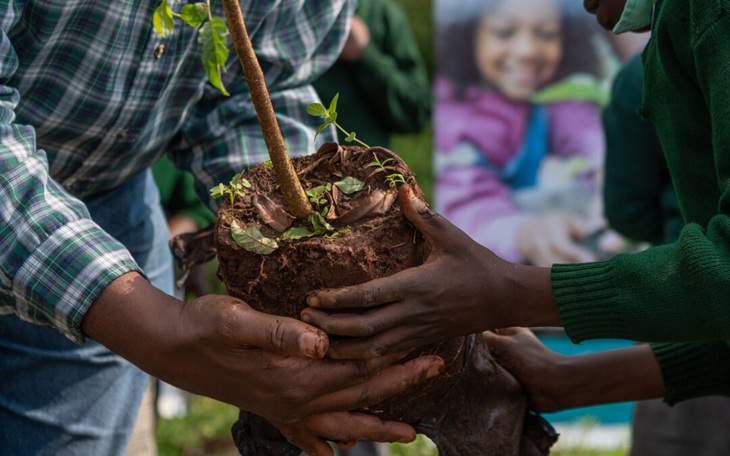
There is a version of corporate social responsibility in Kenya that is all packaging. A tree planted for a photo. A cheque was handed over at a gala. A press release about how many lives were “touched.” And after that, everything goes silent. Life goes back to normal. No real lives touched, but imaginary ones. And then there is the I&M Foundation, which, five years into its work, has quietly built one of the more credible models for what institutional philanthropy can actually look like when it decides to be serious about it.
The Foundation was established in 2020 as the philanthropic arm of I&M Bank Group, and it has operated from the beginning on a straightforward financial commitment: 2 percent of I&M Bank Kenya’s annual profit before tax goes directly to funding social investment programmes. This is probably the only institution that does this in the region, not only in Kenya.
But let us face the truth, the money, on its own, does not explain why the Foundation’s work is worth paying attention to. Here is how:

A Philosophy Built on Partnership
The Foundation does not operate in the field. It does not run schools, manage forests, or employ youth trainers. Its stated implementation philosophy is to work through partners, registered organisations with good governance structures, demonstrated track records, and deep community roots. The Foundation’s role is explicitly catalytic: to identify where existing efforts are working, and to amplify them.
That is a harder model to execute than it sounds. It requires institutional humility that most funders, corporate or otherwise, struggle to sustain. It requires genuine due diligence rather than relationship-based grant-making. And it requires accepting that your name will often appear in small font, beneath the organisations that did the actual work on the ground.
I&M Foundation appears to have accepted that trade-off, and the results, particularly across its four thematic pillars of environmental conservation, education and skills development, economic empowerment, and enabling giving, are worth examining closely.
Forests, Livelihoods, and the Long Game in Nairobi
Project Imarisha Ngong Forest is the Foundation’s flagship environmental initiative, a multi-year restoration effort carried out in partnership with the Kenya Forest Service. The Foundation has committed over KES 160 million to the project, a figure that reflects not just ecological ambition but an understanding that meaningful conservation requires sustained, not episodic, investment.
What distinguishes this initiative is not the scale of the financial commitment alone, but the way it integrates livelihood creation into the conservation mandate. Residents from informal settlements in Kibera and Dagoretti have been engaged in paid restoration work, turning what could have been a pure conservation narrative into something with tangible economic consequences for people who live in the shadow of a forest that was disappearing around them.
On the Kenyan coast, the Foundation’s partnership with A Rocha Kenya has embedded environmental education into school-level programming around Arabuko Sokoke Forest in Kilifi County. 20 primary schools have been mobilised, students and youth drawn into wildlife clubs, and families provided with seedlings to plant in their homes and communities. It is the kind of patient institution-building — cultivating the habits and knowledge of conservation in children before they become adults who make land-use decisions, that rarely makes headlines but genuinely shapes the long arc of environmental outcomes.
The Foundation’s partnership with the Kenya Community Development Foundation (KCDF), formalised in 2020 with an investment of over KES 50 million across three years, extended this work to 172 learning institutions across Narok and Kilifi counties. The programme combined tree planting with clean energy adoption, including energy-saving jikos and solar lighting, alongside sustainable waste management infrastructure. The projected reach covered over 5,000 households, families, not just students, in communities where charcoal burning, land degradation, and soil erosion remained live economic and ecological threats.
At the same time, between 7th and 18th October 2025, the I&M Foundation, through its Environment Conservation Program, undertook a large-scale restoration of degraded mangrove areas within the Mwache Block of Mwatsumbo Forest. Delivered in partnership with Furaha & Baraka Farms as the implementing partner and the Mwatsumbo Community Forest Association (CFA), the project restored 60 hectares of mangrove forest through the planting of 500,000 seedlings. Beyond the impressive scale, however, the true significance of the initiative lies in how it was executed, and what it signals for the future of conservation in Kenya.
Skills That Survive Beyond the Training Room
The Foundation’s education and skills development work reflects a clear-eyed reading of Kenya’s labour market realities. About 80 percent of high school graduates in Kenya do not qualify for university, yet formal vocational and technical pathways remain either inaccessible or disconnected from actual employment markets. The Foundation has chosen to work in that gap.
Its partnership with Moringa School, formalised with a KES 6.25 million grant, funded access to a 24-week software development boot camp for 25 youth from informal settlements. The programme was not a charitable gesture toward a technology education institution. It was a structured intervention in a workforce pipeline: students received training on employable skills, joined graduate support networks, and were connected to iTalanta, a Kenyan organisation that places developers on real projects with European clients. I&M Bank also opened its own Digital Factory for Moringa student internships, with a standing offer to hire high performers into permanent roles.
That linkage between training and employment, the deliberate closing of the loop, is what separates meaningful skills investment from skills-washing. The Foundation appeared to understand this from the outset.
Its partnership with the Amara Charitable Trust further extended this educational mandate, sponsoring 21 students into Technical and Vocational Education and Training centres after secondary school completion, and pairing the financial support with mentorship sessions.
The Foundation has also worked with the Palmhouse Foundation to support access to education for disadvantaged learners, and has provided scholarships at Strathmore University, investments in a different tier of the education ladder, but rooted in the same conviction that access, not just quality, is the variable that determines whether talent gets developed or wasted.
Youth Enterprise in Kenya’s Forgotten Counties
Perhaps the most strategically ambitious of the Foundation’s partnerships is the tripartite arrangement with The King’s Trust International (KTI) and Asante Africa Foundation, which brought the Enterprise Challenge programme to high school students in some of Kenya’s most economically marginalised counties: Narok, Samburu, Marsabit, and Turkana.
KTI’s Enterprise Challenge is not a hypothetical exercise. It is a structured entrepreneurship programme, already proven across eight countries, including Tanzania, Uganda, Rwanda, Nigeria, Ghana, Pakistan, Jordan, and Barbados, that equips students with business knowledge, digital simulations, and real exposure to the mechanics of starting and running a venture. Asante Africa Foundation, which had been implementing the programme in Kenya since 2019, brought the local context and community trust. I&M Foundation brought the capital: KES 48.1 million endowment to scale the programme significantly.
The numbers from earlier iterations of the programme are not trivial. Over 2,500 youth participants had acquired entrepreneurship skills before the Foundation’s entry, with 43 percent initiating their own economic ventures. With the Foundation’s investment, the programme targeted 1,716 learners across 22 remote schools in its 2024 cycle, with a projected total of 6,300 students by the end of the current phase.
What this partnership recognises, and what too much youth empowerment programming in Kenya fails to grapple with, is that enterprise ambition does not begin at university. It can and must be seeded earlier, in communities where formal employment will not arrive on its own. The Foundation’s decision to focus this work in Northern Kenya, specifically, is a deliberate departure from the Nairobi-centric geography of most corporate philanthropy.
Empowering Women and Communities Beyond the Cities
The Foundation’s reach also extends into less-documented but equally significant community work. Through its partnership with The Maa Trust, I&M Foundation has supported Maasai women in building sustainable livelihoods, boosting household incomes in communities where women’s economic agency remains constrained by a combination of cultural norms and limited market access.
In Nairobi’s informal settlements, the Foundation’s partnership with the Jonathan Jackson Foundation has created 37 new jobs, directly impacted 191 individuals, and engaged nine community groups. These are not large numbers in absolute terms, but they reflect focused, verified outcomes rather than aspirational projections.
The Foundation marked its fifth anniversary in September 2025, and the occasion was used not to celebrate the institution but to hear from its beneficiaries. University scholarship recipients shared their stories. Youth who had built entrepreneurial ventures through the Enterprise Challenge spoke. Forest restoration workers described what paid employment in their own neighbourhood had meant. James Gatere, Head of the Foundation, put it plainly: real change is deeply impactful, and the test of it is what you can see in the lives of people who were underserved before you arrived.
What Collaboration Actually Requires
Watching how the I&M Foundation structures its relationships with partners, a few things stand out that other corporate funders could learn from.
First, the Foundation does not re-invent programmes that already exist. Its partnership with KTI and Asante Africa Foundation was built on a programme that had already been tested in eight countries. The Foundation’s contribution was to bring the capital and the institutional credibility to scale it, not to create a parallel structure from scratch. This is rarer than it should be in corporate philanthropy, where the impulse to brand and own the intervention often leads to duplication of effort and dilution of impact.
Second, the Foundation works across sectors without pretending any single sector has all the answers. Its portfolio spans conservation, education, digital skills, enterprise development, and community economic empowerment. These are not isolated programmes. They reflect an understanding that the barriers facing underserved communities are interconnected — that a young woman in Turkana County is not primarily constrained by lack of business knowledge alone, but by a cluster of geographic, economic, and institutional disadvantages that require coordinated response.
Third, the Foundation appears to take governance seriously, not as compliance but as quality control. Its stated preference for partners with good governance structures and demonstrated track records is not bureaucratic gatekeeping. It is a recognition that money flowing through weak institutions tends to disappear before it reaches the people it was meant to serve.
Five years into its work, the I&M Foundation is not the loudest voice in Kenyan philanthropy. It does not hold the most events or generate the most press releases. But across Ngong Forest, the schools of Kilifi and Narok, the informal settlements of Nairobi, and the remote counties of Northern Kenya, there is evidence of something rarer than good intentions: a structured, partnership-driven model that is actually producing the kinds of change, ecological, educational, and economic, that communities asked for.
For those watching corporate philanthropy in East Africa and wondering whether it can be done well, the I&M Foundation offers a credible, if still evolving, answer. The work is not finished. The reach is not yet wide enough. But the architecture of how it is being done is, by any honest reckoning, more serious than most.
About Soko Directory Team
Soko Directory is a Financial and Markets digital portal that tracks brands, listed firms on the NSE, SMEs and trend setters in the markets eco-system.Find us on Facebook: facebook.com/SokoDirectory and on Twitter: twitter.com/SokoDirectory
- January 2026 (220)
- February 2026 (248)
- March 2026 (287)
- April 2026 (208)
- May 2026 (156)
- January 2025 (119)
- February 2025 (191)
- March 2025 (212)
- April 2025 (193)
- May 2025 (161)
- June 2025 (157)
- July 2025 (227)
- August 2025 (211)
- September 2025 (270)
- October 2025 (297)
- November 2025 (230)
- December 2025 (220)
- January 2024 (238)
- February 2024 (227)
- March 2024 (190)
- April 2024 (133)
- May 2024 (157)
- June 2024 (145)
- July 2024 (136)
- August 2024 (154)
- September 2024 (212)
- October 2024 (255)
- November 2024 (196)
- December 2024 (143)
- January 2023 (182)
- February 2023 (203)
- March 2023 (322)
- April 2023 (297)
- May 2023 (267)
- June 2023 (214)
- July 2023 (212)
- August 2023 (257)
- September 2023 (237)
- October 2023 (264)
- November 2023 (286)
- December 2023 (177)
- January 2022 (293)
- February 2022 (329)
- March 2022 (358)
- April 2022 (292)
- May 2022 (271)
- June 2022 (232)
- July 2022 (278)
- August 2022 (253)
- September 2022 (246)
- October 2022 (196)
- November 2022 (232)
- December 2022 (167)
- January 2021 (182)
- February 2021 (227)
- March 2021 (325)
- April 2021 (259)
- May 2021 (285)
- June 2021 (272)
- July 2021 (277)
- August 2021 (232)
- September 2021 (271)
- October 2021 (304)
- November 2021 (364)
- December 2021 (249)
- January 2020 (272)
- February 2020 (310)
- March 2020 (390)
- April 2020 (321)
- May 2020 (335)
- June 2020 (327)
- July 2020 (333)
- August 2020 (276)
- September 2020 (214)
- October 2020 (233)
- November 2020 (242)
- December 2020 (187)
- January 2019 (251)
- February 2019 (215)
- March 2019 (283)
- April 2019 (254)
- May 2019 (269)
- June 2019 (249)
- July 2019 (335)
- August 2019 (292)
- September 2019 (306)
- October 2019 (313)
- November 2019 (362)
- December 2019 (318)
- January 2018 (291)
- February 2018 (213)
- March 2018 (275)
- April 2018 (223)
- May 2018 (235)
- June 2018 (176)
- July 2018 (256)
- August 2018 (247)
- September 2018 (255)
- October 2018 (282)
- November 2018 (282)
- December 2018 (184)
- January 2017 (183)
- February 2017 (194)
- March 2017 (207)
- April 2017 (104)
- May 2017 (169)
- June 2017 (205)
- July 2017 (189)
- August 2017 (195)
- September 2017 (186)
- October 2017 (235)
- November 2017 (253)
- December 2017 (266)
- January 2016 (164)
- February 2016 (165)
- March 2016 (189)
- April 2016 (143)
- May 2016 (245)
- June 2016 (182)
- July 2016 (271)
- August 2016 (247)
- September 2016 (233)
- October 2016 (191)
- November 2016 (243)
- December 2016 (153)
- January 2015 (1)
- February 2015 (4)
- March 2015 (164)
- April 2015 (107)
- May 2015 (116)
- June 2015 (119)
- July 2015 (145)
- August 2015 (157)
- September 2015 (186)
- October 2015 (169)
- November 2015 (173)
- December 2015 (205)
- March 2014 (2)
- March 2013 (10)
- June 2013 (1)
- March 2012 (7)
- April 2012 (15)
- May 2012 (1)
- July 2012 (1)
- August 2012 (4)
- October 2012 (2)
- November 2012 (2)
- December 2012 (1)
