


Kenya’s democratic crisis is no longer just about elections. It is about what happens after elections, when the vote is counted, power is handed over, promises are forgotten, citizens are overtaxed, Parliament bends, opposition is absorbed, dissent is punished, and public institutions begin to behave like private instruments of survival for those in power. That is the real meaning of transactional democracy. It is the reduction of a republic into a deal-making machine where loyalty is bought, silence is rewarded, accountability is negotiated away, and the ordinary citizen is left carrying the cost of political bargains made in boardrooms, hotel meetings, rallies, and State House handshakes.
Transactional democracy is killing Kenya because it empties democracy of its moral purpose. In a true democracy, power flows from the people, leaders serve the public, Parliament checks the Executive, police protect citizens, public money is used for public good, and elections create accountability. In a transactional democracy, all those principles are reversed. Power flows upward to the political elite. Leaders rule instead of serving. Parliament bargains instead of overseeing. Police intimidate instead of protecting. Public money oils political networks instead of fixing public pain. Elections become a ritual for renewing elite contracts, not a mechanism for changing the lives of the people.
This is why the presidency of William Ruto has become, to many Kenyans, the clearest symbol of the democratic betrayal now facing the country. The criticism is not merely personal. It is institutional, economic, constitutional, and moral. President Ruto came to power through the language of the hustler, the poor, the mama mboga, the boda boda rider, the youth, and the struggling taxpayer. But the lived experience of many Kenyans under his administration has been heavier taxation, deeper public anger, shrinking trust, repeated protests, violent policing, and a growing sense that the country is being governed through transactions rather than consent.


The Constitution of Kenya is very clear. All sovereign power belongs to the people of Kenya and is exercised only in accordance with the Constitution. Kenya is a multi-party democratic state founded on the national values of the rule of law, democracy, participation of the people, human dignity, equity, social justice, integrity, transparency, and accountability. Leadership is not ownership. Authority assigned to a State officer is a public trust to be exercised in a manner that demonstrates respect for the people and promotes public confidence in the integrity of the office. In plain language, the presidency is not a throne. Parliament is not a marketplace. Public office is not a private investment.
That is where transactional democracy becomes dangerous. It attacks the Constitution without necessarily announcing itself as a coup. It does not always arrive with tanks on the streets. Sometimes it arrives through political deals that neutralize opposition, through budget lines that punish citizens, through appointments that reward loyalty, through intimidation of critics, through police brutality against protesters, through public relations language that calls elite accommodation national unity, and through economic policies that ask the poor to sacrifice while the political class protects its privileges.
The Broad-Based Bargain and the Death of Opposition
The broad-based government is presented by President Ruto and his allies as a national unity project. The official argument is that Kenya benefits more from unity than from division, and that a wider political arrangement can unlock the country’s potential. On paper, dialogue across political divides can be useful. Kenya is a fragile country with ethnic memory, economic pressure, and institutional weaknesses. Responsible cooperation is not automatically wrong. But cooperation becomes dangerous when it converts the opposition from a watchdog into a stakeholder in the same system it was supposed to interrogate.
When the largest political actors enter arrangements that blur the line between government and opposition, the citizen loses a crucial democratic shield. The country may gain political calm at the top, but it risks democratic silence below. The people may still vote, but their vote becomes weaker because the alternatives they voted for can later be folded into the Executive’s survival architecture. This is the central tragedy of Kenya’s transactional politics: the voter chooses a side, then the elite negotiate the meaning of that choice after the election.
That is why many young Kenyans look at the broad-based arrangement with suspicion. They do not see unity. They see elite insurance. They see the political class protecting itself after the Gen Z revolt exposed the anger beneath Kenya’s polished political language. They see a government that was shaken by public resistance, then turned to elite accommodation as a stabilizer. They see the old Kenya surviving by absorbing those who should have held it accountable.
Democracy cannot breathe where opposition is converted into a transaction. A republic needs serious opposition, not because opposition is always right, but because unchecked power is always dangerous. Oversight is not noise. Protest is not treason. Criticism is not sabotage. A government that fears scrutiny is already confessing that it does not trust its own legitimacy.
The Gen Z Moment and the State’s Response
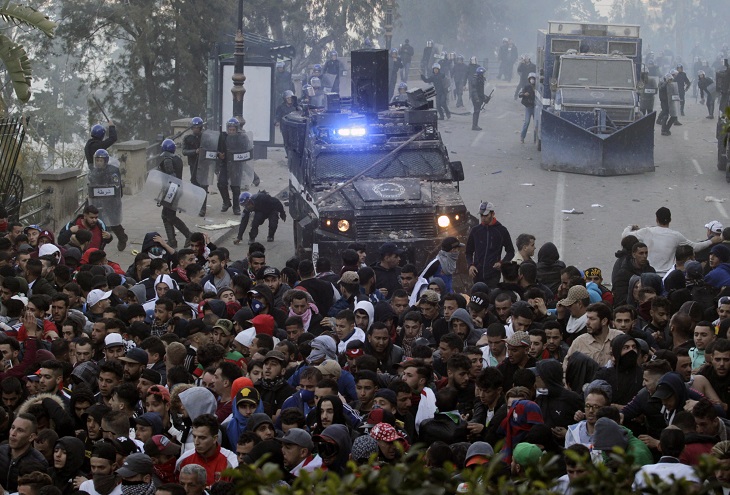
The youth-led protests of 2024 and 2025 changed Kenya’s political language. They were not organized in the old ethnic grammar. They were not driven by the usual party machinery. They were digital, angry, educated, leaderless, impatient, and deeply aware that the cost of bad governance is paid in school fees, rent arrears, unemployment, hospital bills, food prices, fuel prices, and debt. They rejected the idea that suffering is patriotism. They rejected the arrogance of being taxed without being heard. They rejected a political class that asks citizens to tighten belts while leaders tighten their grip on privilege.
The state’s response revealed the true danger facing Kenya’s democracy. Human rights organizations have reported killings, abductions, arbitrary arrests, torture, intimidation, and heavy-handed policing linked to the protest period. Reuters reported that on June 25, 2025, sixteen people died during nationwide anti-government protests, with Amnesty Kenya saying most were killed by police. Human Rights Watch reported that Kenyan authorities continued cracking down on peaceful protesters and that plain-clothed security forces reportedly abducted, tortured, and forcibly disappeared people suspected of organizing or supporting anti-government protests and social media activism. Amnesty International also reported the use of digital tactics to suppress Gen Z protests, including online intimidation, threats, smear campaigns, surveillance, and disinformation.
A democracy is not judged by how leaders behave when they are praised. It is judged by how they behave when they are challenged. When citizens protest taxes, corruption, unemployment, police brutality, and economic pain, the democratic answer is listening, accountability, reform, and restraint. The authoritarian answer is intimidation, force, denial, propaganda, and fear. Kenya has seen too much of the second answer.
This is why President Ruto is increasingly viewed by critics as a direct threat to democracy and the people of Kenya. Not because disagreement with him is enough to condemn him, but because the pattern of governance under his watch has too often placed regime survival above public trust. When citizens die in protest, when families search for the disappeared, when young people are threatened for speaking online, when activists are treated as enemies, when Parliament appears more responsive to power than to voters, then democracy is no longer a living promise. It becomes a shell.
The Economy of Pain
Transactional democracy also kills a country economically. It turns policy into political theatre. It produces decisions designed to calm pressure temporarily rather than fix structural rot. Kenya’s economic crisis is not simply that taxes are high or debt is heavy. It is that citizens no longer believe sacrifice is shared. They are asked to pay more, but they do not see enough discipline, enough integrity, enough transparency, or enough accountability from those demanding sacrifice.
The public finance reality is brutal. The National Treasury’s Public Debt Management Annual Performance Report for FY 2024/2025 shows actual net borrowing of KSh 1.0317 trillion, with borrowing used for debt rollovers and financing the fiscal deficit. Reuters reported in May 2026 that Kenya’s total debt service reached 71.2 percent of ordinary revenue in FY 2024/25, up from 50 percent four years earlier. That means the state is spending an enormous share of ordinary revenue servicing debt before it can adequately fund the ordinary dreams of ordinary Kenyans.
This is why taxation without trust becomes explosive. A government can ask citizens to contribute more when citizens believe public money is protected, corruption is punished, waste is cut, institutions are honest, and leadership is sacrificial. But when citizens see political extravagance, corruption scandals, opaque deals, expensive offices, endless foreign trips, and patronage networks, taxation begins to feel like punishment. The people are not rejecting the responsibility of citizenship. They are rejecting the hypocrisy of being lectured by leaders who do not appear to feel the pain they impose.
The May 2026 fuel-price episode illustrates the logic of transactional governance. Reuters reported that public transport operators called off a strike after President Ruto announced a diesel price cut, following a two-day strike that brought economic activity in Nairobi to a standstill and clashes that left four people dead and about thirty injured. The same report noted that the government had spent at least KSh 28.1 billion to reduce fuel prices between April and June, while warning that additional cuts would further strain public finances. This is not sustainable policy. It is pressure management. Prices rise, citizens protest, lives are lost, government cuts prices, fiscal strain worsens, and the underlying crisis remains.
That is not how a serious democracy should work. A serious democracy anticipates pain before it explodes. It explains policy honestly. It publishes numbers clearly. It cuts waste before raising taxes. It protects peaceful protest. It treats citizens as partners, not subjects. It does not wait for strikes, deaths, and public anger before discovering compassion.
Trust Is Collapsing
The most dangerous thing a government can lose is not an election. It is trust. Elections happen after five years. Trust is tested every day. Afrobarometer reported in September 2025 that, according to the Edelman Trust Institute’s 2025 Trust Barometer, only 38 percent of adults in Kenya trusted the government to do what is right, a decline from the previous year. That number is not just a statistic. It is a national alarm bell. It means millions of citizens look at the state and do not believe it is acting honestly for them.
Once trust collapses, every policy becomes suspicious, every tax becomes theft in the public imagination, every appointment becomes patronage, every police action becomes intimidation, every handshake becomes betrayal, every speech becomes performance, and every promise becomes a trap. This is where Kenya is heading if transactional democracy is not confronted.
President Ruto’s greatest democratic failure is that he has governed as though political cleverness can substitute for public confidence. But citizens are not fools. They know when opposition is being softened. They know when Parliament is being managed. They know when public participation is treated as a box-ticking exercise. They know when austerity is preached to the poor and ignored by the powerful. They know when leaders are more interested in controlling the narrative than changing the reality.
A leader becomes an enemy of democracy not merely by suspending elections, but by hollowing out the institutions that make elections meaningful. A leader becomes an enemy of the people not merely by making unpopular decisions, but by making citizens feel powerless, unheard, overburdened, and unsafe in their own republic. This is the charge that now hangs over the Ruto administration: that it has normalized a politics where citizens are useful during campaigns, disposable during protests, and taxable after elections.
The Parliament Problem
No democracy can survive when Parliament behaves like an extension of the Executive. Parliament is supposed to be the first wall between citizens and executive overreach. It approves taxes, scrutinizes spending, questions appointments, protects public resources, and forces government to explain itself. When Parliament becomes transactional, the citizen is left exposed.
The damage is not theoretical. A transactional Parliament passes laws without moral courage, defends unpopular decisions without public conviction, and treats loyalty to power as more rewarding than loyalty to voters. It waits for instructions instead of listening to the country. It reduces representation to bargaining. It turns the national budget into a political instrument. It makes the people wonder whether their MPs are representatives or brokers.
This is why the anger against transactional democracy is not anti-politics. It is pro-democracy. Kenyans are not rejecting government. They are rejecting government without accountability. They are not rejecting taxes. They are rejecting taxes without integrity. They are not rejecting leadership. They are rejecting leadership that behaves as though power is a private asset.
Why This Matters Beyond Ruto
This article is about President Ruto because he is the sitting President, the commander of the government, the face of the current political order, and the person with the greatest constitutional responsibility to protect the republic. But the crisis is bigger than one man. Kenya’s transactional democracy has roots in older political habits: ethnic mobilization, patronage, elite bargains, weak political parties, corruption, police impunity, and a culture where leaders cross political lines not for ideology but for survival.
That is why removing one leader without changing the system would not be enough. Kenya must reject the entire architecture of transactional rule. It must reject the idea that opposition can be bought. It must reject the idea that Parliament can be whipped into betraying citizens. It must reject the idea that police can kill or abduct people and the country simply moves on. It must reject the idea that public debt can be piled on future generations while today’s leaders spend without discipline. It must reject the idea that youth are only useful as voters, bloggers, mobilizers, and campaign crowds, but dangerous when they demand accountability.
The youth of Kenya are right to be restless. They are inheriting a country whose public debt limits opportunity, whose political class appears insulated from pain, whose institutions are too often compromised, and whose democracy is being tested in real time. Their anger is not indiscipline. It is civic intelligence. Their impatience is not immaturity. It is moral urgency.
The Way Forward
Kenya can still be saved, but only if democracy is returned to the people in substance, not slogans. The first step is accountability for protest deaths, abductions, torture, and illegal detentions. No police officer, commander, intelligence operative, or political actor should be above the law. The right to life, liberty, expression, assembly, and protest must be protected not only when citizens agree with government, but especially when they oppose it.
The second step is restoring Parliament as an independent institution. MPs must remember that they were elected by citizens, not hired by State House. They must scrutinize taxes, reject wasteful spending, demand full transparency on public debt, and stop behaving like political subcontractors. Kenya does not need a Parliament that asks what the Executive wants. It needs a Parliament that asks what the people can bear.
The third step is ending the politics of elite absorption. Dialogue is healthy when it strengthens accountability. It is dangerous when it kills opposition. If broad-based politics is to mean anything positive, it must be transparent, issue-based, constitutionally honest, and accountable to citizens. It must not become a hiding place for failed governance.
The fourth step is economic honesty. Kenya cannot tax itself out of a trust deficit. The government must cut waste, publish clear numbers, fight corruption credibly, protect productive sectors, support small businesses, and explain fiscal choices in language citizens understand. Debt must stop being treated as a technical matter for economists alone. Debt is a democratic issue because it determines what schools, hospitals, roads, jobs, and opportunities citizens will or will not get.
The fifth step is leadership humility. Kenya needs leaders who understand that public anger is not an inconvenience but a message. A serious leader listens before the streets burn. A democratic leader respects citizens before courts compel him. A constitutional leader does not confuse criticism with enmity. A patriotic leader protects even those who oppose him.
Transactional democracy is killing Kenya because it has turned public trust into a negotiable commodity. It has made citizens feel that their vote can be traded, their pain can be ignored, their protest can be criminalized, their taxes can be extracted, and their future can be mortgaged by people who face no real consequences.
President Ruto stands at the center of this crisis because the presidency carries the highest burden of constitutional responsibility. Under his watch, Kenya has witnessed a dangerous collision of economic pain, public mistrust, youth revolt, broad-based elite deals, heavy-handed policing, and a deepening sense that the people are being managed rather than served. That is why many Kenyans now see him not merely as a political opponent, but as the sharpest threat to the democratic promise of the republic.
But the final answer does not belong to Ruto, Parliament, opposition chiefs, police commanders, donors, or political brokers. It belongs to the people of Kenya. The Constitution begins with the sovereignty of the people for a reason. The republic is not a gift from leaders. It is an inheritance held by citizens. If transactional democracy is the disease, civic courage must be the cure. Kenya must refuse to be auctioned. Kenya must refuse to be silenced. Kenya must refuse to be ruled through fear, deals, and debt. Kenya must remember that democracy is not what politicians say during campaigns. Democracy is what citizens can defend after betrayal.
Read Also: Tanzania’s Test of Healing: Why Africa’s Youth Are Watching Democracy on Trial